
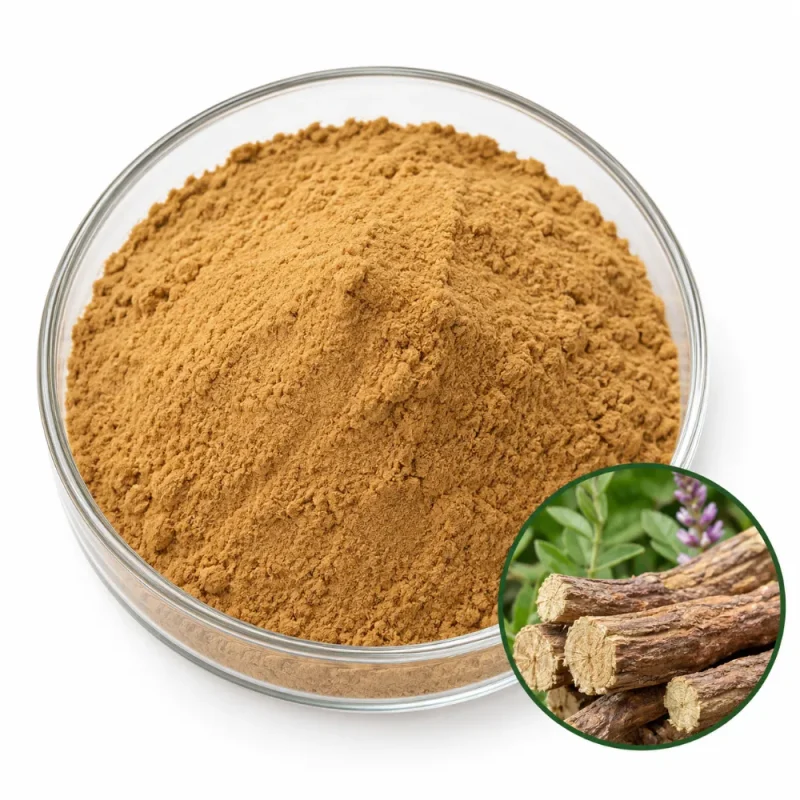
Glycyrrhizic Acid Standardization & Grades
Glycyrrhizic acid, also written glycyrrhizin, is the sweet principle of licorice: a triterpenoid saponin made of one glycyrrhetinic acid unit carrying two glucuronic acid units. It is the standardization target because it defines both the taste and the saponin character of the root and is resolved cleanly by HPLC. The botanical entity is Glycyrrhiza uralensis Fisch. ex DC., and the part used is the root with its rhizome.
The page carries one grade, so the choice is about format. At 20%, glycyrrhizic acid is the dominant single compound of the powder, while the remainder includes flavonoids such as liquiritin and isoliquiritigenin, polysaccharides and minor saponins. Sibling products from the same genus are the unstandardized Licorice Root Extract Powder, the milled Licorice Root Powder and the aglycone 18-Alpha-Glycyrrhetinic Acid 98%, which is produced from the saponin by removing its sugars.
A deglycyrrhizinated licorice material has most of the glycyrrhizin removed and is a different ingredient, so a 20% figure should never be compared with the percentage of such products. Buyers who compare licorice extract quotes should also check whether the figure is the free acid or a salt, because glycyrrhizin occurs in the plant as potassium and calcium salts and is traded as the ammonium salt.
Because intake limits for glycyrrhizin exist in several markets, the 20% figure is a design constraint for the whole formula, not just a label number. A formulator who knows the glycyrrhizic acid content per gram can plan the dose, the sweetness and the market limit in the same calculation.


