Glycyrrhiza uralensis Raw Material & Plant Part
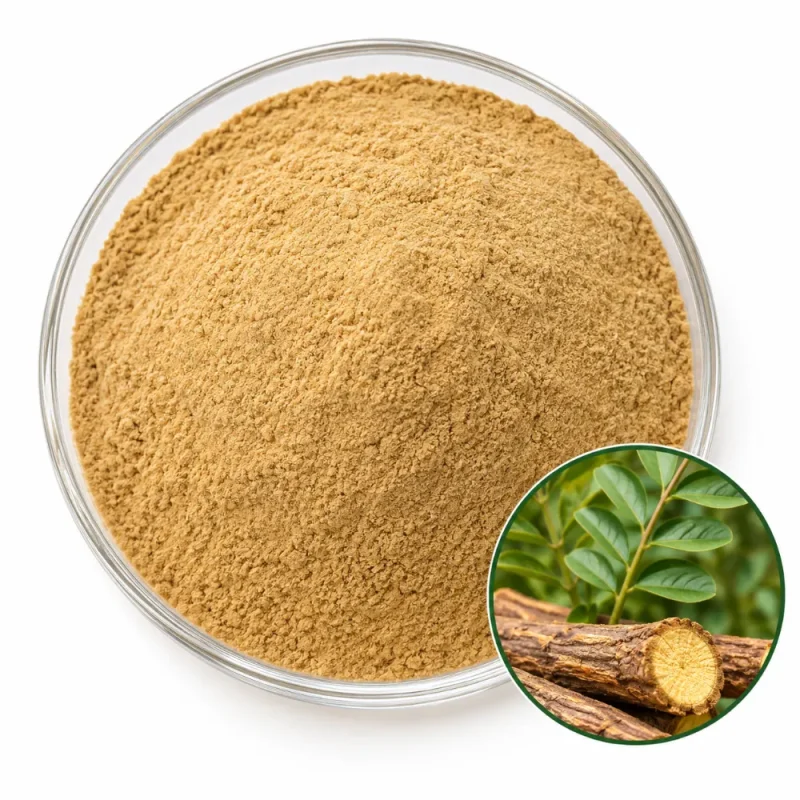
The botanical name is Glycyrrhiza uralensis Fisch. ex DC., family Fabaceae, known as Chinese licorice or gan cao. The raw material is the dried root and rhizome of the perennial, harvested from mature plants, trimmed, dried and milled. The bark is often left on, which adds to the yellow-brown tint of the powder.
Licorice is not a single species. Glycyrrhiza glabra is the European and Mediterranean licorice, and Glycyrrhiza inflata is another species used in Central Asia and in Chinese pharmacopoeial practice. They share a name and a sweet taste, but differ in their flavonoid profile, and the species name is therefore part of the identification. Licorice candy flavor, by contrast, often comes from aniseed, a different plant altogether.
The sweetness of the root comes from glycyrrhizin, a triterpenoid saponin that tastes far sweeter than sugar and lingers in the mouth. The yellow color comes from flavonoids such as liquiritin and isoliquiritin. These are traits of the plant, not levels for this powder, and glycyrrhizin intake is limited by rules in several markets, so formulators check local limits at the finished-product level.
The perennial is dug after several years of growth, and the roots are washed, sliced and dried before milling. The inner wood of the root is bright yellow and the bark is brown, so the powder is yellow with brown flecks when the bark is left on.