Matcha Powder

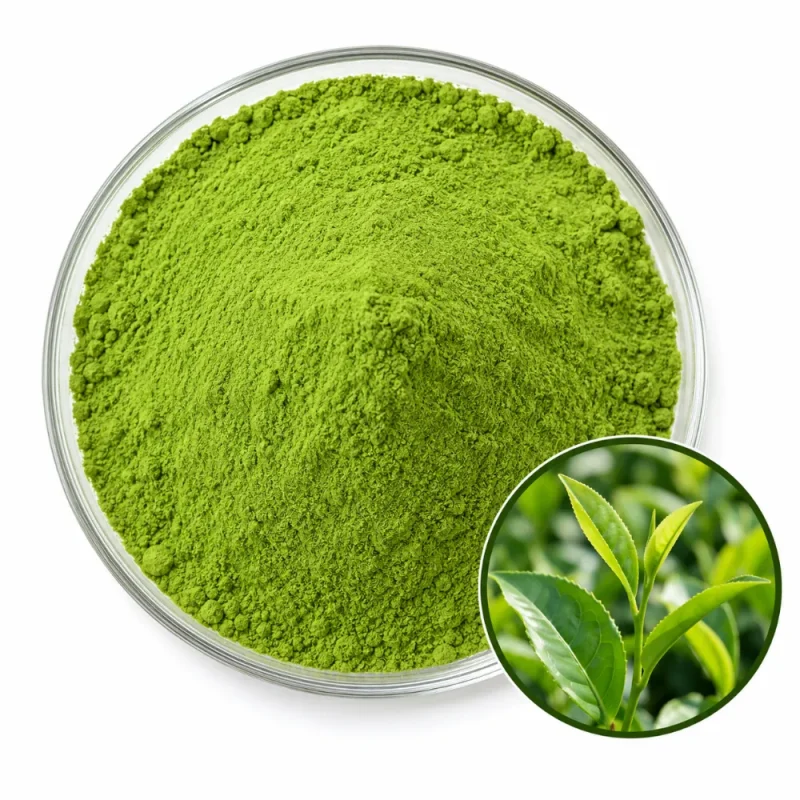
Milling tea leaves of Camellia sinensis into a fine green powder gives matcha powder, so the whole leaf is consumed when it is whisked or blended into a drink. The powder is a leaf powder, not a tea extract or an instant tea.

It is supplied at 80 mesh, with 40, 60 and 100 mesh optional, as a green powder with a vegetal, slightly marine odor and a taste that combines bitterness with a savory note. Unlike green tea leaf powder from other leaf styles or tea extract powder, matcha is defined by the leaf style and the fine grind.

Camellia sinensis Raw Material & Plant Part

The scientific name is Camellia sinensis (L.) Kuntze, family Theaceae. The part used is the leaf. All true teas come from this single species, and the differences between green, black, white and matcha lie in leaf growing and processing, not in the plant. Stems, flowers and seeds are not part of the raw material.

Matcha is by convention made from tea grown in shade for a period before harvest, then steamed to stop enzymatic oxidation, dried, cleaned of stems and veins and ground to a fine powder. Shading is reported to raise chlorophyll and amino acid content and to lower astringency. There is no universal grading standard for matcha, so grade words differ between producers and are not specifications.

Three tea powders sit next to matcha in the catalog and differ in leaf processing: green tea leaf powder, black tea leaf powder and white tea leaf powder. Matcha is also distinct from instant tea powder, which is made by drying a brewed infusion, so the leaf itself is not eaten.

Because the leaf is consumed whole, caffeine and the tea catechins are taken with it.

In a specification, matcha powder should state in words that it is a whole-leaf powder from tea leaves, because the same word is used for blends of green tea powder with sugar, milk powder or flavorings. The words milled tea leaf, the species name and the mesh make the raw material unambiguous, and a buyer can add leaf-style requirements if the shading or processing matters.
Matcha Powder vs Other Tea Powders

FormWhat It IsChoose It When
Matcha PowderFine milled green tea leaf powderWhole-leaf drinks, blends and bakery use
Green Tea Leaf PowderMilled green tea leaf powderA coarser green tea leaf ingredient is acceptable
Black Tea Leaf PowderMilled black tea leaf powder from oxidized leafA darker, more oxidized tea character is wanted
White Tea Leaf PowderMilled white tea leaf powderA milder tea character is wanted

Matcha powder is a whole-leaf powder, and its position among tea products is set by leaf processing and grind. Green tea leaf powder uses leaf that was heat-treated to stop oxidation, black tea leaf powder uses fully oxidized leaf and white tea leaf powder uses lightly processed leaf. The tea extract and instant tea products in the catalog are extracts of the brewed infusion, a different class of ingredient. Choose matcha powder where the fine green whole-leaf character is the point, and another tea powder or an extract where a different leaf style or solubility is needed.

Taste and color separate the forms in practice. Matcha powder gives a vivid green and a bitter-savory note when it is whisked, while a plain green tea leaf powder is usually duller and more astringent and an extract powder is softer and more soluble.

Typical Specifications

Specification ItemProduct Information
Latin NameCamellia sinensis
Plant PartLeaf & Herb
ProcessingMilled
Common NameMatcha, powdered green tea
Raw MaterialDried tea leaf
Ingredient TypeMilled Powder
AppearanceGreen powder (natural color of the dried material)
Odor & TasteVegetal, slightly marine odor, bitter and savory taste
Solubility / DispersibilityWater Dispersible
Quality Parameters
Moisture (LOD)≤8.0%
Particle Size80 mesh (40 / 60 / 100 mesh optional)
Heavy MetalsLead ≤2 ppm · Arsenic ≤1 ppm · Cadmium ≤1 ppm · Mercury ≤0.1 ppm
MicrobiologyTPC ≤10,000 cfu/g · Yeast & Mold ≤1,000 cfu/g · E. coli Negative · Salmonella Negative/25 g
Shelf Life24 months in unopened original packaging, cool and dry storage

Application Areas

Whisked and blended tea drinks

Matcha powder is whisked into hot water or blended with milk, and the fine particles stay suspended long enough to drink. A sieve before whisking breaks up lumps, and water that is hot but not boiling keeps the taste smoother.

Encapsulated and compressed formats

Capsules hold matcha powder as a dry fill, and the green color shows through clear shells. Tablets need a compressible binder, and the dose is by weight in milligrams because the leaf also carries caffeine. Fill weights are sampled during the run.

Smoothie and nutrition blends

Smoothie packs and protein blends use matcha powder for color and a vegetal note. The pigment is sensitive to acid and heat, so the powder is added just before serving, and the finished drink is checked for color fade.

Bakery, confectionery and ice cream

Baked goods, chocolate and frozen desserts use matcha powder for green color and a bitter-savory note. Heat and acid shift the color toward olive, so trials at the process temperature set the useful inclusion level. Color is judged on the finished product.

Handling & Blending Notes

Color is the principal handling point. The green of matcha powder comes from chlorophyll that fades in light, heat and acid, so the powder is stored in opaque, oxygen-barrier packaging, kept cool and used soon after opening. Finished products are tested for color at the end of the shelf-life period, and acidic recipes are checked for olive shifts.

Fineness and static control the physical behavior. The fine powder clumps in humid air, clings to scoops and floats as dust. Dry rooms, antistatic tools and a sieve before dosing keep the flow regular, and dust extraction protects the area around the weighing station.

Mesh choice changes the result. The 80 mesh grade suits blends and most drinks, 100 mesh gives a smoother whisked drink, and 40 and 60 mesh suit tea bags and rustic blends. The bitterness and savory notes are balanced with milk, sweeteners or vanilla, and as a raw leaf powder matcha takes up odors easily, so it is stored away from strong aromas.

Storage after opening matters for color and aroma. Matcha powder is held in a sealed barrier bag inside a closed bin in a cool, dry room away from light. Oxygen and light dull the green quickly, so smaller packs and prompt use maintain the quality.

Packaging & Commercial Supply

Essencefield supports product evaluation, formulation trials, commercial orders, and ongoing ingredient supply. Packaging, storage, and shipping arrangements are determined by product characteristics, order quantity, stability requirements, and destination-market needs.

Supply ItemGeneral Information
SampleAvailable upon request for formulation, testing, and supplier evaluation
Order Quantities100 g · 1 kg · 5 kg · 25 kg · 100 kg · 500 kg · Bulk
Sample Lead TimeTypically 5–7 days after sample confirmation
Production Lead TimeTypically 15–30 days after order and specification confirmation
PackagingSuitable protective inner packaging with bags, cartons, drums, or other appropriate outer packaging
StorageStore in tightly sealed, suitable protective packaging in a cool, dry environment. Protect from moisture, heat, and direct sunlight. Specific storage conditions follow the approved product specification.
DocumentationCOA · Product Specification · TDS · SDS · Applicable declarations (as applicable)

Final order quantities, lead times, packaging, documentation, and shipping arrangements are confirmed according to the selected product and commercial requirements.

Request Ingredient Specifications & Quote

Share your target specification, application, quantity, and documentation needs. We’ll help confirm suitable options, samples, and commercial supply details.