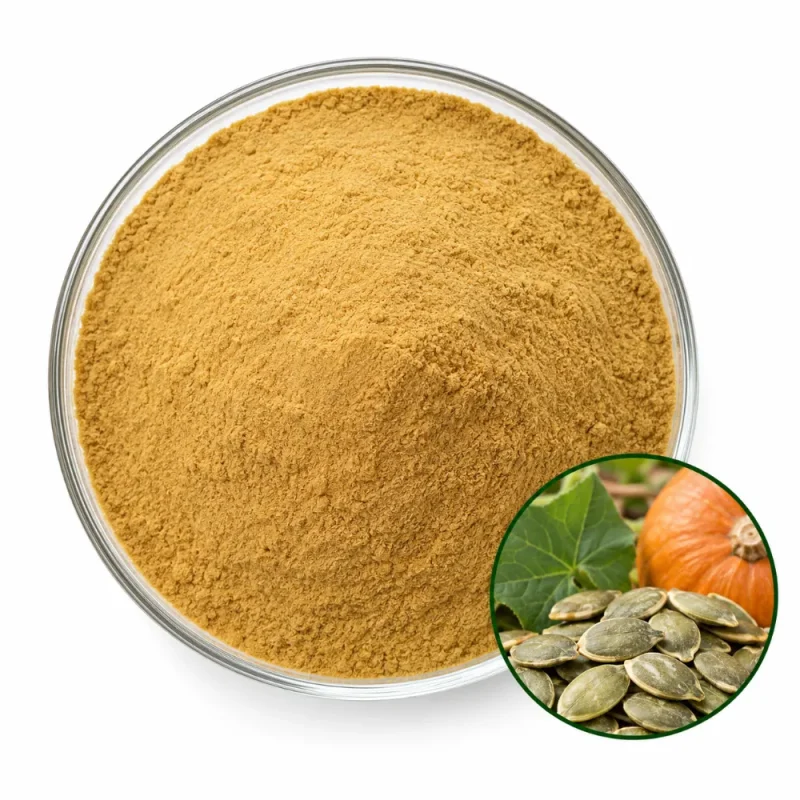
Pumpkin Seed Extract 10–30% Phytosterols

Pumpkin seed extract comes from the seeds of Cucurbita pepo, the field and pumpkin squash, and not from the flesh, the pressed seed oil or the defatted protein meal that are sold as separate ingredients. Ethanol extraction concentrates the sterol-rich lipid fraction of the seed, and the liquor is dried to a yellow-orange powder.

The primary grade is 30% phytosterols by GC, with 10% as the lower end of the range. The powder is 80 mesh and insoluble in water. The 30% grade serves softgels, capsules and tablets with a small fill weight, while the 10% grade suits dry blends and bars in which more of the seed matrix is wanted.

Phytosterol Standardization & Grades

Phytosterols are the plant counterparts of cholesterol: waxy, fat-soluble alcohols with a four-ring steroid skeleton. Pumpkin seed is unusual because a large part of its sterol fraction consists of delta-7 sterols, such as spinasterol and delta-7-stigmastenol, alongside the more common beta-sitosterol. The grade sums the sterols measured by GC, because the seed carries several of them in comparable amounts. The botanical entity is Cucurbita pepo L., and the part used is the seed.

GradeAssay & MethodWhere It Fits
10% PhytosterolsGCDry blends and bar premixes
30% PhytosterolsGCSoftgels, capsules and tablets with small fill

Grade choice follows dose, fill weight and the amount of seed lipid and protein a formula should carry. The 30% grade holds three times the sterol load per gram of the 10% grade, so a softgel or capsule reaches its target with a smaller fill. The 10% grade retains more of the seed oil, protein and minerals and is oilier, bulkier and more prone to oxidation. The same seed is supplied as the unstandardized Pumpkin Seed Extract Powder, the milled Pumpkin Seed Powder and the hydrolyzed Pumpkin Seed Peptide Powder.

Buyers who compare pumpkin seed extract quotes should check what the percentage counts. Total phytosterols and a single named sterol are different measurements, and a seed oil that is rich in sterols is a different ingredient from an ethanol extract. A named species, the seed as the stated part and the sterol method are the three items that make a figure comparable between suppliers.

Phytosterol Analysis & Purity Risks

Both grades are measured by GC. Sterols are not volatile enough to be run as such, so the sample is saponified to free the sterols from their esters, extracted into an organic solvent, converted to volatile silyl derivatives and injected. Each sterol appears as its own peak and is quantified against reference standards, and the sum gives the phytosterol figure. A UV or gravimetric test would count every lipid-soluble compound and is not comparable.

The sterol pattern is the identity check. In pumpkin seed, the delta-7 sterols are prominent, whereas many other seed extracts are dominated by beta-sitosterol with campesterol and stigmasterol. A sterol profile with a strong delta-7 group therefore points to a cucurbit source, and the profile gives more information than the sum alone.

The hydrolysis step also decides what is counted. Sterols in the seed occur free, as fatty acid esters and as glycosides, and a method with a full hydrolysis counts all forms, while a method without it counts only the free sterol. Two laboratories can therefore report different totals on the same lot.

Purity risks follow from the botany. The seeds of Cucurbita maxima and Cucurbita moschata are also sold as pumpkin seed, and hull-less varieties of Cucurbita pepo differ in lipid content from hulled ones. Sterols from soy or pine are chemically similar, so a total figure cannot show the origin, which is why the delta-7 pattern matters more than the number itself.

Typical Specifications

Specification ItemProduct Information
Latin NameCucurbita pepo
Plant PartSeed & Grain
ProcessingEthanol Extraction
Compound ClassPhytosterols
Common NamePumpkin Seed, Pepita
Ingredient TypeStandardized Extract
Marker Compound(s)Phytosterols (including delta-7 sterols of Cucurbita pepo seed)
Primary Grade30% Phytosterols (GC)
Available Grades10% · 30% Phytosterols (GC)
AppearanceYellow-Orange powder
Solubility / DispersibilityInsoluble in Water
Quality Parameters
Moisture (LOD)≤5.0%
Total Ash≤5.0%
Particle Size80 mesh
Heavy MetalsLead ≤2 ppm · Arsenic ≤1 ppm · Cadmium ≤1 ppm · Mercury ≤0.1 ppm
MicrobiologyTPC ≤1,000 cfu/g · Yeast & Mold ≤100 cfu/g · E. coli Negative · Salmonella Negative/25 g
Shelf Life24 months in unopened original packaging, cool and dry storage

Applications by Grade

30% Grade for Oil-Based Softgels

Sterols dissolve better in oil than in water, so the 30% grade is dispersed in a carrier oil for softgel fills. Warm the oil gently, mill the powder fine and stir during encapsulation, since waxy particles settle and change the content between capsules.

30% Grade in Compact Capsules

In hard capsules, the 30% grade delivers a sterol target in a small fill. The yellow-orange powder is waxy and cohesive, so a flow agent and a cool, dry filling room keep the hopper steady, and weight checks should begin each run.

30% Grade in Tablet Blends

Tablets of the high grade need a dry binder and an absorbent, because the waxy lipid fraction sticks to punches and softens compacts. Keep lubricant levels under control, run a compression trial on the full blend and check hardness after storage.

10% Grade for Bar Premixes

In bar premixes the lower grade goes in at a moderate level and is mixed into the dry fraction ahead of the binder. The nutty, slightly oily seed note suits oat, honey and cocoa bases, and a modest inclusion keeps the bar from turning greasy.

10% Grade for Dry Seed Blends

Dry blends use the lower grade beside seed and nut powders. Pre-mix it with a bulking agent, because the oily powder lumps, and store blends cool, since residual seed lipids oxidize faster than the sterols they accompany.

Technical & Quality Considerations

The extract is a yellow-orange powder with a mild nutty odor and a fatty, slightly bitter taste. It is insoluble in water, so it floats or settles in drink bases and does not form a clear solution. Sterols dissolve in oils and in warm ethanol, and the choice of carrier decides how well they stay dispersed in the final product.

The sterols themselves are chemically stable, but the residual unsaturated lipids of the seed oxidize in air, light and heat, giving rancid notes over time. Protect the powder from oxygen and light and keep it cool. At production scale, handle the waxy powder at moderate temperature, because warm rooms make it clump, and pre-mix pumpkin seed extract with a portion of the carrier before it enters the main blender.

The yellow-orange color comes from carotenoids in the seed and fades slowly in light. Check every lot against a retained sample for color, odor and flow. Wash equipment with a solvent-compatible cleaner or a detergent at warm temperature, because the lipid residue does not rinse off with cold water and can carry over into the next product.

A pumpkin seed extract should smell nutty and clean. A sharp, paint-like or rancid odor signals oxidized seed lipids, even when the sterol figure is unchanged. Keep a retained sample of each pumpkin seed extract lot, check the delta-7 sterol pattern when identity is in question, and store the powder in barrier packaging, because the oily matrix is the first part of the powder to age.

Packaging & Commercial Supply

Essencefield supports product evaluation, formulation trials, commercial orders, and ongoing ingredient supply. Packaging, storage, and shipping arrangements are determined by product characteristics, order quantity, stability requirements, and destination-market needs.

Supply ItemGeneral Information
SampleAvailable upon request for formulation, testing, and supplier evaluation
Order Quantities100 g · 1 kg · 5 kg · 25 kg · 100 kg · 500 kg · Bulk
Sample Lead TimeTypically 5–7 days after sample confirmation
Production Lead TimeTypically 15–30 days after order and specification confirmation
PackagingSuitable protective inner packaging with bags, cartons, drums, or other appropriate outer packaging
StorageStore in tightly sealed, suitable protective packaging in a cool, dry environment. Protect from moisture, heat, and direct sunlight. Specific storage conditions follow the approved product specification.
DocumentationCOA · Product Specification · TDS · SDS · Applicable declarations (as applicable)

Final order quantities, lead times, packaging, documentation, and shipping arrangements are confirmed according to the selected product and commercial requirements.

Request Ingredient Specifications & Quote

Share your target specification, application, quantity, and documentation needs. We’ll help confirm suitable options, samples, and commercial supply details.