
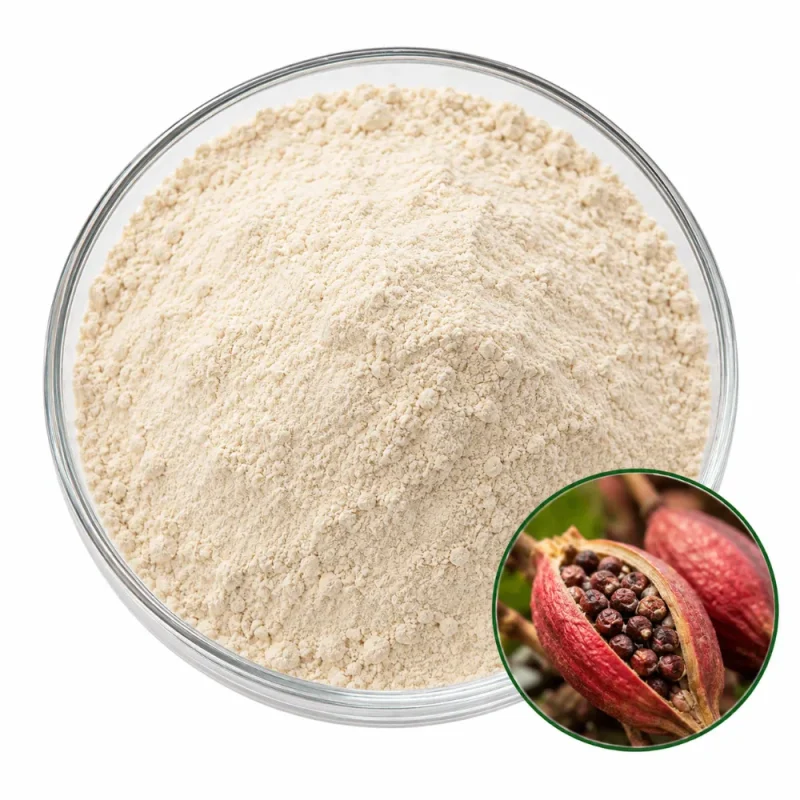
Paradol & Gingerol Standardization & Grades
Grains of paradise belong to the ginger family, and their pungency comes from the same chemical class as ginger, the phenolic ketones. The seed’s lead compound is 6-paradol, whose side chain lacks the hydroxyl group that characterizes 6-gingerol, so paradol is the more stable and more lipophilic of the two. The grade states both compounds because the seed always carries them together and because the pair separates this Aframomum melegueta extract from a ginger extract. The botanical entity is Aframomum melegueta K.Schum., and the part used is the seed.
The specification has a single grade, so there is no ladder of tiers to choose between. The two figures define one product: 12.5% 6-paradol and 5% 6-gingerol are read in the same HPLC run, and they are not additive into a single number. The rest of the powder includes shogaols, other gingerol homologs, essential oil fragments and the lipids of the seed. No sibling product from the same plant is currently listed in the catalog.
Buyers who compare grains of paradise extract quotes should check which compounds are named. An extract that states only a total pungent figure or only 6-gingerol does not describe this seed, because gingerol is the minor marker here. A 6-paradol figure is the most specific identity indicator and the one that separates the extract from a ginger-based product.
The two markers also set formulation limits. Both are lipophilic, both are pungent, and both are used in small doses, so the grade is typically blended into a larger carrier before use. The percentages are high for a botanical extract, and the Aframomum melegueta powder behaves almost like an oleoresin on a flow-aid carrier.


