
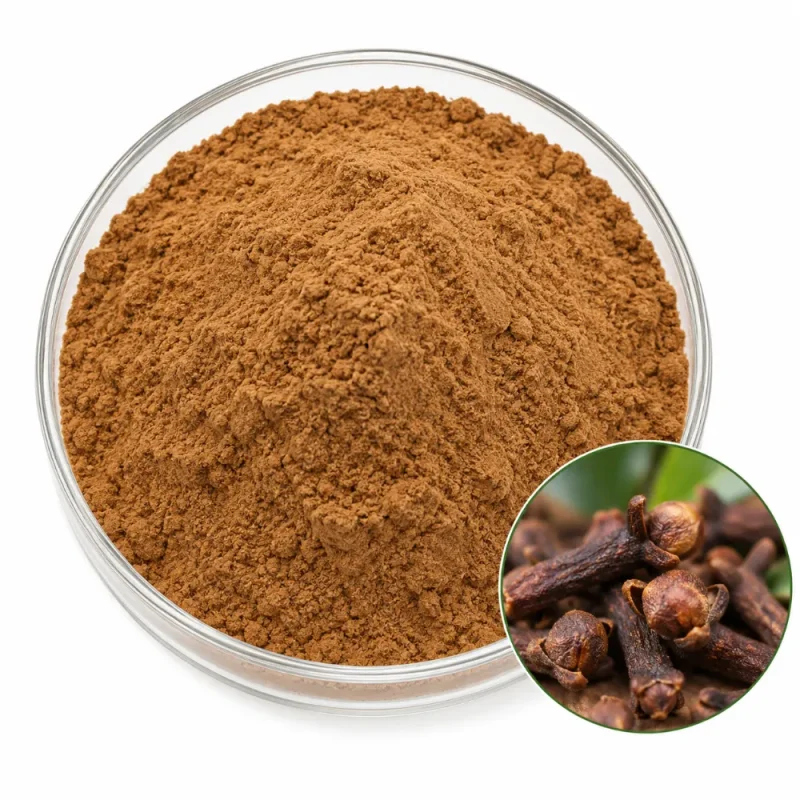
Volatile Oil Standardization & Grades
The volatile oil of clove is dominated by eugenol, a phenylpropanoid that typically forms most of the oil, with eugenyl acetate and beta-caryophyllene as the next main constituents. The botanical entity is Syzygium aromaticum (L.) Merr. & L.M.Perry, and the extract is standardized to the volatile oil because the oil carries the aroma and much of the activity of the bud, while the non-volatile tannins and flavonoids make up the rest of the powder.
| Grade | Assay & Method | Where It Fits |
|---|---|---|
| 2% Volatile Oil | Class figure, no named method | Dry blends, higher inclusion |
| 4% Volatile Oil | Class figure, no named method | Capsules and tablets |
Grade choice follows aroma intensity and fill weight. The 4% grade carries twice the oil load of the 2% grade per gram and gives a stronger, spicier powder, while the 2% grade is milder and easier to blend dry. Clove is also supplied as a 10:1 ratio extract with no marker figure, the Clove Extract Powder, and as milled buds, the Clove Bud Powder. The data also records a defined eugenol marker option, which is not published as a separate grade here. The standardized extract is the row to use when an oil figure has to appear in the specification.


