
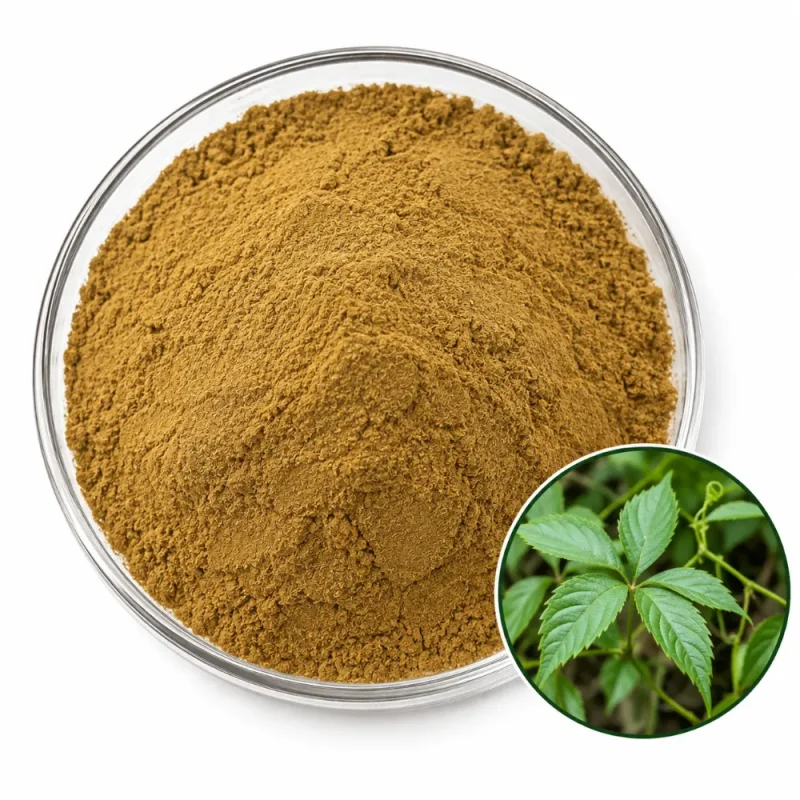
Gypenoside Standardization & Grades
Gypenosides are triterpene saponins built on a dammarane skeleton with sugar chains at two positions, and they are the characteristic constituents of Gynostemma pentaphyllum (Thunb.) Makino. Several of them share a skeleton with the ginsenosides of ginseng, although the plant belongs to the gourd family and is unrelated to ginseng. Standardizing to total gypenosides gives one figure that tracks the whole saponin fraction, whichever individual saponins dominate a harvest.
| Grade | Assay & Method | Where It Fits |
|---|---|---|
| 20% Gypenosides | UV | Drink mixes, larger-fill blends |
| 80% Gypenosides | UV | Capsules and tablets, small fill weight |
Grade choice follows dose and fill weight. Reaching the same gypenoside target takes four times as much powder at 20% as at 80%, so the 80% grade is the one for compact dosage forms. The 20% grade is easier to weigh and disperse at higher inclusion, and it keeps more of the non-saponin fraction of the vine, such as flavonoids and polysaccharides, in the powder. Buyers who compare lots should compare them at the same grade and the same method. The same vine is also supplied as a 10:1 ratio extract without a marker figure, the Jiaogulan Extract Powder, and the single saponin is available as Gypenoside XLIX 98%.


