
Combined Marker Standardization & Grades
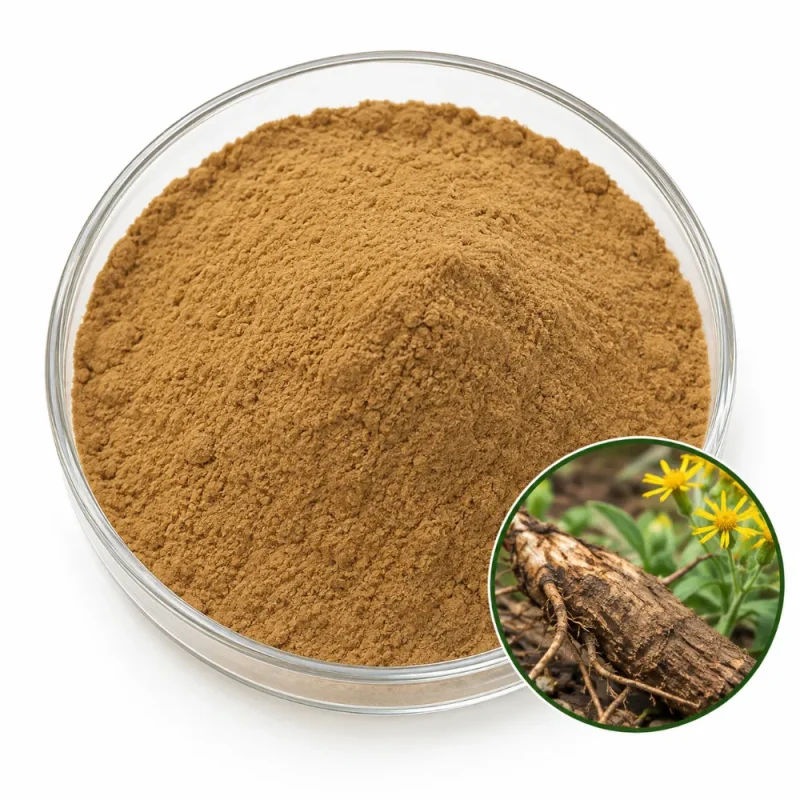
Inula racemosa Hook.f. is a large-rooted species of the daisy family. Its root is rich in sesquiterpene lactones, such as alantolactone and isoalantolactone, together with other terpenoid constituents, and these compounds give the dried root its camphor-like aroma. The extract is standardized to a combined marker figure, which gives buyers one defined number for the characteristic fraction of the root and keeps the specification the same from lot to lot.
The grade is a single level, 2%, so each lot is measured against the same target. A single level also avoids the common confusion in which two suppliers quote different markers under the same species name. The combined figure should be read as a measure of the marker fraction taken together, and a lot is judged against the stated figure and not against any single compound inside it.
Inula racemosa has a close relative in the same genus, elecampane (Inula helenium), which is also grown for its root and also contains sesquiterpene lactones, but with a different profile. The two plants are traded under overlapping common names, so the extract is defined by its species. No sibling product of this species is currently listed in the catalog.
The root is the only part used. Dried Inula racemosa root is thick, dense and aromatic, and it is cleaned of soil and of rootlets before extraction. Leaf or flowering material of the same plant carries different compounds and is not part of this identity, so a figure obtained from mixed aerial and root material is not equivalent to a root-based grade.


