
Piperine Standardization & Grades
Piperine is the pungent amide alkaloid of the pepper family, built from a piperidine ring joined to a conjugated methylenedioxyphenyl chain. It is a characteristic compound of Piper longum L., the long pepper, but it is also the main alkaloid of black pepper, which is far richer in it. A long pepper extract is therefore standardized to piperine for consistency, while its identity as long pepper comes from the species, the fruit part and the accompanying amides such as piperlongumine and piperlonguminine.
| Grade | Assay & Method | Where It Fits |
|---|---|---|
| 1% Piperine | HPLC | Blends, oil-based fills |
| 3% Piperine | HPLC | Capsules and tablets |
At 3% the extract carries three times the piperine of the 1% grade per gram, so a capsule reaches its target with a smaller fill, while the 1% grade is bulkier and easier to blend. The same fruit is also supplied as a 10:1 ratio extract without a marker figure, the Piper Longum Extract Powder, and a related amide is available as a purified compound, Piperlongumine 98%. The standardized extract is the one to specify when a piperine figure has to appear on the specification.
Black pepper extracts sold at much higher piperine levels are a different species and a different product. The figure applies to long pepper only.
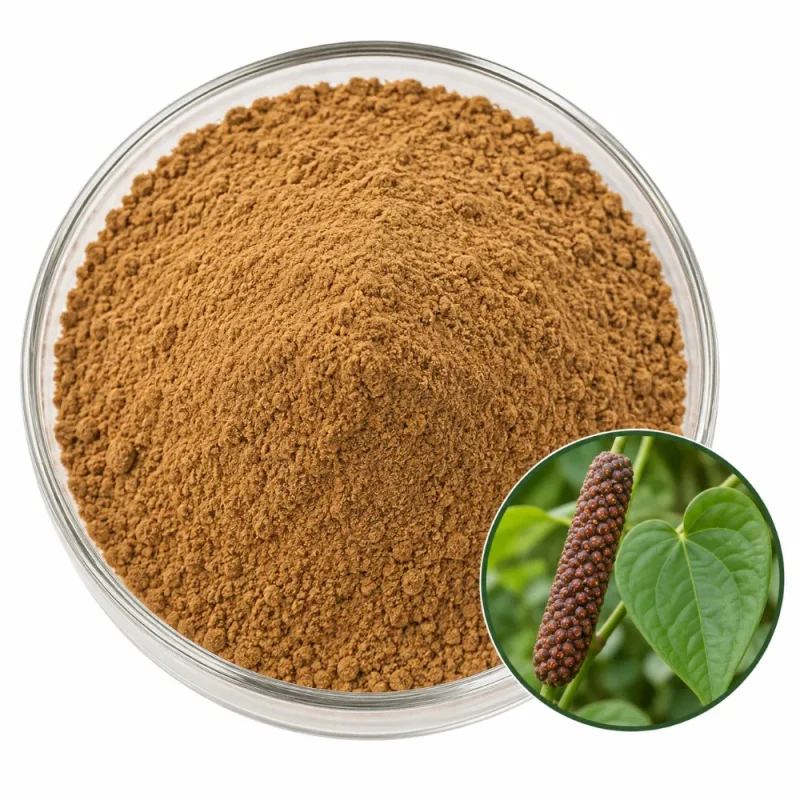
The fruit spike is the part used. Long pepper is harvested as the immature, cylindrical catkin-like fruit cluster, dried whole and ground before extraction. The root of the same plant, known as pippali moola, is a separate herbal drug with a different marker profile and is not part of this identity. Ripe, expanded fruit loses much of its pungency, which is why the spike is picked green.


