
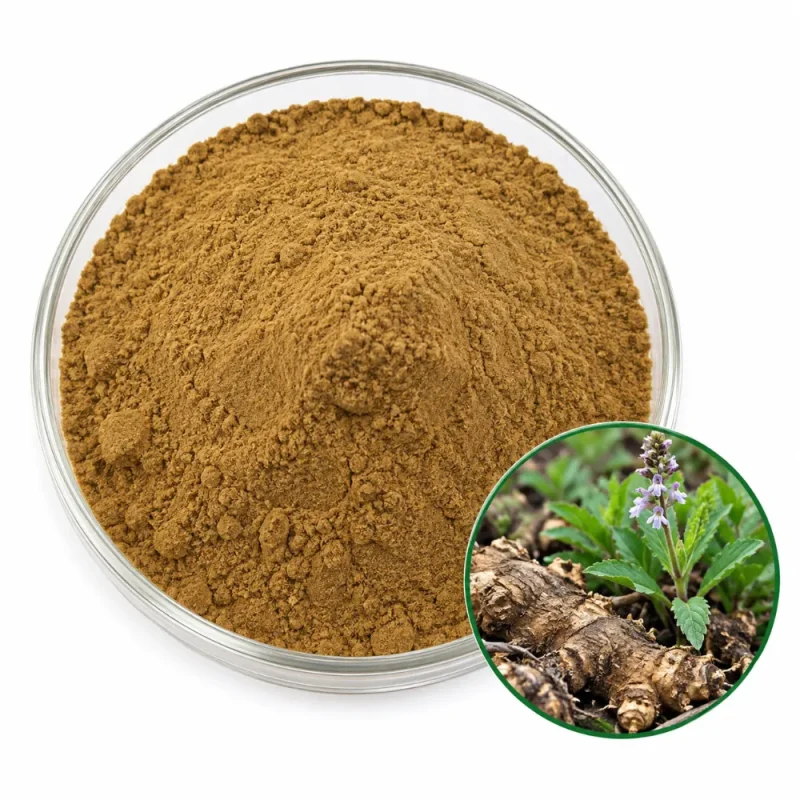
Picroside Standardization & Grades
Picrosides are iridoid glycosides, and the best-known of them, picroside I and picroside II, are esters of the iridoid catalpol with cinnamic and vanillic acid, respectively. They are the characteristic constituents of the rhizome of Picrorhiza kurroa Royle ex Benth., together with kutkoside, cucurbitacins and phenolic glycosides. A Picrorhiza kurroa extract is standardized to picrosides because they are defined, measurable and typical of the plant, and the bitter principles figure covers the wider bitter fraction that gives kutki its name.
The Picrorhiza kurroa grade is a single level with two numbers, 4% picrosides and 8% bitter principles. The picroside figure is a specific HPLC result, while bitter principles is a group figure, so the two are not interchangeable and they describe different parts of the extract. A single grade keeps ordering simple: each lot is measured against the same pair of targets and the same procedure.
The same plant is also supplied as a 10:1 ratio extract without a marker figure, the Picrorhiza Kurroa Extract Powder, as a milled rhizome, Kutki Root Powder, and as a purified glycoside, Picroside I 98%. Specifications that must show picrosides and bitter principles are served by this standardized grade.
The rhizome is the part used, and the supply side explains why. Picrorhiza kurroa grows at high altitude on damp rock slopes, takes years to mature and is mostly collected from the wild, so lots vary with collection area, altitude and age. The extract is defined by the species and by two figures, and a lot made from young or thin rhizome shows a lower picroside share than one made from mature rhizome.


