
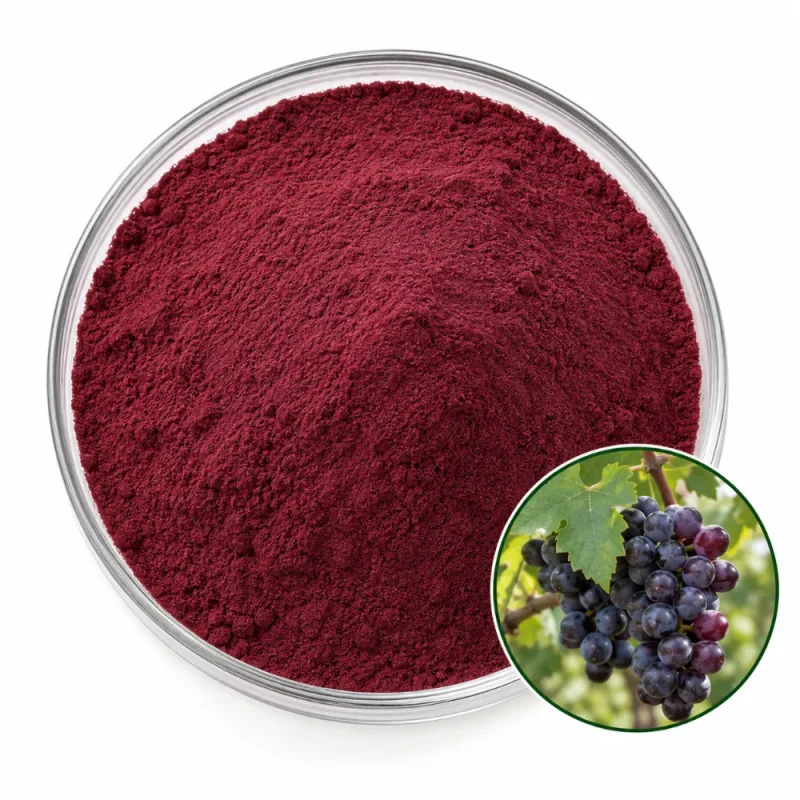
Red Wine Polyphenol Standardization & Grades
Polyphenols are compounds with several phenolic hydroxyl groups. In red wine grapes they include anthocyanins from the skin, flavan-3-ols and procyanidins from skin and seed, flavonol glycosides, phenolic acids and stilbenes such as resveratrol. Red wine extract is standardized to total polyphenols because no single compound speaks for this mixture. The class figure is what lets a formulator compare one lot with another.
The botanical entity is Vitis vinifera L. The extract is a separate product from grape seed extract, which is standardized to oligomeric proanthocyanidins, and from grape skin extract, which is standardized to anthocyanins. Red wine extract covers the mixed profile that a wine-type grape fraction carries. The seed-based product is Grape Seed Extract 95% OPC / Proanthocyanidins, the pigment-based one is Grape Skin Extract 10–25% Anthocyanins, and the whole fruit is available as Grape Powder.
| Grade | Assay & Method | Where It Fits |
|---|---|---|
| 30% Polyphenols | UV (Folin-Ciocalteu) | Drink powders, larger inclusion |
| 50% Polyphenols | UV (Folin-Ciocalteu) | Capsules, tablets, effervescent |
The 50% grade carries two thirds more polyphenol per gram than the 30% grade, so a capsule or an effervescent tablet reaches its target at lower weight. The 30% grade is the bulkier powder and gives a milder astringency in a dissolved drink, which matters in powders that are tasted directly. Because the grades are expressed on the same reagent basis, a formulator can move between them by simple weight adjustment, without recalculating for a different compound.


