
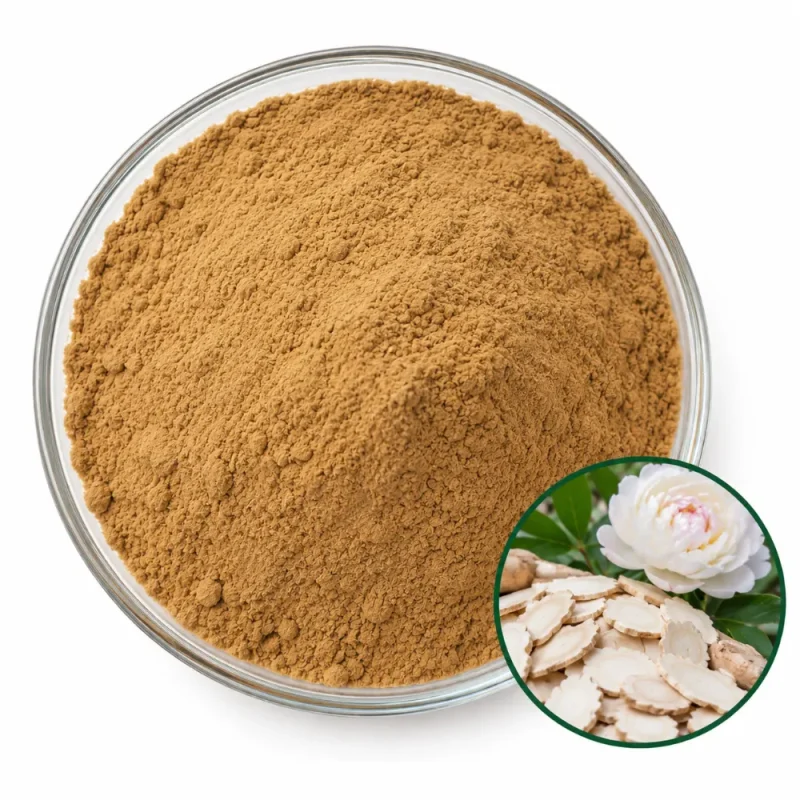
Paeoniflorin Standardization & Grades
Paeoniflorin is a pinane-type monoterpene glycoside with a cage-like ring system, a glucose unit and a benzoyl group. It is the principal glycoside of the root of Paeonia lactiflora, and it sits beside albiflorin, oxypaeoniflorin, gallotannins, benzoic acid and starch. White peony extract is standardized to paeoniflorin because the compound is the defining marker of the root, and a laboratory can follow it by HPLC against a reference standard.
The botanical entity is Paeonia lactiflora Pall., and the part is the root. White peony and red peony both come from this species and differ in how the root is processed: white peony root is peeled and boiled before drying, while red peony is dried with its skin. The moutan bark of the tree peony (Paeonia suffruticosa) is a different plant with a different marker, paeonol. The same root is supplied as a 10:1 ratio extract with no marker figure, White Peony Root Extract Powder, as milled root, White Peony Root Powder and Red Peony Root Powder, and as the single compound Paeoniflorin 98%.
| Grade | Assay & Method | Where It Fits |
|---|---|---|
| 8% Paeoniflorin | HPLC | Drink powders, bulk blends |
| 20% Paeoniflorin | HPLC | Capsules and tablets, small fill |
The 20% grade carries two and a half times the paeoniflorin per gram of the 8% grade, so a capsule or tablet reaches its target with a smaller charge. The 8% grade is bulkier, and it dissolves with the sugars and tannins of the root, which gives a milder, slightly sweet and astringent drink.


