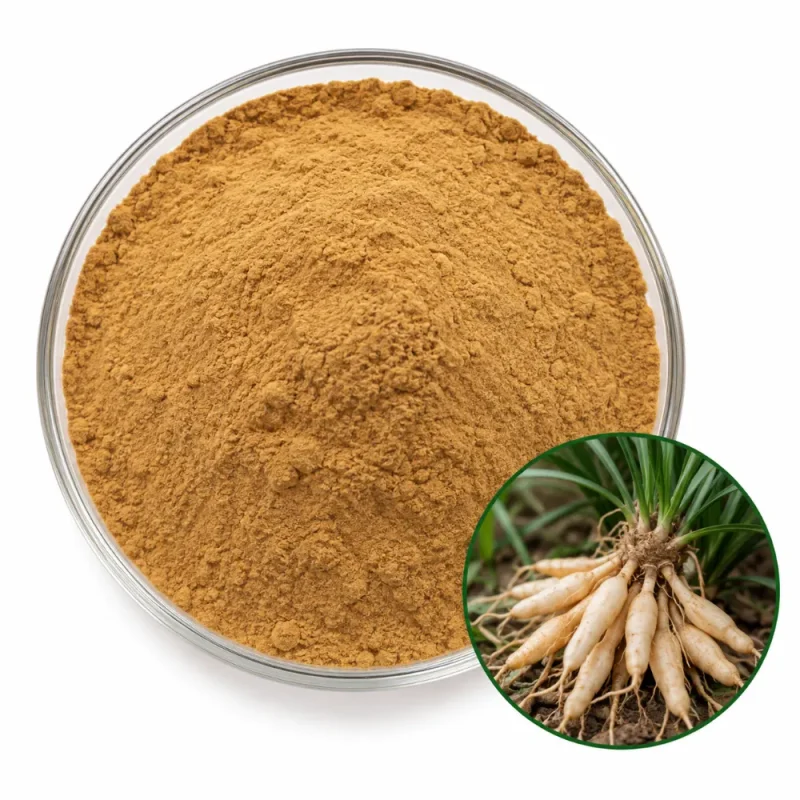
Ophiopogon Japonicus Extract Powder

Ophiopogon japonicus extract starts from the tuberous root of Ophiopogon japonicus, the swollen, spindle-shaped storage roots of the evergreen lilyturf, with the leaves excluded. Water extraction concentrates the soluble root fraction, and the liquor is dried into a light yellow powder that disperses in water.

The extract is supplied at a 10:1 ratio with no marker percentage and is milled to 80 mesh. It is the whole-root profile, rich in mucilaginous polysaccharide, and is kept apart from the saponin-defined grade of the same plant.

Ophiopogon japonicus Root Source & Identity

The botanical entity is Ophiopogon japonicus (Thunb.) Ker Gawl., the dwarf lilyturf of the Asparagaceae, a grass-like evergreen perennial with spindle-shaped tuberous roots. The part used is the tuberous root. Leaf and flower stem are not part of this Ophiopogon japonicus extract.

Look-alike roots are a known source of mix-ups. The tubers of Liriope species are used as substitutes under the Chinese name mai dong, so the Latin binomial should be quoted on every specification. The root holds steroidal saponins, homoisoflavonoids and fructan-type polysaccharides, named here only as constituent families.

Ophiopogon Extract vs Saponin Grade

FormWhat It IsChoose It When
10:1 Root ExtractWater-extracted, concentrated Ophiopogon japonicus tuberous rootA whole-root ratio extract is wanted
Ophiopogon Japonicus Extract 5–20% SaponinsExtract of the same root defined by a saponin rangeA stated saponin range is required

Both entries come from the same root. The 10:1 ratio on the Ophiopogon japonicus extract describes concentration against the starting root and gives no saponin figure, so a buyer who needs a declared saponin level should select the defined grade. A buyer who wants the whole-root profile at a plain ratio, including the soluble polysaccharide that gives a water extract its body, can use the ratio extract. The two serve different specification logics and are not interchangeable.

Typical Specifications

Specification ItemProduct Information
Latin NameOphiopogon japonicus
Plant PartRoot & Rhizome
ProcessingWater Extraction
Common NameOphiopogon Tuberous Root
Ingredient TypeRatio Extract
Extract Ratio10:1
AppearanceLight yellow powder
Solubility / DispersibilityWater Dispersible
Quality Parameters
Moisture (LOD)≤5.0%
Total Ash≤5.0%
Particle Size80 mesh
Heavy MetalsLead ≤2 ppm · Arsenic ≤1 ppm · Cadmium ≤1 ppm · Mercury ≤0.1 ppm
MicrobiologyTPC ≤1,000 cfu/g · Yeast & Mold ≤100 cfu/g · E. coli Negative · Salmonella Negative/25 g
Shelf Life24 months in unopened original packaging, cool and dry storage

Application Areas

Capsule Fills for Sticky Extracts

Ophiopogon japonicus extract fills into capsules as a light yellow powder. The mucilaginous polysaccharide makes the particles cohesive and moisture-sensitive, so a flow aid and a dry filling suite are needed. Opaque shells protect the pale color from light.

Dispersible Drink Powders

In drink powders the extract gives a pale, slightly viscous liquid because of its soluble fructans. Pear, citrus and honey flavors suit it. The powder wets slowly, so it is dry-blended with sugar or a carrier to avoid clumps on first contact with water.

Tablet Blends That Absorb Water

Tablets of the root extract need a moisture-controlled compression room, because the polysaccharide fraction pulls in water and softens the compact. A disintegrant is often not needed beyond a low level, since the extract itself swells in water.

Sachets and Powder Sticks

Sticks pair the extract with sweetener and flavor in barrier laminate. A sticky, hygroscopic extract clumps at the seal in humid storage, so the premix is dried and the sealing line is kept free of condensation.

Gummy Bases with Mucilage

Cooked gummies take the root extract late in the batch. Its soluble polysaccharide adds viscosity, so cooking viscosity and depositing temperature are checked in trials. Pale fruit flavors suit the light yellow tint. Texture is verified after a week of storage, since the mucilage keeps drawing water.

Formulation Notes

Ophiopogon japonicus extract is a light yellow powder with a faint, sweet, slightly earthy aroma and a mildly sweet, bland taste with a little bitterness. In water it forms a pale, slightly viscous liquid, with only a small amount of sediment. The mucilage gives body and a smooth mouthfeel to drinks.

The polysaccharide fraction takes up moisture quickly and the powder cakes. Weigh the powder in a dry room, since the polysaccharide fraction pulls in moisture, and close the liner after each draw. Surface clumping is the first sign of moisture pickup, and a flow aid in the premix keeps the powder moving through feeders.

Ophiopogon japonicus extract wets slowly and forms clumps when added straight to water, so it is dry-blended with sugar or a carrier first. Screen the premix once, keep the room dry and fill promptly. In tablets, add a low level of disintegrant and test release, since the swelling polysaccharide can slow disintegration.

Packaging & Commercial Supply

Essencefield supports product evaluation, formulation trials, commercial orders, and ongoing ingredient supply. Packaging, storage, and shipping arrangements are determined by product characteristics, order quantity, stability requirements, and destination-market needs.

Supply ItemGeneral Information
SampleAvailable upon request for formulation, testing, and supplier evaluation
Order Quantities100 g · 1 kg · 5 kg · 25 kg · 100 kg · 500 kg · Bulk
Sample Lead TimeTypically 5–7 days after sample confirmation
Production Lead TimeTypically 15–30 days after order and specification confirmation
PackagingSuitable protective inner packaging with bags, cartons, drums, or other appropriate outer packaging
StorageStore in tightly sealed, suitable protective packaging in a cool, dry environment. Protect from moisture, heat, and direct sunlight. Specific storage conditions follow the approved product specification.
DocumentationCOA · Product Specification · TDS · SDS · Applicable declarations (as applicable)

Final order quantities, lead times, packaging, documentation, and shipping arrangements are confirmed according to the selected product and commercial requirements.

Request Ingredient Specifications & Quote

Share your target specification, application, quantity, and documentation needs. We’ll help confirm suitable options, samples, and commercial supply details.