
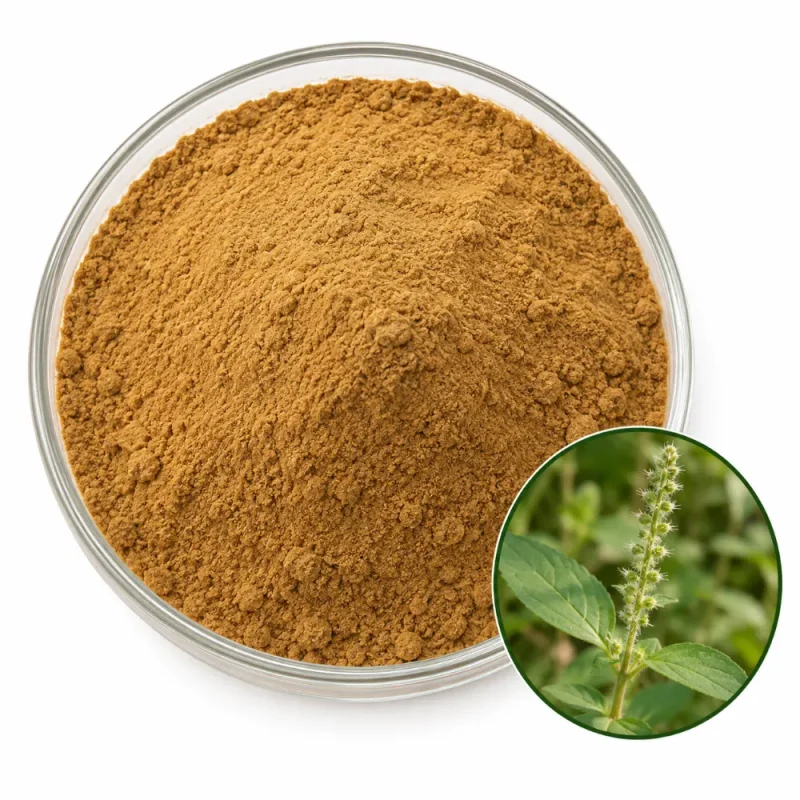
Saponin Standardization & Grades
The saponins of Achyranthes aspera root are triterpenoid glycosides, built mainly on oleanolic acid with sugar chains attached to the ring system. They are the standardization target because they define the foaming, bitter-sweet character of the root and because a colorimetric assay reads the class as a whole. The botanical entity is Achyranthes aspera L., and the part used is the root, which the master data groups with roots and rhizomes.
| Grade | Assay & Method | Where It Fits |
|---|---|---|
| 10% Saponins | UV | Tea blends and dry compounds |
| 30% Saponins | UV | Capsules and drink sticks with small fill |
The choice of grade depends on dose, fill weight and how much root matrix the formula can tolerate. The 30% grade holds three times the saponin load per gram of the 10% grade, so a capsule reaches its target with a smaller fill. The 10% grade keeps more of the betaine, sugars and ecdysteroids of the root and gives a sweeter, stickier powder. The unstandardized sibling is the Achyranthes Aspera Extract Powder, made from the same root with no saponin figure.
The name achyranthes covers two commercial plants. Achyranthes bidentata is the source of niu xi in traditional Chinese drugs, and Achyranthes aspera is the Indian species used in Ayurveda, with a different saponin and ecdysteroid profile. Buyers who compare quotes should confirm the species and the root as the stated part, since the whole herb of the aspera species is also traded.
A UV saponin figure is a class estimate. It is useful for dose planning and for comparing lots from the same method, but it cannot be compared with HPLC values for single oleanolic acid glycosides or with gravimetric totals from other methods.


