
Coumarin Standardization & Grades
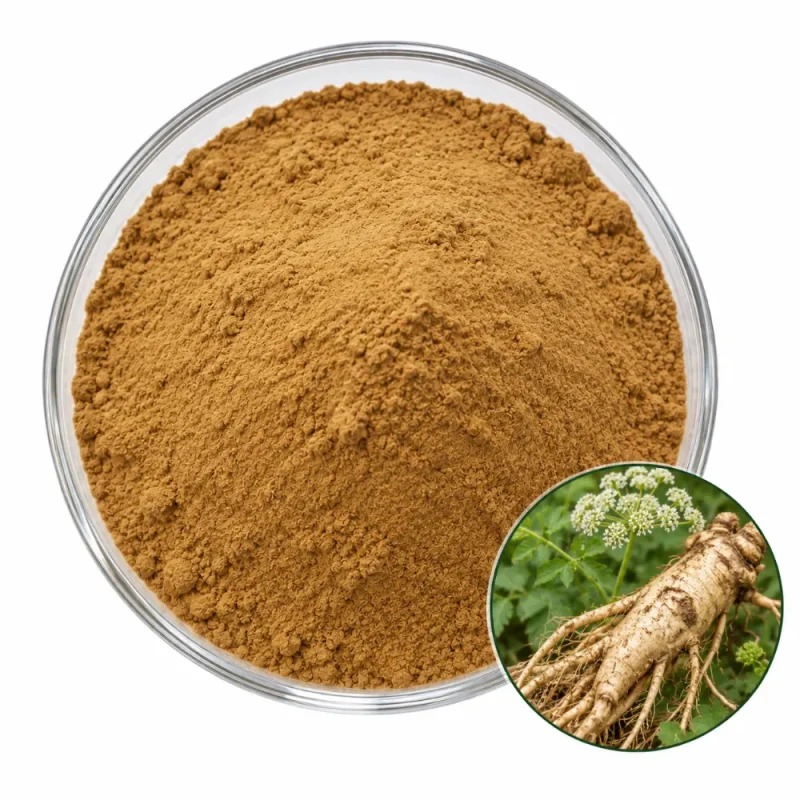
Coumarins are benzopyrone derivatives, and the roots of the carrot family are especially rich in furanocoumarins, in which a furan ring is fused to the coumarin core. Bai zhi contains imperatorin, isoimperatorin, byakangelicin, oxypeucedanin and phellopterin among others. The grade sums the coumarin class, because the root always carries several of them. The botanical entity is Angelica dahurica (Hoffm.) Benth. & Hook.f. ex Franch. & Sav., and the part used is the root.
| Grade | Assay & Method | Where It Fits |
|---|---|---|
| 5% Total Coumarins | UV | Dry compounds keeping the root matrix |
| 30% Total Coumarins | UV | Capsules and softgels with small fill |
Grade choice follows dose, fill weight and the amount of root starch a formula should keep. The 30% grade carries six times the coumarin load per gram of the 5% grade, so a capsule reaches its target with a smaller fill. The 5% grade keeps the starch, volatile oil fragments and polysaccharides of the root and is bulkier and paler. Siblings from the same root are the unstandardized Angelica Dahurica Root Extract Powder, the milled Angelica Dahurica Root Powder and the purified Imperatorin 98%.
A second group, the imperatorin and isoimperatorin pair, is recorded in the data as a secondary marker and is described here without numbers. Buyers who compare Angelica dahurica extract quotes should check whether the figure is a UV class total or an HPLC value for named furanocoumarins, because the first is always larger than the second and the two cannot be converted.
Furanocoumarins deserve a handling remark. They are photoactive compounds, and contact with the powder followed by strong sunlight can irritate the skin of workers, which is why gloves and covered skin are used when the concentrated powder is handled in volume.


