
Polyphenol Standardization & Grades
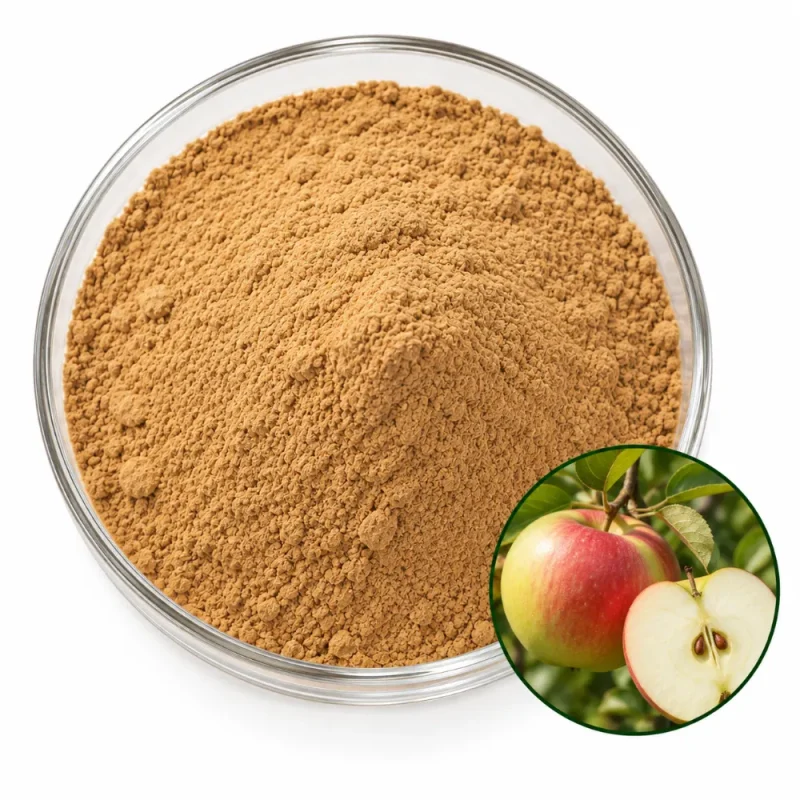
Total polyphenols in apple fruit are a mixed class. Procyanidins, built from catechin and epicatechin units, usually make up the largest share, and they sit beside chlorogenic acid, the dihydrochalcone phloridzin and flavonol glycosides of quercetin. The grade sums this class without naming one compound, because the apple has no single dominant marker comparable with a tea catechin. The botanical entity is Malus domestica (Suckow) Borkh., and the part used is the fruit.
| Grade | Assay & Method | Where It Fits |
|---|---|---|
| 40% Total Polyphenols | UV (Folin-Ciocalteu) | Beverage bases and gummy premixes |
| 80% Total Polyphenols | UV (Folin-Ciocalteu) | Capsules, tablets and drink sticks |
Grade choice follows dose, fill weight and taste. The 80% grade holds twice the polyphenol load per gram of the 40% grade, so a capsule reaches its target in a smaller fill, but its astringency is stronger. The 40% grade retains more of the fruit sugars and organic acids and gives a rounder, apple-like character. Other apple ingredients are the unstandardized Apple Extract Powder and the dried fruit Apple Powder, which carries no polyphenol figure. The fermented Apple Cider Vinegar Powder is a separate vinegar product and not a substitute for either.
A Folin-Ciocalteu result measures reducing capacity and is usually expressed as an equivalent of one reference phenol such as gallic acid. Buyers who compare apple polyphenols extract quotes should therefore ask which reference compound sits behind the number, because a figure calibrated against catechin and another calibrated against gallic acid describe the same powder with different values.
Since immature apples are richer in polyphenols than ripe ones, raw material maturity influences the starting point of the extraction. The finished grade is fixed by the specification, not by the fruit, but it explains why the polyphenol profile of an apple extract can differ between lots at the same percentage.


