
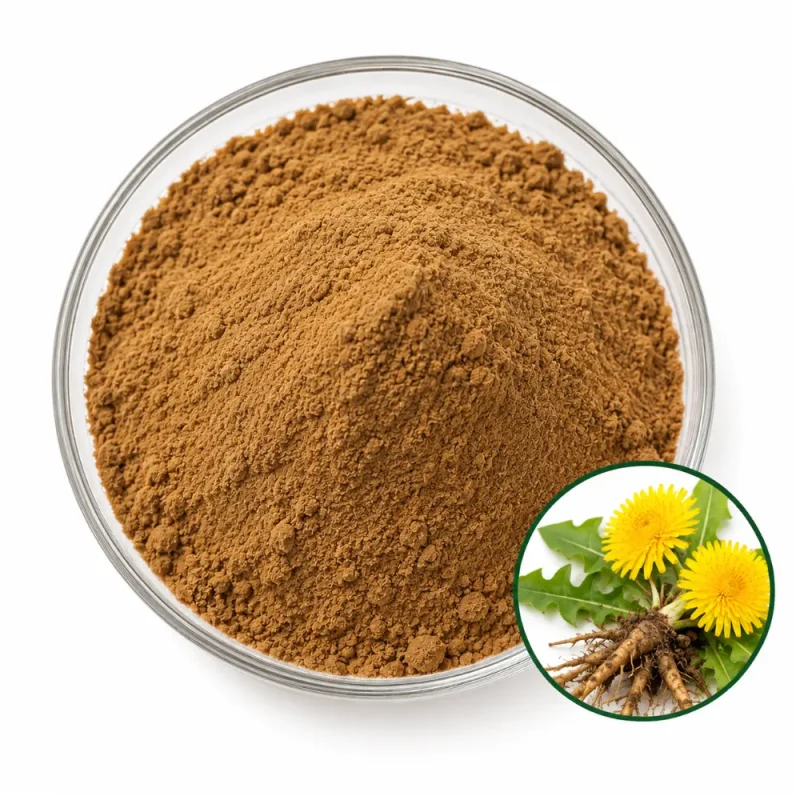
Flavonoid Standardization & Grades
In dandelion leaf the main members are glycosides of luteolin and apigenin, accompanied by phenolic acids such as chicoric acid and chlorogenic acid. The leaf also carries bitter sesquiterpene lactones, and the root holds the storage carbohydrate inulin, which the leaf lacks. The grade is a class total and does not name a single compound. The botanical entity is Taraxacum officinale Weber ex F.H.Wigg., a plant of the Asteraceae, and the part used is the leaf.
| Grade | Assay & Method | Where It Fits |
|---|---|---|
| 3% Flavonoids | UV | Tea-style blends and drink powders |
| 5% Flavonoids | UV | Capsules and tablets |
The two grades are close in strength, so the choice is about fill size and flavor. The 5% grade gives a little more flavonoid in a capsule of the same weight. The 3% grade is closer to the leaf, with more of the sugars, the bitter lactones and the chlorophyll-derived solids, so dandelion extract at this level suits tea-style blends and drink powders. Dandelion is also supplied as a 10:1 ratio extract, the Dandelion Extract Powder, as a milled root, the Dandelion Root Powder, and as a peptide product, the Dandelion Peptide Powder. The leaf, the root and the peptide are different materials with different chemistry. Dandelion extract at 5% is the more concentrated of the two grades, and dandelion extract at 3% is the fuller one. Dandelion leaves are deeply toothed and bitter, and the dandelion leaf is the part that carries the flavonoid glycosides named in the grade.


