
Marker Compounds & Standardization
The rhizome of Ligusticum chuanxiong S.H.Qiu and colleagues is rich in two chemically different marker families. Ligustilide is a lipophilic phthalide with a conjugated diene, and ferulic acid is a polar hydroxycinnamic acid. Because they sit at opposite ends of the polarity scale, a single extraction solvent favors one or the other, and the profile of the finished extract reflects how the solvent and the cleanup were chosen. Standardizing to both gives a fuller description than either marker alone.
| Grade | Assay & Method | Where It Fits |
|---|---|---|
| 1% Ligustilide / Ferulic Acid | HPLC | Blends, high-inclusion powders |
| 20% Ligustilide / Ferulic Acid | HPLC | Capsules, small fill weight |
The range is wide, so grade choice follows dose and carrier. At 20% the extract carries twenty times the marker of the 1% grade per gram, which allows a compact capsule. At 1% the powder keeps more of the rhizome matrix and handles like a root powder. Chuanxiong is also supplied as a 10:1 ratio extract without a marker figure, the Chuanxiong Rhizome Extract Powder, and as a milled rhizome, Chuanxiong Rhizome Powder. Where marker figures are required in the specification, this standardized grade is the product to use.
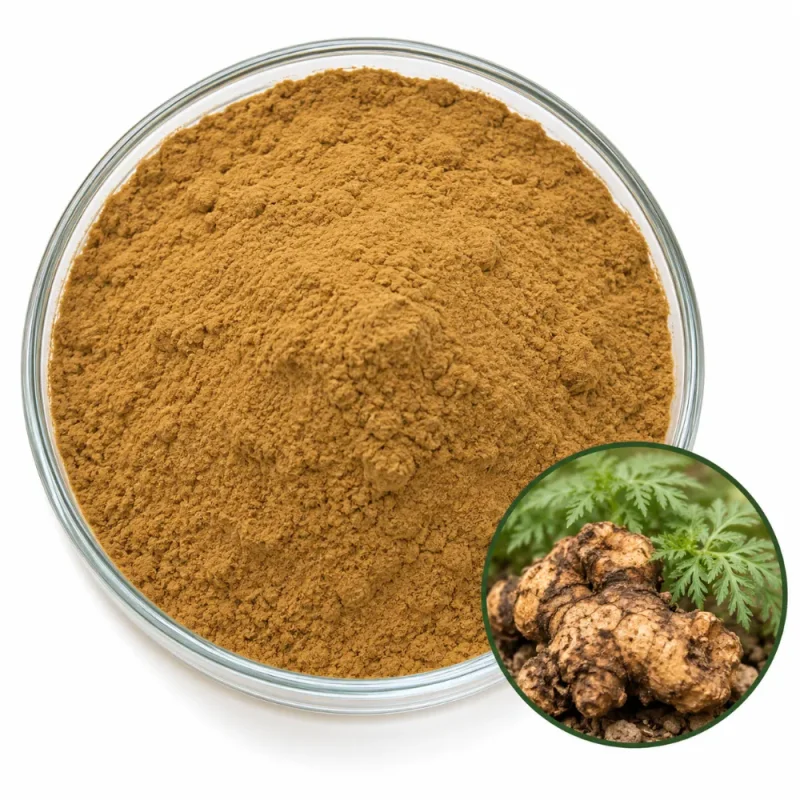
The rhizome is the only part used. Chuanxiong is cultivated in Sichuan, where the small rhizome nodes are dug in early summer, cleaned and dried, and the dried rhizome is sliced or milled before extraction. Stem, leaf and fibrous roots carry other compounds and are not part of this identity. The Ligusticum chuanxiong extract is therefore defined by the rhizome and by the two marker families named in the grade.


