
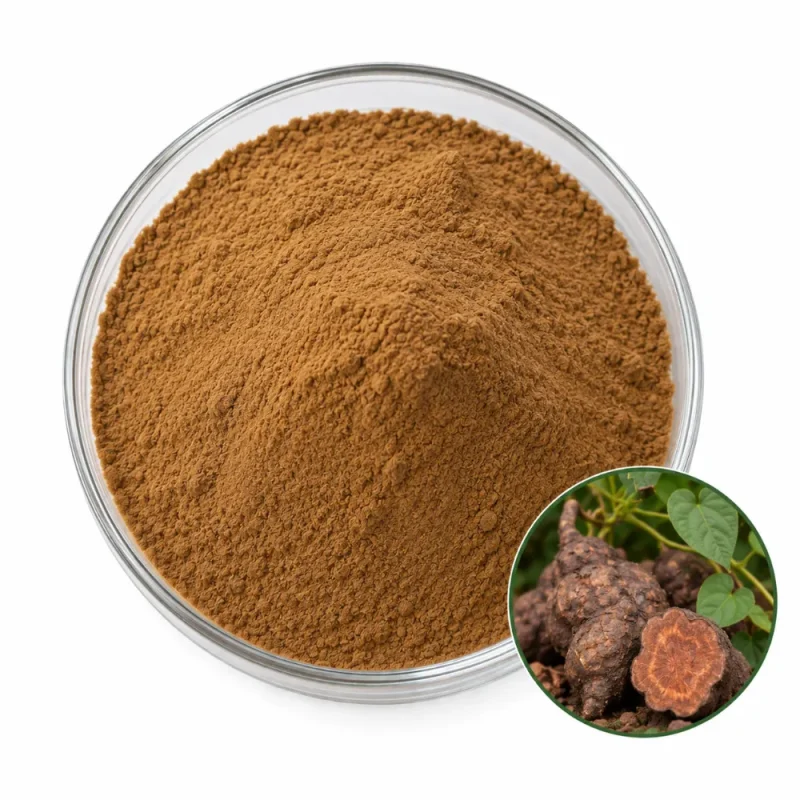
THSG Standardization & Grades
THSG is 2,3,5,4′-tetrahydroxystilbene-2-O-β-D-glucoside, a hydroxylated stilbene bound to one glucose unit, and it is the characteristic water-soluble marker of Polygonum multiflorum Thunb. Resveratrol is the better-known stilbene, but THSG carries four hydroxyl groups and a sugar, which makes it much more polar. The plant also contains anthraquinones such as emodin and physcion and condensed tannins, and a standardized extract is defined by its THSG figure while carrying the others as a background profile.
| Grade | Assay & Method | Where It Fits |
|---|---|---|
| 1% THSG | HPLC | Blends, tablets |
| 80% THSG | HPLC | Capsules, small fill weight |
The span is very wide, so grade choice follows dose and carrier. An 80% extract is a heavily purified material in which the plant matrix is largely removed, while a 1% extract behaves like a whole-root extract with a modest marker share. The same plant is also supplied as a 10:1 ratio extract without a marker figure, the Polygonum Multiflorum Extract Powder, as a vine extract of the stem, the Polygonum Vine Extract Powder, and as the purified compound, THSG 98%.
Regulators in several markets have issued restrictions or warnings on this botanical, and the rules differ by country and by the processing state of the material. Brands review them for each destination before launch.
The raw material needs a precise statement. The traditional drug is the large tuberous root, which is dug after several years, washed, sliced and dried, and sold either raw or after steaming with black bean juice. The master data lists the whole plant for this extract, so the material is stated that way, and lots are tested on the finished powder.


