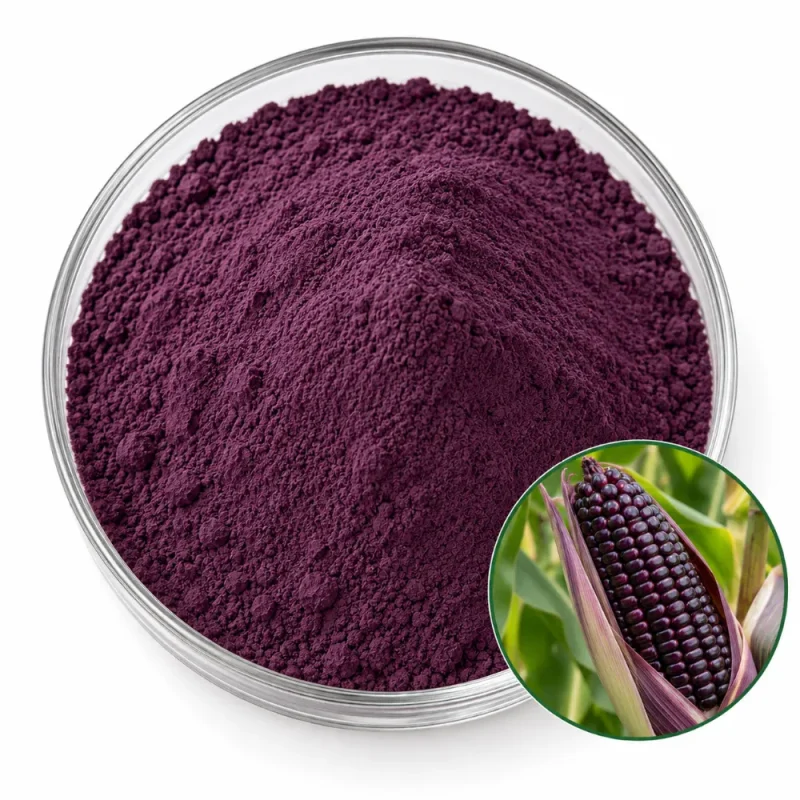
Purple Corn Extract Powder

Purple corn, the deeply pigmented Andean maize landrace of Zea mays, gives this purple corn extract its kernel material and its color, and the cob, husk and silk are not used. Water extraction concentrates the soluble fraction of the seed, and the liquor is dried into a purple-red powder that disperses in water.

Concentration is set by a 10:1 ratio, the mesh is 80, and no marker percentage applies. An anthocyanin-defined purple corn extract is a separate standardized product, and corn silk and corn powder are listed on their own pages. This ratio extract carries no declared pigment figure.

Zea mays Purple Corn Source & Identity

The botanical entity is Zea mays L., the maize species, which belongs to the grass family Poaceae. Purple corn is a pigmented landrace of the species, known in Peru as maiz morado, whose kernels and cob carry deep purple anthocyanins. The part used is the seed, meaning the kernel. Husk, silk and tassels are not part of this ingredient. Cob and kernel are both pigmented in the landrace, and only the kernel is used here.

Because maize is one species with many forms, the botanical name does not identify the ingredient. Yellow dent corn, sweet corn and purple corn share the binomial but differ in pigment, in starch type and in use, and the pigment of purple corn is its distinguishing property.

The color comes from anthocyanins, mainly cyanidin glycosides, which are water soluble and so move into a water extract.

Purple Corn Extract vs Other Corn Forms

FormWhat It IsChoose It When
10:1 Purple Corn ExtractWater-extracted, concentrated and dried purple corn kernelA dispersible pigmented kernel extract is wanted without a marker
Purple Corn Extract 10–25% AnthocyaninsStandardized purple corn extract with a defined anthocyanin rangeThe specification names an anthocyanin figure
Corn Silk Extract PowderRatio extract of corn silk instead of the kernelThe silk, not the kernel, is the target
Corn PowderMilled corn grain with no extractionA cereal-grade corn flour is wanted

The 10:1 ratio records how much purple corn went into the extract. No anthocyanin figure comes with the ratio, so a labelled pigment content belongs to the standardized grade. Because the grain is rich in starch, a hot-water extract also carries soluble starch into the powder, which tempers the color intensity compared with a pigment-defined grade. A purple corn extract of this type is therefore read by its kernel, ratio and solvent, not by shade.

The three siblings change the basis of the specification. The standardized extract adds a measured pigment range, the silk extract moves to another part of the plant, and the corn powder keeps the whole grain. A formula that wants a dispersible purple corn ingredient with no declared figure starts here.

Shade differs between purple corn lots because the landrace population, the extraction and the drying all move the color, so powder color describes the lot physically and does not state pigment content.

Typical Specifications

Specification ItemProduct Information
Latin NameZea mays
Plant PartSeed & Grain
ProcessingWater Extraction
Common NamePurple Corn
Ingredient TypeRatio Extract
Extract Ratio10:1
AppearancePurple Red powder
Solubility / DispersibilityWater Dispersible
Quality Parameters
Moisture (LOD)≤5.0%
Total Ash≤5.0%
Particle Size80 mesh
Heavy MetalsLead ≤2 ppm · Arsenic ≤1 ppm · Cadmium ≤1 ppm · Mercury ≤0.1 ppm
MicrobiologyTPC ≤1,000 cfu/g · Yeast & Mold ≤100 cfu/g · E. coli Negative · Salmonella Negative/25 g
Shelf Life24 months in unopened original packaging, cool and dry storage

Application Areas

Berry-Toned Drink Mixes

Purple corn extract gives dry drink mixes a purple-red tone that brightens as acidity rises. Since anthocyanin color depends on pH, finished beverages are checked at their final acidity, and the mild sweet corn note disappears under grape and berry flavors.

Gummy and Jelly Color

Pectin gummies can use purple corn extract for a natural purple tint. Add it after the cooked mass has cooled below its setting temperature to limit heat exposure, and use the setting acid to decide whether the tint reads red or violet.

Capsule and Tablet Blends

The extract fills hard capsules or compresses into tablets once a flow aid is added. Its strong pigment stains white excipients and equipment, so planning a cleaning step and a coated tablet surface early avoids rework.

Powder Sachet Blends

Sachets pair the extract with fruit powders and a dispersible base. Pigment migrates into pale powders when moisture is present, so a dry filling area and tight seals protect the appearance of the other components, and a matched particle size reduces sifting.

Formulation Notes

The powder is purple-red with a mild sweet-corn aroma and a faintly sweet taste. In water it disperses to a hazy red-violet liquid, and the hue turns brighter red as acid is added.

Anthocyanins lose color with heat, light and oxygen, so add the extract late in warm processes and use opaque packaging. Because staining is strong, weigh it in a separate area and wipe contact surfaces after each run. A spill is easier to lift dry than wet. Once a pack is open, press out the air and reseal the liner, since a humid pack cakes and the pigment bleeds outward.

Packaging & Commercial Supply

Essencefield supports product evaluation, formulation trials, commercial orders, and ongoing ingredient supply. Packaging, storage, and shipping arrangements are determined by product characteristics, order quantity, stability requirements, and destination-market needs.

Supply ItemGeneral Information
SampleAvailable upon request for formulation, testing, and supplier evaluation
Order Quantities100 g · 1 kg · 5 kg · 25 kg · 100 kg · 500 kg · Bulk
Sample Lead TimeTypically 5–7 days after sample confirmation
Production Lead TimeTypically 15–30 days after order and specification confirmation
PackagingSuitable protective inner packaging with bags, cartons, drums, or other appropriate outer packaging
StorageStore in tightly sealed, suitable protective packaging in a cool, dry environment. Protect from moisture, heat, and direct sunlight. Specific storage conditions follow the approved product specification.
DocumentationCOA · Product Specification · TDS · SDS · Applicable declarations (as applicable)

Final order quantities, lead times, packaging, documentation, and shipping arrangements are confirmed according to the selected product and commercial requirements.

Request Ingredient Specifications & Quote

Share your target specification, application, quantity, and documentation needs. We’ll help confirm suitable options, samples, and commercial supply details.