
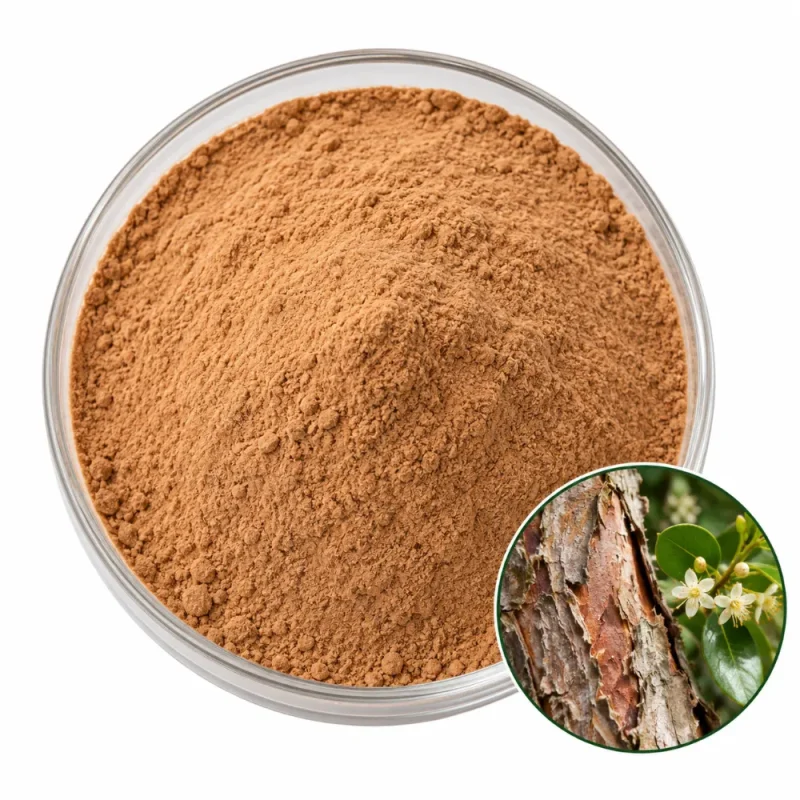
Quillaja Saponin Standardization & Grades
Saponins are glycosides. A triterpenoid core, built here largely on quillaic acid, carries branched sugar chains. The sugar end attracts water and the core attracts oil, so the molecule lowers surface tension. That is why a solution foams and why the compounds hold oil droplets apart. The botanical entity is Quillaja saponaria Molina, and the bark is the defined part, because the wood of the same tree carries little saponin.
Quillaja saponaria extract is standardized to this class because the foaming and emulsifying behavior of the bark follows the saponin load. The polyphenols, sugars and tannins that travel with it add color and weight but little surface activity.
| Grade | Assay & Method | Where It Fits |
|---|---|---|
| 30% Saponins | UV | Foaming drink mixes, bulk blends |
| 80% Saponins | UV | Emulsion concentrates, capsule fills |
Grade choice follows the job. The 80% grade delivers more than twice the surface activity per gram, so an emulsion concentrate or a capsule reaches its target with a small charge of powder. The 30% grade is the bulkier, darker and more astringent solid. It is chosen where the foam is wanted at a gram weight that a stick pack or premix can carry without dosing errors.


