
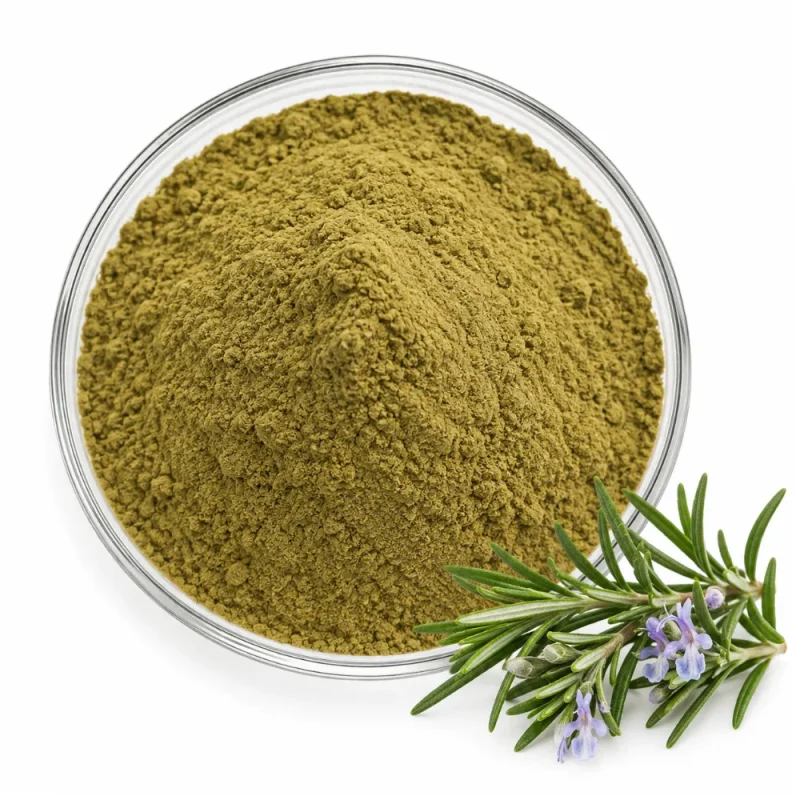
Carnosic Acid Standardization & Grades
Carnosic acid is a phenolic diterpene of the abietane type, a molecule with a three-ring skeleton and two adjacent hydroxyl groups on an aromatic ring. It is fat soluble and a strong antioxidant in oils and fats. It is the standardization target because it is the main diterpene of rosemary leaf and because a pure reference exists. The botanical entity is Salvia rosmarinus Spenn., a shrub of the Lamiaceae, and the part used is the leaf. The leaf also holds rosmarinic acid, a different, more polar phenolic acid, which the data for this product lists as a secondary marker.
| Grade | Assay & Method | Where It Fits |
|---|---|---|
| 5% Carnosic Acid | HPLC | Dry blends and oil-phase premixes |
| 20% Carnosic Acid | HPLC | Capsules and tablets with small fill |
The two grades differ by a factor of four. The 20% grade is a diterpene concentrate that supplies a defined load from a small fill. The 5% grade holds more of the rosmarinic acid, flavonoids and plant solids of the leaf, so rosemary extract at this level is bulkier and suits dry blends and oil-phase premixes. The leaf is also supplied as a 10:1 ratio extract, the Rosemary Extract Powder, as a milled leaf, the Rosemary Powder, and the water-soluble phenolic acid as the purified compound Rosmarinic Acid 98%. Carnosic acid and rosmarinic acid are different markers, and a grade names one or both. Rosemary leaves are needle-like and leathery, and the fat-soluble diterpenes sit in the leaf resin.


