
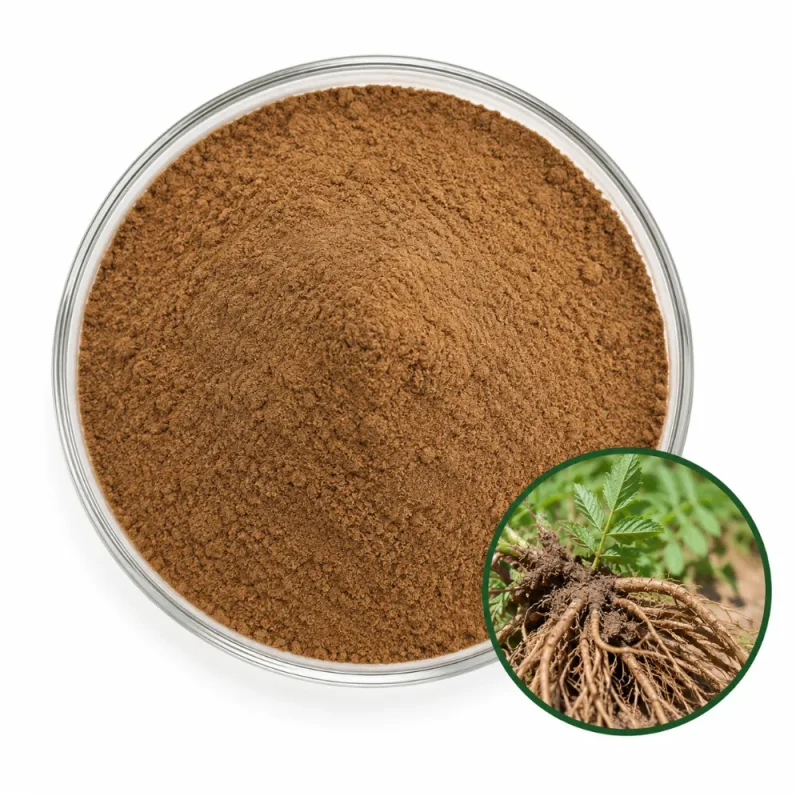
Valerenic Acid Standardization & Grades
Valerenic acids are sesquiterpenoid acids, a small family of related compounds that includes valerenic acid, hydroxyvalerenic acid and acetoxyvalerenic acid. They are characteristic of Valeriana officinalis and are largely absent from several other Valeriana species, which is why they are used as the identity marker. The root also holds iridoid esters called valepotriates, which are unstable and not retained in an extract, and the volatile oil that gives the plant its odor. The botanical entity is Valeriana officinalis L., a plant of the Caprifoliaceae, and the part used is the root and rhizome.
| Grade | Assay & Method | Where It Fits |
|---|---|---|
| 0.8% Valerenic Acids | HPLC | Capsules and tablets |
| 1% Valerenic Acids | HPLC | Capsules and tablets with small fill |
The two grades differ by a quarter. The 1% grade packs a little more marker into a capsule of the same weight, and the 0.8% grade fills at a slightly larger weight. Valerian extract at either level is a standardized extract with a low marker percentage, since the sesquiterpenoid acids make up only a small share of the root. The root is also supplied as a 10:1 ratio extract, the Valerian Root Extract Powder, which carries no marker figure, and as a milled root, the Valerian Root Powder. Both are different materials from the standardized extract. The dried root of valerian has the strongest odor of any part of the plant. Valerian extract at 1% is the more concentrated of the two grades, and valerian extract at 0.8% fills slightly more bulk.


