
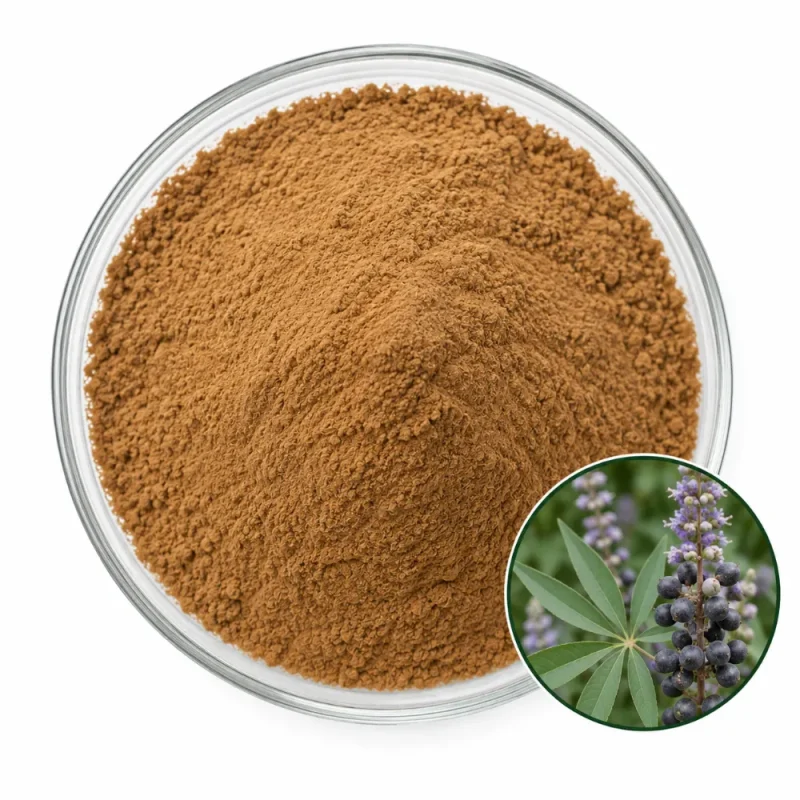
Flavonoid Standardization & Grades
Flavonoids in chaste tree fruit are a mixed group. The polymethoxylated flavone casticin and the apigenin C-glycosides vitexin and isovitexin are the best known members, and the genus name gave vitexin its own name. The page standardizes to the sum of flavonoids, not to one named compound, because the fruit carries several related structures that respond in the same assay. The botanical entity is Vitex agnus-castus L., and the part used is the fruit.
| Grade | Assay & Method | Where It Fits |
|---|---|---|
| 1% Flavonoids | UV | Tea-style blends and drink powders |
| 5% Flavonoids | UV | Capsules and tablets with limited fill weight |
Grade choice follows dose per serving and how much fruit flavor a format can carry. The 5% grade holds five times the flavonoid load per gram, so a capsule reaches its target with a smaller fill. The 1% grade keeps more of the bulk and bitterness of the whole extract, which suits loose blends where a bigger dose weight is acceptable.
A flavonoid percentage alone does not say which members were counted, so buyers who compare quotes should ask what the figure covers before they compare numbers. A vitex extract that reads 5% by UV can differ in profile from another at the same figure, because the assay cannot tell glycosides from methoxylated aglycones. The same fruit is supplied as the whole-extract Chaste Tree Extract Powder, as a second ratio extract, the Vitex Fruit Extract Powder, and as a milled berry, the Vitex (Chasteberry) Powder, none of which carries a flavonoid figure.


