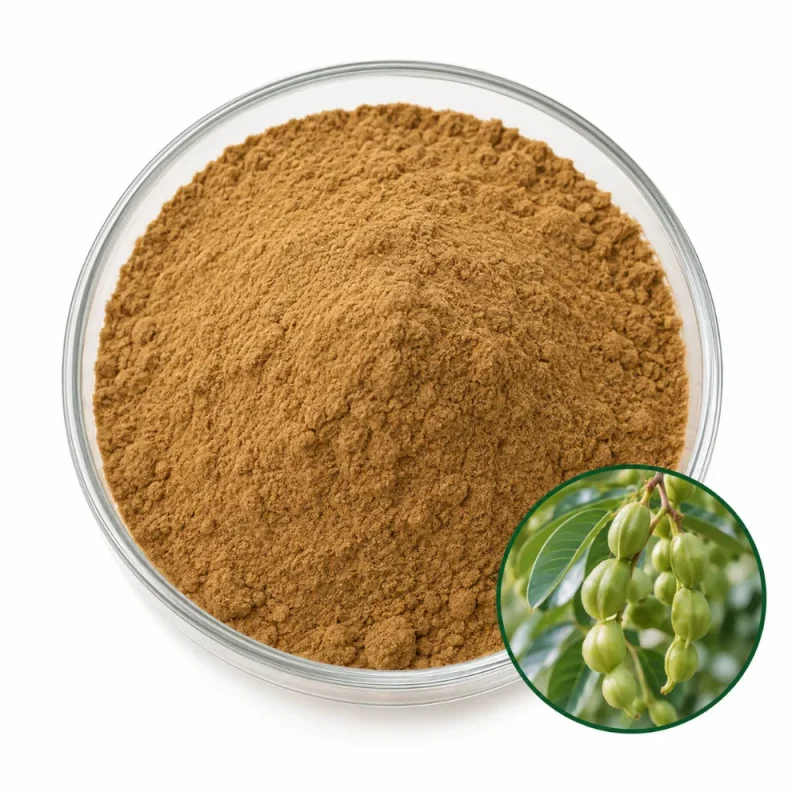
Sophora Japonica Fruit Extract Powder

Seed pods of Styphnolobium japonicum, the Japanese pagoda tree long sold as Sophora japonica, are the raw material behind this fruit extract. Water extraction concentrates the soluble pod fraction, and the liquor is dried to a light brown powder at a 10:1 ratio. Flowers, leaves and bark are left out.

The 10:1 ratio of this sophora japonica extract carries no marker percentage. The powder is light brown, ground to 80 mesh and water dispersible. The flower extract, the rutin-graded extract and the plain rutin are separate products, and the fruit is a different raw material from the flower.

Styphnolobium japonicum Fruit Identity & Part

The tree is Styphnolobium japonicum (L.) Schott, a member of the legume family, Fabaceae, which older sources and the product name call sophora japonica. The part used is the fruit, a beaded, fleshy pod that hangs from the branches in autumn and is dried before extraction. Flowers, leaves and bark are not added to this sophora japonica fruit extract.

The tree is better known for its flower buds as a source of rutin, and the two parts differ in chemistry. The pods contain isoflavones such as genistein and its glycoside sophoricoside, together with flavonoid glycosides and sugars. A specification that says only “Sophora japonica” does not say flower or fruit, which is why the part appears in the name of each page.

Sophora Fruit Extract vs Flower Extract

FormWhat It IsChoose It When
10:1 Sophora Japonica Fruit ExtractWater-extracted, concentrated and dried pod extractA dispersible fruit extract without a marker is wanted
Sophora Japonica Flower Extract Powder10:1 water extract of the flowerFlower, not fruit, is the required source
Sophora japonica Extract 95% RutinExtract with a defined rutin figureThe specification names a rutin figure
Rutin 98%Single purified flavonol glycosideA pure compound is required, not a plant extract

Sophora pods are counted ten to one against the sophora japonica powder, and 10:1 states only that input. The rutin figures on the graded and purified products come from flower buds and do not describe this fruit extract.

The sophora japonica extract suits blends that want sophora fruit identity in a sweet-bitter, dispersible form. The flower extract has a more yellow, flavonol-driven profile, and the rutin grades are defined by an assay. The choice follows the part named in the specification.

Typical Specifications

Specification ItemProduct Information
Latin NameStyphnolobium japonicum
Plant PartFruit & Berry
ProcessingWater Extraction
Common NameJapanese Pagoda Tree Fruit, Sophora Pod
Ingredient TypeRatio Extract
Extract Ratio10:1
AppearanceLight Brown powder
Solubility / DispersibilityWater Dispersible
Quality Parameters
Moisture (LOD)≤5.0%
Total Ash≤5.0%
Particle Size80 mesh
Heavy MetalsLead ≤2 ppm · Arsenic ≤1 ppm · Cadmium ≤1 ppm · Mercury ≤0.1 ppm
MicrobiologyTPC ≤1,000 cfu/g · Yeast & Mold ≤100 cfu/g · E. coli Negative · Salmonella Negative/25 g
Shelf Life24 months in unopened original packaging, cool and dry storage

Application Areas

Sweet-Bitter Drink Powders

Drink powders use the pod extract in brown, tea-style or malt bases. The pods are fleshy and sugar-rich, so the extract carries a faint sweetness balanced by bitterness. A modest dose keeps the taste rounded, and roasted-grain flavors suit it.

Isoflavone-Bearing Capsule Blends

Capsule blends combine the extract with other plant extracts. Fruit sugars make the sophora japonica powder cohesive and hygroscopic, so a flow aid is considered and humidity is held low. A trial run confirms fill weight before capsule size is chosen.

Tablet Cores

Tablet cores use the extract with a dry binder. The sugar-rich solids soften in humid air, so tablets are coated and hardness is rechecked after storage. A pigmented coat hides the brown core and the speckles from fruit solids.

Light Sports-Style Sticks

Sports-style sticks carry the extract with sweetener and electrolytes. The brown tint blends into cola, tea or malt flavors, and a premix step prevents the fine, sticky particles from clumping at the bottom of the sachet.

Formulation Notes

The sophora japonica powder is light brown with a faint, sweetish, hay-like aroma and a mild bitter-sweet taste. Dissolved in water, it gives a slightly hazy, pale amber liquid. Fruit sugars dissolve readily, but the isoflavone glycosides are less soluble and may leave a light haze in cold drinks.

Work the powder into a share of the base first, so that sugar-rich particles do not stick together in the main mix. Because the extract is sugar-rich, it takes up water readily and can set hard within hours in damp air. A short sieve step after storage breaks up soft lumps without grinding the powder.

Opened packs are closed tightly with the liner pressed flat. A light acidity in the base does not affect the isoflavone glycosides, so the pod extract fits mildly acidic drinks, though clarity is checked at the final pH. Pilot batches should include a hardness and sticking check, because sugar-rich pod extract makes tablets stick to punches in humid rooms, and a small lubricant adjustment or a drier room solves it.

Packaging & Commercial Supply

Essencefield supports product evaluation, formulation trials, commercial orders, and ongoing ingredient supply. Packaging, storage, and shipping arrangements are determined by product characteristics, order quantity, stability requirements, and destination-market needs.

Supply ItemGeneral Information
SampleAvailable upon request for formulation, testing, and supplier evaluation
Order Quantities100 g · 1 kg · 5 kg · 25 kg · 100 kg · 500 kg · Bulk
Sample Lead TimeTypically 5–7 days after sample confirmation
Production Lead TimeTypically 15–30 days after order and specification confirmation
PackagingSuitable protective inner packaging with bags, cartons, drums, or other appropriate outer packaging
StorageStore in tightly sealed, suitable protective packaging in a cool, dry environment. Protect from moisture, heat, and direct sunlight. Specific storage conditions follow the approved product specification.
DocumentationCOA · Product Specification · TDS · SDS · Applicable declarations (as applicable)

Final order quantities, lead times, packaging, documentation, and shipping arrangements are confirmed according to the selected product and commercial requirements.

Request Ingredient Specifications & Quote

Share your target specification, application, quantity, and documentation needs. We’ll help confirm suitable options, samples, and commercial supply details.