Camellia sinensis Raw Material & Plant Part
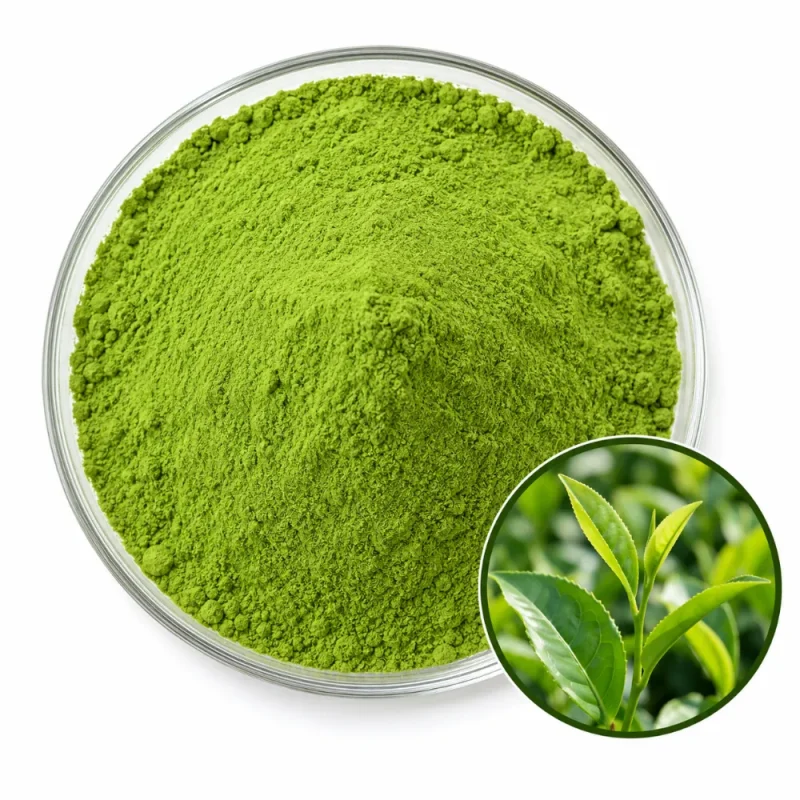
The scientific name is Camellia sinensis (L.) Kuntze, family Theaceae. The part used is the leaf. All true teas come from this single species, and the differences between green, black, white and matcha lie in leaf growing and processing, not in the plant. Stems, flowers and seeds are not part of the raw material.
Matcha is by convention made from tea grown in shade for a period before harvest, then steamed to stop enzymatic oxidation, dried, cleaned of stems and veins and ground to a fine powder. Shading is reported to raise chlorophyll and amino acid content and to lower astringency. There is no universal grading standard for matcha, so grade words differ between producers and are not specifications.
Three tea powders sit next to matcha in the catalog and differ in leaf processing: green tea leaf powder, black tea leaf powder and white tea leaf powder. Matcha is also distinct from instant tea powder, which is made by drying a brewed infusion, so the leaf itself is not eaten.
Because the leaf is consumed whole, caffeine and the tea catechins are taken with it.
In a specification, matcha powder should state in words that it is a whole-leaf powder from tea leaves, because the same word is used for blends of green tea powder with sugar, milk powder or flavorings. The words milled tea leaf, the species name and the mesh make the raw material unambiguous, and a buyer can add leaf-style requirements if the shading or processing matters.