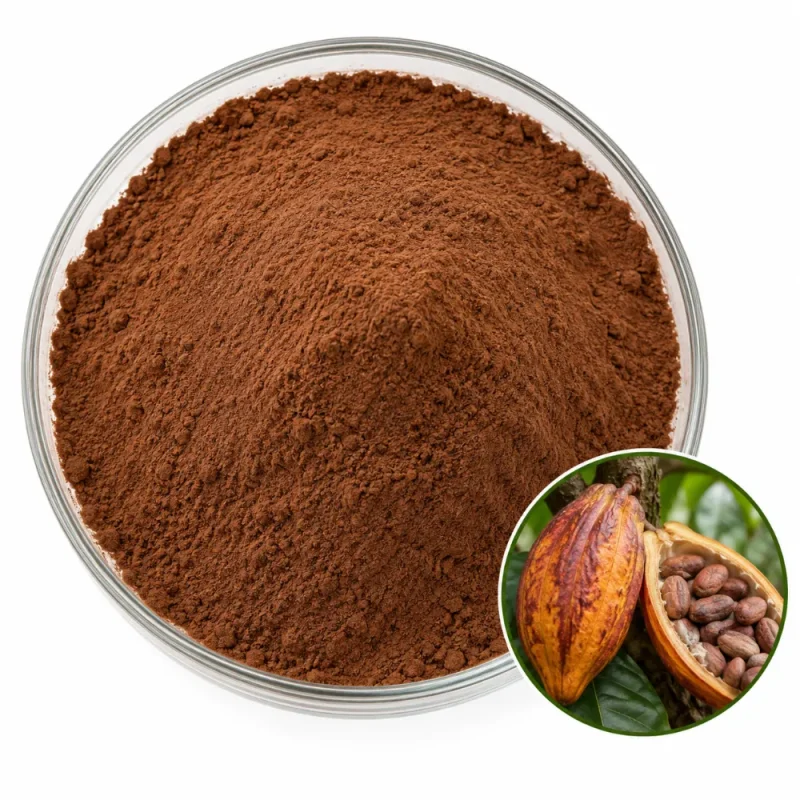
Cocoa Extract Powder

Seeds of the cacao tree, Theobroma cacao, once removed from the pod, are the starting material for this cocoa extract, and the extract is not the same as cocoa powder. Water extraction concentrates the soluble bean fraction, and the liquor is dried to a brown powder.

Marked only by its 10:1 ratio, with no flavanol figure attached, this cocoa extract powder is water dispersible and milled to 80 mesh. The flavanol-standardized extract, the defatted cocoa powder and the isolated theobromine are separate products with their own specifications.

Theobroma cacao Seed Identity & Plant Part

The botanical entity is Theobroma cacao L., a small evergreen tree of the mallow family (Malvaceae) from the tropical Americas, now grown in humid tropical belts worldwide. The part used is the seed, the cacao bean, which grows embedded in white pulp inside large pods. Pod husk, pulp, leaves and shells are not included in this cocoa extract.

“Cocoa” covers several different materials. Cocoa powder is the pressed, defatted and milled bean, a food ingredient with fiber and protein. Cocoa butter is the fat, nibs are crushed roasted beans, and a cocoa extract is the concentrated soluble fraction of the bean. The Latin name, the part and the extraction route tell them apart.

Cocoa Extract vs Powder & Grades

FormWhat It IsChoose It When
10:1 Cocoa Bean ExtractWater-extracted, concentrated and dried T. cacao seedA dispersible cocoa extract without a marker is wanted
Cocoa Extract 10–40% Flavanols / ProcyanidinsStandardized extract with a defined flavanol rangeThe specification names a flavanol figure
Cocoa PowderDefatted, milled cocoa beanA chocolate-flavored food ingredient is the brief
Theobromine 99%Isolated methylxanthine compoundA pure single compound is required

In cocoa the 10:1 ratio says how far the bean fraction was concentrated; it does not report flavanol or theobromine content. Two cocoa extracts at the same ratio can differ widely in both, because fermentation and roasting of the starting bean change the polyphenol profile.

Cocoa powder remains the choice when bulk, fat-reduced chocolate flavor and color are the aim, and isolated theobromine serves where a single compound is the brief. The standardized extract is the one to select if a flavanol figure has to be declared; the ratio extract sits between them as a soluble, dispersible bean fraction.

Typical Specifications

Specification ItemProduct Information
Latin NameTheobroma cacao
Plant PartSeed & Grain
ProcessingWater Extraction
Common NameCocoa, Cacao
Ingredient TypeRatio Extract
Extract Ratio10:1
AppearanceBrown powder
Solubility / DispersibilityWater Dispersible
Quality Parameters
Moisture (LOD)≤5.0%
Total Ash≤5.0%
Particle Size80 mesh
Heavy MetalsLead ≤2 ppm · Arsenic ≤1 ppm · Cadmium ≤1 ppm · Mercury ≤0.1 ppm
MicrobiologyTPC ≤1,000 cfu/g · Yeast & Mold ≤100 cfu/g · E. coli Negative · Salmonella Negative/25 g
Shelf Life24 months in unopened original packaging, cool and dry storage

Application Areas

Opaque Capsule Fills

The dark brown powder is hidden by opaque shells, and the bitter cocoa taste stays inside the capsule. Because the extract holds much less fat than cocoa powder, it wets and flows differently, so a hopper trial confirms that fine particles neither float nor bridge.

Chocolate-Flavor Drink Mixes

Dry drink mixes use cocoa extract to add bitter-cocoa depth to milk powders and instant beverages. It dissolves to a dark brown tint with less bulk and fat than cocoa powder, though proteins in the base can bind its tannins and cloud the drink.

Bar and Bite Premixes

Bars take the extract in the dry premix for a cocoa note and dark color. With little fat it adds no oiliness, but water-extracted solids are hygroscopic, so the premix is best held sealed until the bars are formed.

Coffee-Note Stick Packs

Single-serve sticks pair the extract with coffee, hazelnut or caramel flavors that share its roasted-bitter profile. The slight haze it gives in water is invisible in a dark cup, and a sweetener is usually needed to balance the astringent finish.

Gummy and Chew Premixes

Gummy premixes add the extract after cooking, once the mass has cooled and the pectin or gelatin is already set up. Bean tannins bind gelatin, so a trial batch with the chosen gelling agent confirms texture and clarity before scale-up.

Formulation Notes

The powder is brown with a roasted, chocolate-like aroma and a bitter, astringent taste. In water it gives a brown, slightly hazy liquid. Because the fat content is low, it wets differently from cocoa powder, and fine particles can float briefly before sinking.

Bean polyphenols carry catechol groups that bind iron and copper and darken, so keep those metals out of tools and hoppers. Blending the extract into sweetener before it meets protein powder avoids concentrated tannin-protein contact, and protein-containing dry blends deserve a haze test after liquid is added.

Watch the capsule hopper for bridging and screen out soft lumps before filling. Opened pails of this extract draw moisture quickly, so press the liner flat after each use, because damp powder darkens and sets hard.

Packaging & Commercial Supply

Essencefield supports product evaluation, formulation trials, commercial orders, and ongoing ingredient supply. Packaging, storage, and shipping arrangements are determined by product characteristics, order quantity, stability requirements, and destination-market needs.

Supply ItemGeneral Information
SampleAvailable upon request for formulation, testing, and supplier evaluation
Order Quantities100 g · 1 kg · 5 kg · 25 kg · 100 kg · 500 kg · Bulk
Sample Lead TimeTypically 5–7 days after sample confirmation
Production Lead TimeTypically 15–30 days after order and specification confirmation
PackagingSuitable protective inner packaging with bags, cartons, drums, or other appropriate outer packaging
StorageStore in tightly sealed, suitable protective packaging in a cool, dry environment. Protect from moisture, heat, and direct sunlight. Specific storage conditions follow the approved product specification.
DocumentationCOA · Product Specification · TDS · SDS · Applicable declarations (as applicable)

Final order quantities, lead times, packaging, documentation, and shipping arrangements are confirmed according to the selected product and commercial requirements.

Request Ingredient Specifications & Quote

Share your target specification, application, quantity, and documentation needs. We’ll help confirm suitable options, samples, and commercial supply details.