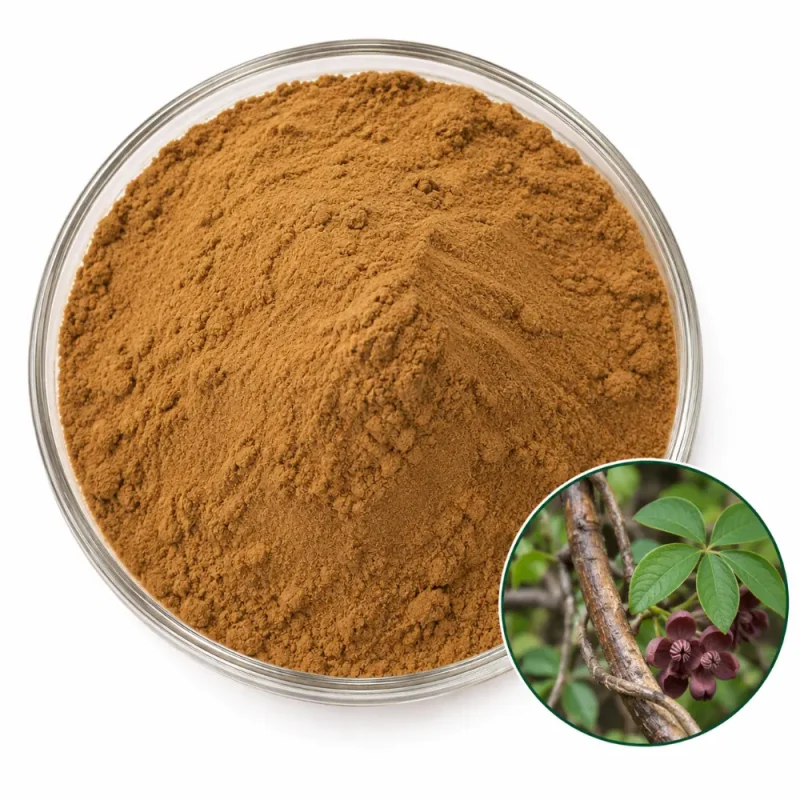
Akebia Quinata Extract Powder

Akebia quinata extract powder comes from the stem of the chocolate vine, a climbing East Asian plant sold in Chinese trade as mu tong. The stem is extracted with water, concentrated and dried to a light brown powder, and a market-wide adulteration risk makes the species name especially important.

The product is a 10:1 ratio extract with no marker percentage attached. It is water dispersible and milled to 80 mesh. The data for this botanical lists no powdered or standardized sibling, so the ratio extract is the only form described.

Akebia quinata Identity & Plant Part

The botanical entity is Akebia quinata (Houtt.) Decne., family Lardizabalaceae, called chocolate vine or five-leaf akebia. The part used in this Akebia quinata extract is the stem; roots, leaves and fruit are not part of the product.

Mu tong is a name that covers more than one plant. A published survey of herbal shop material found stems sold as mu tong that were Aristolochia manshuriensis, known as guan mu tong, or Clematis, rather than Akebia. Aristolochia stems contain aristolochic acids, which are nephrotoxic and carcinogenic, so the botanical name on the specification is a safety identifier here and not a formality. Akebia quinata extract is therefore best described by its binomial, its stem as plant part and the form of the Akebia quinata powder, since a common name such as mu tong is not enough to identify the plant.

What 10:1 Means for Akebia quinata

The 10:1 ratio describes how much starting stem stands behind one part of powder, and it is silent about chemistry. Given the adulteration history of the name, a buyer comparing Akebia quinata offers should rely on identity evidence and on the botanical name in the table, not on the ratio.

No standardized extract, powder or isolated compound of Akebia quinata is listed among the siblings, so the ratio extract is the single form described. Choose it when the species and the stem as plant part are the requirement. Formulation work should rest on that identity and on the physical behavior described in this module and the next.

Typical Specifications

Specification ItemProduct Information
Latin NameAkebia quinata
Plant PartBark & Stem
ProcessingWater Extraction
Common NameChocolate Vine, Mu Tong
Ingredient TypeRatio Extract
Extract Ratio10:1
AppearanceLight Brown powder
Solubility / DispersibilityWater Dispersible
Quality Parameters
Moisture (LOD)≤5.0%
Total Ash≤5.0%
Particle Size80 mesh
Heavy MetalsLead ≤2 ppm · Arsenic ≤1 ppm · Cadmium ≤1 ppm · Mercury ≤0.1 ppm
MicrobiologyTPC ≤1,000 cfu/g · Yeast & Mold ≤100 cfu/g · E. coli Negative · Salmonella Negative/25 g
Shelf Life24 months in unopened original packaging, cool and dry storage

Application Areas

Stem-Extract Capsule Fills

Ordinary shells mask the light brown fill easily. Stem extracts can bridge in the hopper and absorb moisture, so run a flow check on the lot before filling and weigh capsules at intervals to catch fill drift.

Mild Herbal Drink Powders

In drink powders the extract gives a faint woody-herbal base with a slight bitterness. It suits pear, honey or ginger flavors, so taste a plain-water sample first and adjust sweetener and flavor from there in small steps.

Tea-Style Instant Sachets

Instant sachets can present Akebia stem extract in a tea-style cup without brewing. Dissolve a sample in hot and cold water to compare haze, and screen the powder into the premix so the brown tint spreads evenly across each sachet.

Tablets for Stem Extracts

A press can form this extract into tablets once a dry binder and disintegrant are blended in. Stem extracts take up moisture before compression, so keep humidity low and test hardness and disintegration on the finished tablet.

Light Gummy Bases

In gummies the extract adds a light brown tint that suits apple, pear or honey flavors. Add the powder after cooking and cooling slightly, and test gel set, since polyphenol-bearing extracts can change the firmness of pectin masses.

Formulation Notes

Akebia stem extract looks light brown, smells faintly woody and tastes slightly bitter. It disperses in water to a light brown, slightly hazy liquid, and haze may build as the liquid cools. Judge clarity in the real drink formula. Stem extracts absorb moisture, so weigh the powder promptly and reseal the container after each use. In the blender, pre-blend it with some of the filler and sieve the result. A retained sample helps to detect darkening in an opened lot before it goes into a pale blend.

Packaging & Commercial Supply

Essencefield supports product evaluation, formulation trials, commercial orders, and ongoing ingredient supply. Packaging, storage, and shipping arrangements are determined by product characteristics, order quantity, stability requirements, and destination-market needs.

Supply ItemGeneral Information
SampleAvailable upon request for formulation, testing, and supplier evaluation
Order Quantities100 g · 1 kg · 5 kg · 25 kg · 100 kg · 500 kg · Bulk
Sample Lead TimeTypically 5–7 days after sample confirmation
Production Lead TimeTypically 15–30 days after order and specification confirmation
PackagingSuitable protective inner packaging with bags, cartons, drums, or other appropriate outer packaging
StorageStore in tightly sealed, suitable protective packaging in a cool, dry environment. Protect from moisture, heat, and direct sunlight. Specific storage conditions follow the approved product specification.
DocumentationCOA · Product Specification · TDS · SDS · Applicable declarations (as applicable)

Final order quantities, lead times, packaging, documentation, and shipping arrangements are confirmed according to the selected product and commercial requirements.

Request Ingredient Specifications & Quote

Share your target specification, application, quantity, and documentation needs. We’ll help confirm suitable options, samples, and commercial supply details.