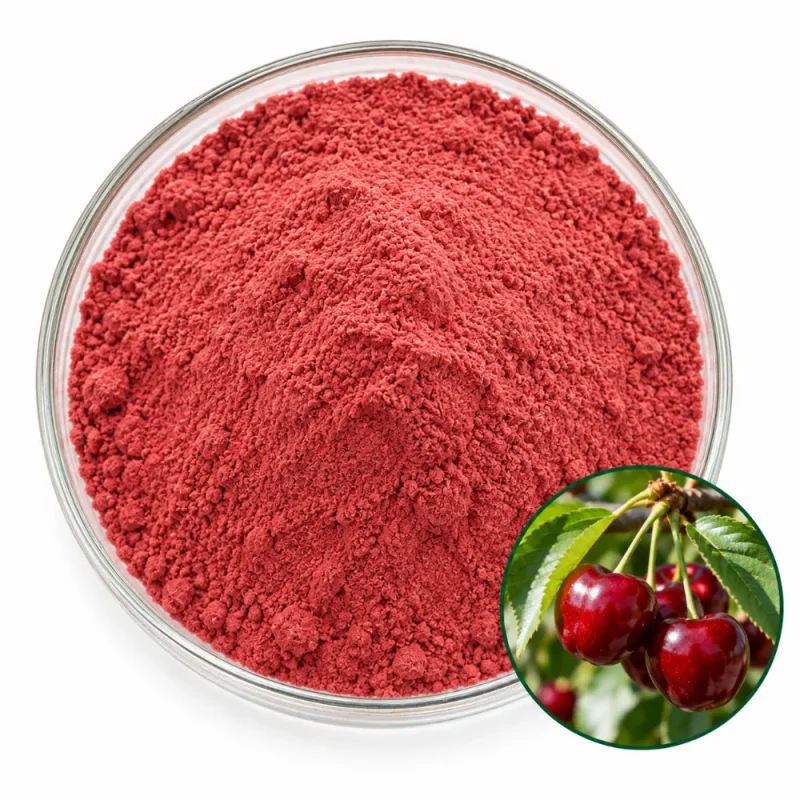
Cherry Extract Powder

Cherry extract starts from the ripe fruit of Prunus avium, the sweet cherry, with the stems, pits and leaves excluded. Water extraction concentrates the soluble fruit fraction, and the liquor is dried into a purple-red powder that disperses in water, with the pigment of the skin carried into the powder.

The extract is supplied at a 10:1 ratio with no anthocyanin percentage and is milled to 80 mesh. Tart cherry is a separate species with its own materials, and this ratio extract does not carry a declared pigment figure or a juice-concentrate claim.

Prunus avium Identity & Plant Part

The botanical entity is Prunus avium (L.) L., the sweet cherry, a Rosaceae tree grown for its dark red to near-black dessert fruit. The part used is the ripe fruit flesh and skin. Stems, pits and leaves are not part of this ingredient, and each of them is a separate raw material in the market.

The identity point buyers meet most often is sweet versus tart cherry. Tart or sour cherry is Prunus cerasus, a different species with a more acidic fruit. Sweet cherry fruit carries anthocyanins, hydroxycinnamic acids, sorbitol and malic acid, named only as constituent families, and the balance differs between the two species.

What 10:1 Means for Cherry Extract

The 10:1 ratio concentrates the fruit and gives the water-soluble anthocyanins a deep purple-red color. The ratio does not translate into a pigment figure, because anthocyanin levels move with cultivar, ripeness and extraction conditions. A buyer who needs a defined pigment level has to look at a marker-based product. One who names species, fruit and ratio can use this cherry extract directly. Sweet cherry sugar content is also concentrated, which is why the powder takes up humidity faster than a low-sugar extract. No powder or marker grade of this fruit is listed beside it, so the ratio extract is the only form offered.

Typical Specifications

Specification ItemProduct Information
Latin NamePrunus avium
Plant PartFruit & Berry
ProcessingWater Extraction
Common NameSweet Cherry Fruit
Ingredient TypeRatio Extract
Extract Ratio10:1
AppearancePurple red powder
Solubility / DispersibilityWater Dispersible
Quality Parameters
Moisture (LOD)≤5.0%
Total Ash≤5.0%
Particle Size80 mesh
Heavy MetalsLead ≤2 ppm · Arsenic ≤1 ppm · Cadmium ≤1 ppm · Mercury ≤0.1 ppm
MicrobiologyTPC ≤1,000 cfu/g · Yeast & Mold ≤100 cfu/g · E. coli Negative · Salmonella Negative/25 g
Shelf Life24 months in unopened original packaging, cool and dry storage

Application Areas

Fruit Extract Capsules

Cherry extract suits two-piece capsules as a dispersible purple-red powder. The sugars in the fruit make it more hygroscopic than a root or bark extract, so a flow aid and a dry filling room are used. Disintegration is checked on the finished fill, because the powder disperses and does not dissolve.

Gummy Color Bases

Sweet cherry extract brings a natural red-purple tint to gummies and needs less added color. Anthocyanins turn bluer as pH rises, so the gel pH is set below 3.5 and tested after cooling to keep the red tone.

Stick-Pack Drink Mixes

In drink powders the extract dissolves to a clear to slightly hazy red liquid with a mild fruity taste. It pairs well with citrus, pomegranate and berry flavors. Protect the packed mix from light and heat, since anthocyanin color fades with exposure.

Coated Tablet Blends

The deep pigment stains uncoated tablet cores, so a white film coat is common. Microcrystalline cellulose and a disintegrant carry the compression, and granulating with a dry binder avoids the sugar migration that wet granulation can cause.

Fruit Bar Mixes

Bars use the extract in the dry fraction beside oat and date pastes. Its fruit-forward tartness lifts the sweetness of the paste, and the red tint is hidden by chocolate or granola coatings, so the finished bar keeps its usual look.

Formulation Notes

Cherry extract is a purple-red powder with a sweet, jammy aroma and a lightly tart taste. In water it dissolves or disperses to a red liquid that turns bluish in neutral solutions and bright red when acidified. Anthocyanin color also fades on long heat exposure, so beverage processing should avoid prolonged hot holds.

The sugar content makes the powder pick up humidity quickly, and a cake forms at the surface of an opened pack. Weigh in a dry room, reseal the pack after each draw, and keep it out of direct light. Metal contact with iron or copper shifts the color toward gray, so stainless steel scoops are preferred.

Packaging & Commercial Supply

Essencefield supports product evaluation, formulation trials, commercial orders, and ongoing ingredient supply. Packaging, storage, and shipping arrangements are determined by product characteristics, order quantity, stability requirements, and destination-market needs.

Supply ItemGeneral Information
SampleAvailable upon request for formulation, testing, and supplier evaluation
Order Quantities100 g · 1 kg · 5 kg · 25 kg · 100 kg · 500 kg · Bulk
Sample Lead TimeTypically 5–7 days after sample confirmation
Production Lead TimeTypically 15–30 days after order and specification confirmation
PackagingSuitable protective inner packaging with bags, cartons, drums, or other appropriate outer packaging
StorageStore in tightly sealed, suitable protective packaging in a cool, dry environment. Protect from moisture, heat, and direct sunlight. Specific storage conditions follow the approved product specification.
DocumentationCOA · Product Specification · TDS · SDS · Applicable declarations (as applicable)

Final order quantities, lead times, packaging, documentation, and shipping arrangements are confirmed according to the selected product and commercial requirements.

Request Ingredient Specifications & Quote

Share your target specification, application, quantity, and documentation needs. We’ll help confirm suitable options, samples, and commercial supply details.