Botanical ingredient identity testing verifies whether a raw botanical, powder or extract is consistent with its claimed species, plant part and expected chemical profile. TLC and HPTLC are widely used for qualitative chromatographic fingerprinting, while HPLC can provide detailed chemical profiles and, when designed for it, quantitative assay data. No technique is universally superior; the right approach depends on the botanical, matrix, processing history, reference system, specification and purpose. So the useful question for buyers and QA teams goes beyond “was this ingredient HPLC tested?” to “does the selected test reliably distinguish this botanical from relevant substitutes, related species or adulterated material in its actual commercial form?” For identification, specificity matters more than analytical sophistication.
What Botanical Identity Testing Actually Verifies
Botanical identity is more precise than the product name on a specification sheet. Depending on the ingredient, authentication may confirm genus and species, plant part, characteristic morphology or anatomy, expected phytochemical profile, consistency with authenticated reference material, and distinction from substitutes, related botanicals or adulterants. USP describes identification as multidisciplinary — macroscopic examination, microscopy, DNA techniques and chemical identification, with chemical procedures comparing chromatographic or spectroscopic fingerprints against a Reference Standard, monograph description or reference chromatogram (USP General Chapter <1064> Identification of Articles of Botanical Origin).
Physical form matters too. An intact root keeps recognizable anatomy, grinding removes many macroscopic features, and after extraction morphology may disappear entirely, making chemical profiling more important. The AHPA Botanical ID Reference Compendium likewise notes that appropriate tests depend on whether the material is intact, powdered, or converted into an extract or purified constituent. Our Quality & Testing approach follows the same principle, aligning testing scope with botanical source, ingredient form, concentration, processing, specification and acceptance criteria.
Why Botanical Identity Matters in Ingredient Quality Control
Natural variation is normal; incorrect identity is not. Supply-chain risks include substitution with a related species, the wrong plant part, common-name confusion, mixing during collection or processing, economically motivated adulteration, and approval based only on an assay value or extract ratio. For U.S. dietary supplement manufacturing, identity also has regulatory weight: FDA’s dietary supplement CGMP Small Entity Compliance Guide states that manufacturers generally must conduct at least one appropriate test or examination to verify a dietary ingredient’s identity, with the number and type depending on the ingredient and circumstances. The analytical strategy must therefore reflect the identifying characteristics that survive in the actual commercial material.
Identity vs Assay: Different Questions, Different Evidence
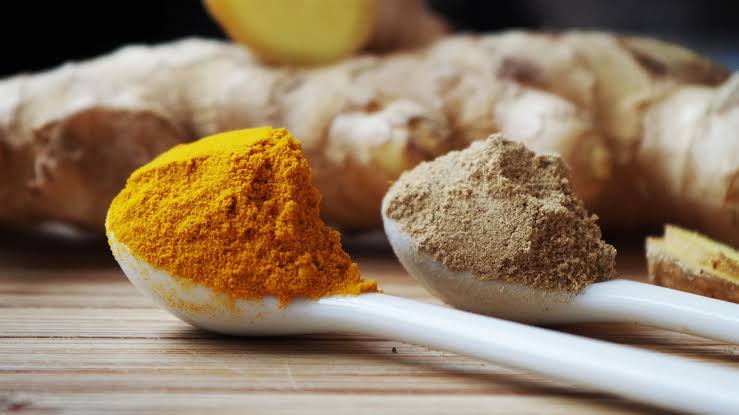
Identity asks whether this is the botanical it claims to be; assay asks how much of a specified compound or group is present. An HPLC assay can show that a standardized turmeric extract such as Turmeric Extract 60–95% Curcuminoids meets its curcuminoid content, but that value does not by itself establish every aspect of the starting botanical’s identity. The same applies to extracts standardized for polyphenols, anthocyanins, flavonoids, saponins, alkaloids or other markers — a marker can be useful for characterization or standardization without being diagnostic of one species. Commercial grades can also differ by plant part, ratio, assay target, method, carrier and physical properties, which our Specification & Grade Matching service compares before treating materials as equivalent. A correct assay result is not a confirmed identity. For more on assay techniques, see Botanical Extract Assay Methods.
Buyer Note: UV/Vis Assay vs Chromatographic Identity
A bulk UV/Vis result is not equivalent to a chromatographic fingerprint. UV/Vis can suit certain quantitative measurements such as defined total compound groups, but a non-separative total assay should not be read as TLC, HPTLC or HPLC fingerprint identity evidence; method and specification must describe the same quality attribute.
How Chromatographic Fingerprinting Supports Botanical Identity
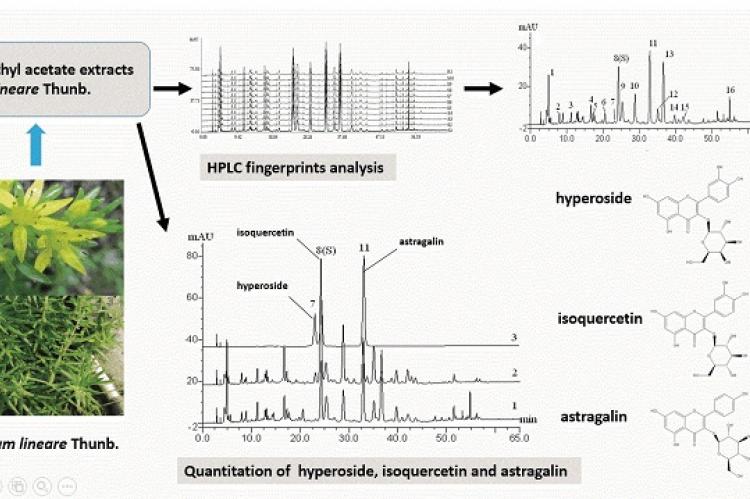
A fingerprint evaluates a pattern of constituents rather than one number — separated zones or bands on a TLC or HPTLC plate, or a series of peaks in HPLC or UHPLC. Its value comes from comparison with an appropriate reference under defined acceptance criteria: authenticated botanical reference material, a pharmacopeial Reference Standard, a characterized extract reference, defined chemical reference compounds, or an established reference chromatogram. So when a specification says “Identification by HPTLC” or “HPLC fingerprint conforms,” the most useful follow-up is compared with what? The platform alone does not determine how strong the identity conclusion is. For HPLC fingerprinting in depth, see HPLC Fingerprinting for Botanical Extract Authentication.
Why System Suitability Matters Before Reading a Fingerprint
System suitability confirms that a chromatographic procedure is working as intended before an unknown sample is judged. For HPTLC, criteria may cover the position, separation, appearance or resolution of designated reference zones; for HPLC, resolution, repeatability, peak characteristics and other method-specific criteria. The HPTLC Association Method Collection states that methods introduced into QC need appropriate transfer validation and that data are valid only when system suitability is met on the individual plate. A matching fingerprint means something only when the system was performing as intended.
TLC: A Practical Qualitative Identity Tool
Thin-layer chromatography separates compounds across a coated plate with a defined mobile phase. Sample and reference materials are applied, constituents migrate at different rates, and after development characteristic bands are viewed under visible or UV light or after derivatization. An Rf value (retention factor) describes how far a compound travels relative to the solvent front under specified conditions; it supports comparison, but authentication should rarely rest on one value — the distribution, color, intensity and relative positions of several zones are more informative. Conventional TLC remains useful where an established procedure has adequate specificity, provided sample preparation, plate quality, mobile phase, development, derivatization and visualization are controlled.
HPTLC: Standardized Botanical Fingerprinting
High-performance TLC runs planar chromatography under more standardized conditions — higher-performance plates, controlled application, standardized development, defined derivatization and documented visualization. Its practical strength is side-by-side comparison: samples, authenticated references, chemical standards and related species can be developed on one plate, making it easy to see expected zones, missing bands, unexpected bands, intensity differences and divergence from the reference. That makes HPTLC especially useful when the question depends on a chemical pattern rather than one compound.
HPLC: Detailed Fingerprinting and Quantitative Analysis
HPLC separates constituents through a column and records detector responses (UV, diode-array, mass spectrometry, ELSD or others) as peaks. For qualitative authentication, analysts look at characteristic peaks, relative retention times, relative intensities, diagnostic peak ratios and similarity to an authenticated extract reference. A 2026 Journal of Natural Products review involving USP botanical experts, Compendial Perspectives on Botanical Identity Testing, covers HPTLC, HPLC and UHPLC fingerprints, system suitability, reference standards, botanical variability and the need to confirm fitness for purpose when moving a method from raw material to an extract. Because HPLC is also widely used for assays, “HPLC tested” does not say what HPLC was used to determine — fingerprint identification, marker quantification, impurity analysis or something else. A useful specification makes the purpose explicit.
TLC vs HPTLC vs HPLC: Key Differences
| Factor | TLC | HPTLC | HPLC |
|---|---|---|---|
| Typical role | Qualitative identity and fingerprinting | Standardized botanical fingerprinting | Detailed fingerprinting and/or quantitative assay |
| Primary output | Bands | Documented high-performance bands | Chromatographic peaks |
| Reference comparison | Yes | Yes | Yes |
| Side-by-side samples | Good | Particularly strong | Usually sequential |
| Quantitative capability | Limited or method-dependent | Possible with suitable procedures | Strong when validated for quantitation |
| Relative complexity | Lower | Moderate | Higher |
| Botanical fingerprinting | Useful | Strong | Strong |
| Key buyer question | Does the expected pattern appear? | Does the controlled fingerprint match the reference? | Does the peak profile and/or assay meet defined criteria? |
Instrument complexity does not determine fitness for purpose. A well-designed HPTLC fingerprint may discriminate botanicals better than an HPLC method built only to quantify one marker, while HPLC may be preferable where more chemical resolution or quantitative data is needed. Buyer takeaway: the strongest procedure is the one that distinguishes the claimed botanical from relevant alternatives in the actual matrix, using an appropriate reference and predefined criteria.
Match the Identity Method to the Material Matrix
| Material | Potentially Useful Approaches | Why |
|---|---|---|
| Whole or semi-whole botanical | Macroscopy, microscopy, chromatography, DNA where appropriate | Morphological and anatomical characteristics remain available |
| Botanical powder | Microscopy, HPTLC/HPLC, DNA where suitable | Many macroscopic features are lost |
| Botanical extract | HPTLC/HPLC/UHPLC fingerprinting; DNA in selected cases | Morphology is lost and DNA may be degraded or removed |
| Standardized extract | Identity fingerprint plus separate or combined assay | Identity and marker concentration control different quality attributes |
| Multi-ingredient finished product | Highly selective or orthogonal procedures | Matrix interference can complicate identification |
A procedure developed for raw botanical powders should not be applied to extracts without confirming it still suits the processed matrix, since solvents, concentration, purification, carriers and other steps change the observable profile.
Why Sample Preparation Can Change a Botanical Fingerprint
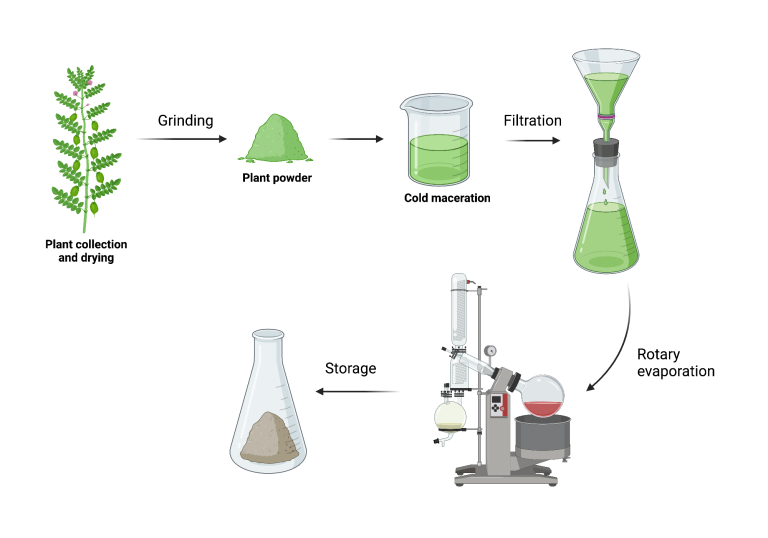
Sample preparation decides which constituents reach the test solution. Sample mass, particle size, extraction solvent, material-to-solvent ratio, extraction time, temperature and dilution or concentration can all shift the relative abundance of compounds in the fingerprint. Two labs can both report “HPTLC identity testing” with materially different preparations and get different chromatograms from the same botanical source, so the complete procedure — not just the instrument name — has to be compared.
Ginseng Example: Why Shared Markers Do Not Prove Species Identity
American ginseng (Panax quinquefolius), Asian ginseng (Panax ginseng) and Panax notoginseng contain overlapping ginsenoside families, and compendial procedures use chromatographic profiles and differences in characteristic ginsenosides to tell them apart. Two botanicals can share marker compounds and still be different ingredient identities, so a broader fingerprint gives stronger evidence than confirming one shared marker. That is why Ginseng Extract 10–80% Ginsenosides and American Ginseng Extract 10–80% Ginsenosides are separate ingredients even where ginsenoside percentages look alike.
Why Reference Materials Matter as Much as the Instrument
The platform determines how the sample is separated; the reference determines what the pattern means. A botanical reference material represents a known authentic plant or preparation; a chemical Reference Standard is a defined compound that helps identify characteristic zones or peaks; and a botanical extract Reference Standard or validated reference chromatogram represents the broader expected pattern. Botanical references may be tied to a voucher specimen or herbarium collection linking the analytical reference to an identified source, and AHPA’s identity resources include voucher images, morphology, microscopy and chromatographic methods for commercially important botanicals. “HPTLC performed” therefore tells a buyer much less than “HPTLC fingerprint conforms to an authenticated reference according to defined acceptance criteria.” FDA has cited an HPTLC identity procedure as inadequate where the firm did not identify the chemical or reference standard used to meet the specification (FDA Warning Letter: Anatox Inc.).
Authentic Botanicals Do Not Always Produce Identical Fingerprints
Authentic lots of one species can differ in fingerprint intensity because composition varies with geographic origin, cultivar or chemotype, climate, harvest stage, post-harvest handling, storage and processing. A strong identity procedure does not demand mathematically identical samples; it identifies diagnostically important features that stay consistent while separating acceptable variation from another species, plant part or adulterant. The International HPTLC Atlas for Identification of Herbal Drugs compares samples from different geographic accessions to illustrate natural variability and includes related or confounding botanicals to support discrimination.
Using Chromatographic Fingerprints to Spot Adulteration
Fingerprints can reveal substitutions or adulterants that alter the expected pattern: missing zones or peaks, unexpected constituents, unusual band or peak ratios, profiles typical of related species, or a strong marker signal without the expected surrounding fingerprint. No single procedure detects every adulterant, so specificity should be tested against realistic confounders — related species, known substitutes and relevant adulteration risks. A method that accurately detects one target compound but cannot separate likely alternatives may still give weak identity evidence.
When One Identity Method Is Not Enough
An orthogonal test examines a different characteristic: microscopy looks at anatomy, HPTLC at a planar chemical fingerprint, HPLC at a liquid chromatographic profile, DNA at genetic information, and GC or GC-MS at volatile profiles. More tests do not automatically make a program stronger — each additional procedure should solve a real limitation of the first, which matters most where processing removes anatomy or related species give similar patterns. Published, compendial or supplier-developed procedures may need validation, verification or transfer before routine use depending on lab, matrix, procedure and application.
How to Evaluate Botanical Identity Results on a COA
“Identification: Conforms” reports a result but gives little context on its own. A meaningful review connects the botanical, matrix, sample preparation, method, reference and acceptance criteria.
| Less Informative COA | More Informative Specification / COA |
|---|---|
| Product: Ginseng Extract | Panax ginseng C.A. Meyer root extract |
| Identification: Conforms | Identification by HPTLC: Conforms to defined reference fingerprint |
| No test method shown | Analytical procedure referenced |
| No plant part | Root specified |
| No reference information | Authenticated reference/profile defined |
| 20% marker treated as identity evidence | Identity fingerprint and quantitative assay reported separately |
The second version creates a clear chain from claimed botanical to reported result. Commercial COAs need not reproduce every validation detail, but the underlying specification and documents should define what is controlled. Our Compliance & Documentation page distinguishes the product specification (expected requirements) from the batch COA (how the supplied lot performed). See also How to Read a Botanical Extract COA.
What If the Supplier and Third-Party Lab Get Different Results?
A passing supplier COA and a failing third-party result do not automatically mean either lab is wrong. First establish whether the tests were comparable:
| Check | Why It Matters |
|---|---|
| Same species and plant part? | Specifications may describe different materials |
| Same lot or retained sample? | Different lots can show legitimate variation |
| Same material matrix? | Raw botanical and extract profiles are not interchangeable |
| Same sample preparation? | Solvent and extraction conditions can change the fingerprint |
| Same analytical procedure/version? | “HPTLC” or “HPLC” alone does not define a complete method |
| Same reference material? | Different comparison standards can affect interpretation |
| Did system suitability pass? | The system must perform correctly before the result is judged |
| Same acceptance criteria? | Laboratories may apply different decision rules |
A discrepancy should trigger a method-to-method investigation — retained samples, chromatograms, method versions, reference information, raw data and repeat testing under harmonized conditions where needed. For repeat supply, our Sourcing & Traceability page connects incoming lots, processing and finished batches, specifications, COA and release records and source information, and notes that changes in source, process, carrier, specification or method may need additional review where they could affect identity or consistency.
Buyer Checklist for Botanical Ingredient Suppliers
- Are the Latin name and plant part clearly defined?
- What form is tested — whole botanical, powder, extract or standardized extract?
- Which procedure establishes identity?
- Has it been validated, verified or transferred for this matrix and laboratory?
- What botanical reference, chemical standard or reference profile is used?
- If HPLC is listed, is it for identity, assay or both?
- Does the procedure discriminate relevant substitutes, related species or known adulterants?
- Does the batch COA correspond to the approved product specification?
A supplier should be able to explain what a test controls and why it is suitable, not just list analytical acronyms.
Frequently Asked Questions
Which is better for botanical identity testing: TLC, HPTLC or HPLC?
None is universally better. TLC may be appropriate for established qualitative procedures. HPTLC provides standardized side-by-side fingerprint comparison, while HPLC offers detailed peak profiles and can also support quantitative assays. Selection should depend on the botanical, matrix, reference system, analytical objective and required specificity.
Can HPLC confirm botanical species?
HPLC can provide strong supporting evidence when a sufficiently specific chemical fingerprint is compared against an appropriate reference. A single marker peak, however, may not uniquely establish species because related botanicals can share constituents.
Does an HPLC assay prove botanical identity?
Not automatically. An assay quantifies a compound or group of compounds, while an identity procedure determines whether the material corresponds to the claimed botanical. HPLC can support both purposes only when suitable criteria are defined for each analytical objective.
What does “Identification: Conforms” mean on a COA?
It means that the tested sample met the acceptance criteria of the specified identification procedure. Proper interpretation also requires knowing the botanical, material matrix, method, reference system and underlying specification.
Why can DNA testing be difficult after extraction?
DNA may be fragmented, degraded or removed during extraction, heating, purification and concentration. For highly processed botanical extracts, chemical fingerprinting can therefore provide more practical identity information than genetic analysis alone.
Botanical Identity Is a System, Not an Instrument
Define the material before choosing the technology: which species, plant part, form, processing history and specification? The analytical strategy then links that material to suitable sample preparation, a fit-for-purpose procedure, a meaningful reference, adequate specificity, system suitability and defined acceptance criteria. TLC, HPTLC and HPLC can all contribute; what matters is whether the evidence answers the actual identity question — and matches the ingredient you intend to buy.
Request Specifications, COAs or Samples
Compare materials across our botanical ingredient portfolio, including Botanical Extracts, Standardized Extracts and Botanical Powders. Contact Essencefield Botanicals to request a specification, identity method information, representative COA or sample.