Botanical extracts can meet the same marker specification while differing in chemical composition. Plant origin, extraction method, processing and undeclared substitution can change the finished ingredient in ways a single-compound assay will not reveal. HPLC fingerprinting compares characteristic chromatographic patterns with authenticated reference profiles to assess chemical identity, flag unusual differences and support batch-to-batch consistency. For manufacturers, buyers and QA teams, its value depends on knowing what a chromatogram actually shows, whether the method is suitable and how the results relate to the material being purchased.
What Is an HPLC Fingerprint?
An HPLC fingerprint is a chromatographic profile of multiple constituents detected in a botanical material under defined conditions. High-performance liquid chromatography separates compounds by their interactions with a stationary phase and a liquid mobile phase; as they pass the detector, their responses are recorded as peaks. The positions and relative responses of selected peaks form a characteristic pattern — flavonoids, phenolic acids, alkaloids, terpenoids, glycosides or other detectable phytochemicals, depending on species and method. Evaluating several features together gives more information than single-marker testing when comparing sources, processing routes or batches.
A fingerprint does not represent every compound in an extract; coverage depends on sample preparation, chromatographic conditions, detector and compound chemistry. A 2022 Frontiers in Pharmacology review, Advances in Fingerprint Analysis for Standardization and Quality Control of Herbal Medicines, describes how chromatographic fingerprints and chemometrics help characterize complex herbal materials beyond selected marker concentrations.
How HPLC Fingerprinting Works
Sample Preparation and Chromatographic Separation
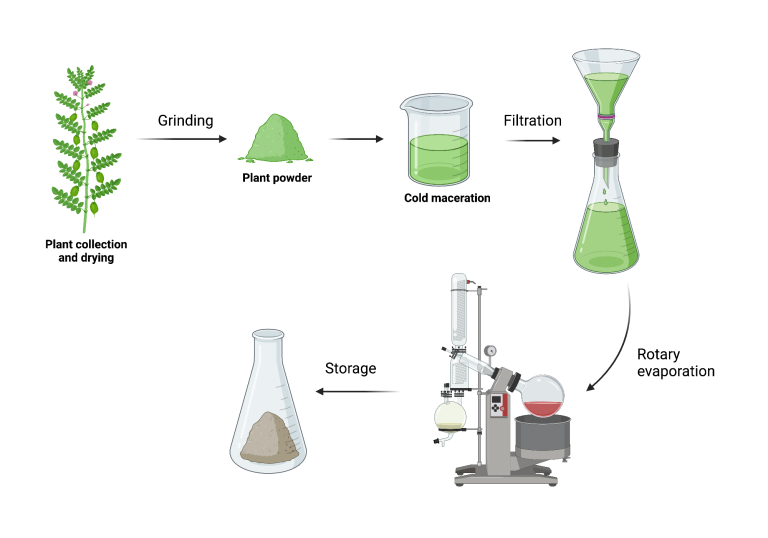
A representative sample is prepared to suit its form and composition — dissolution, solvent extraction, dilution, centrifugation or filtration. Concentrated dry extracts often need different preparation from untreated powders, because extraction shifts the relative abundance of constituents. The solution is injected and carried through the column by the mobile phase; column chemistry, mobile-phase composition, gradient, flow rate and temperature govern resolution and retention, so controlling them is essential for reproducible results.
Detecting and Comparing Characteristic Peaks
Common detectors include UV (HPLC-UV) and diode-array (HPLC-DAD), with mass spectrometry adding compound-selective information when needed. The chromatogram is compared with authenticated reference material or an established reference profile, examining characteristic peak presence, retention behavior, relative responses and unexpected signals against predefined criteria rather than visual similarity. A method built for raw botanical material may not discriminate well enough on a concentrated extract, so reference selection and method suitability are central.
How to Read an HPLC Chromatogram
A chromatogram plots detector response against retention time. Each peak is a detected signal, though several compounds can share a peak if separation is incomplete. For authentication, the question is whether selected features correspond to an appropriate reference and meet the method’s identification criteria.
Retention Time and Relative Retention Time
Retention time is the interval from injection to detection of a peak. Under controlled conditions it helps match compounds, but mobile phase, column performance and temperature can shift it, so analysts often use relative retention time (RRT): RRT = retention time of characteristic peak ÷ retention time of reference peak. A peak at 8.4 minutes against a reference peak at 6.0 minutes gives RRT 1.40 — an illustrative calculation, not a specification for any extract.
Peak Area and Relative Peak Area
Peak area is the integrated detector response; in a validated quantitative assay it can be related to concentration through calibration. For fingerprint comparison, analysts may use relative peak area (RPA): RPA = area of characteristic peak ÷ area of reference peak, so 240,000 against 400,000 units gives 0.60 (illustrative). These ratios compare responses, not mass concentrations, because detector response factors differ between compounds.
Identifying Missing Peaks and Unexpected Signals
| Chromatographic Observation | Possible Explanation | Recommended Assessment |
|---|---|---|
| Expected peaks are present | Profile corresponds to selected reference features | Evaluate against all defined criteria |
| A characteristic peak is missing | Chemical difference, low concentration, or detection issue | Check preparation and method performance |
| An unexpected peak appears | Additional constituent or interference | Investigate its identity |
| Retention times shift | Changes in analytical conditions | Review system suitability |
| Relative peak areas differ | Compositional or analytical variation | Compare with justified limits |
A missing peak does not automatically mean adulteration, nor does an unexpected signal prove substitution. For complex chromatograms, peak alignment, similarity calculations, hierarchical clustering and principal component analysis (PCA) help reveal patterns across samples, but they cannot make up for a method that lacks specificity.
What Happens When a Fingerprint Does Not Match?
An atypical chromatogram should trigger a structured investigation rather than an immediate verdict:
- Check system suitability — did the system meet the method’s performance requirements?
- Review sample preparation — extraction conditions, dilution, filtration, possible errors.
- Confirm reference comparability — were reference and test run under comparable conditions?
- Assess reproducibility — is the difference repeatable under the established procedure?
- Investigate chemical differences — with additional chromatographic or targeted analysis where needed.
- Determine batch disposition — approve, continue investigating or reject under quality procedures.
If a meaningful difference stays unresolved, the material should not be accepted just because its marker assay passes. This is a general framework; laboratory SOPs and applicable regulations take precedence.
HPLC Fingerprints vs. Marker Assays
A marker assay measures the concentration of selected constituents and is the basis for standardized extracts sold to an assay requirement (see Botanical Extract Assay Methods). A fingerprint looks at a broader pattern and can reveal differences the marker misses.
| Quality Question | Marker Assay | HPLC Fingerprint |
|---|---|---|
| Does the material meet its marker specification? | Direct quantitative assessment | Only if suitable quantitative analysis is included |
| Does the broader chemical profile match a reference? | Limited | Primary application |
| Can unusual chemical features be detected? | Usually limited to selected analytes | Potentially, within the method’s detection scope |
| Can it support batch comparison? | Yes, for measured markers | Yes, for characteristic chemical features |
| Does it establish complete botanical authenticity? | Not necessarily | Not necessarily |
Take two hypothetical extracts that both meet a 20% marker specification. If one shows the expected fingerprint and the other lacks characteristic constituents, identical assays do not mean equivalent composition, and the second needs more evaluation before it can replace the approved ingredient. This matters most for botanicals whose markers occur in several species or can be added by blending or spiking. Specification matching should therefore cover species, plant part, grade, marker definition, method and reporting basis — the same reasons a ratio extract and a standardized extract cannot be compared on numbers alone, and the basis of our Specification & Grade Matching service.
What Makes an HPLC Fingerprint Reliable?
Choosing Authenticated Reference Materials
Reference materials set the comparison basis; relevant information includes accepted scientific name, plant part, origin, authentication records and processing history. Chemical reference standards identify selected compounds but serve a different purpose from authenticated botanical references, a distinction explained in USP General Chapter <563> Identification of Articles of Botanical Origin: the botanical reference establishes the expected characteristics of the declared plant, while a chemical standard references an individual constituent.
Matching Sample Preparation and Analytical Conditions
Reference and test chromatograms must be generated under comparable conditions. Differences in extraction solvent, concentration, detector wavelength, column or mobile phase can change the profile even for the same botanical — an aqueous extract, for example, may show a different distribution from a hydroalcoholic one, and comparing them without demonstrated suitability can mislead. The reference should match the species, plant part and extract matrix. The 2026 Journal of Natural Products paper Compendial Perspectives on Botanical Identity Testing examines these issues from a pharmacopeial perspective, emphasizing fit-for-purpose identification, reference standards, validation and complementary techniques.
Method Validation and Acceptance Criteria
| Analytical Parameter | Purpose |
|---|---|
| Specificity | Distinguish relevant chemical patterns from interfering materials |
| Repeatability | Demonstrate consistency under repeated analytical conditions |
| Chromatographic resolution | Separate characteristic peaks sufficiently for interpretation |
| System suitability | Verify acceptable analytical performance |
| Robustness | Evaluate the effect of small procedural changes where relevant |
| Acceptance criteria | Define whether the fingerprint meets identification requirements |
USP General Chapter <621> Chromatography covers chromatographic principles, calculations and system suitability. Acceptance criteria may include diagnostic peak presence, relative retention, peak-area relationships or validated similarity measures. No universal similarity percentage establishes authenticity for every extract; a score means something only when the method and reference dataset have shown enough discriminating power for the material.
Detecting Adulteration in Botanical Extracts
Adulteration can mean species substitution, the wrong plant part, blending with lower-value material or adding selected compounds to manipulate results. HPLC fingerprinting can detect some of the resulting chemical differences, and two published studies show how whole-profile comparison and targeted chromatography complement each other.
Case Study: Authenticating Bilberry Extracts with HPLC Fingerprints
Bilberry (Vaccinium myrtillus L.) has a characteristic anthocyanin mix — glycosides of delphinidin, cyanidin, petunidin, peonidin and malvidin. Other berries contain related pigments, so total anthocyanins alone may not separate genuine bilberry from alternatives. Liu, Hu and Yan (2020) published Authentication of the Bilberry Extracts by an HPLC Fingerprint Method Combining Reference Standard Extracts in Molecules, comparing six bilberry batches with a reference standard extract and also examining blueberry, mulberry, cranberry and black rice extracts.
| Bilberry Sample | Reported Similarity Coefficient |
|---|---|
| A1 | 0.998 |
| A2 | 0.993 |
| A3 | 0.994 |
| A4 | 0.997 |
| A5 | 0.983 |
| A6 | 0.163 |
Five samples closely matched the reference; A6 differed substantially, showing how characteristic anthocyanin patterns can expose an atypical extract sold under the same botanical name. The coefficients are specific to that study’s procedure and reference, not universal thresholds. For buyers evaluating Bilberry Extract Powder, the difference between an anthocyanin assay and an anthocyanin fingerprint matters; our product information describes Vaccinium myrtillus fruit extracts with HPLC-based anthocyanin specifications, including 25% and 36% grades (see also Bilberry Extract 25% Anthocyanins). Identity, assay definition, chromatographic profile and agreed specification should be considered together. The study is independent research and does not represent testing of Essencefield products.
Case Study: Targeted Adulteration Testing in Ginkgo biloba
Ginkgo leaf extracts contain flavonoid-related compounds that overlap chemically with other botanical sources. Bampali and colleagues (2021) studied adulteration with Styphnolobium japonicum (syn. Sophora japonica) fruit in HPLC-UV/HRMS Methods for the Unambiguous Detection of Adulterations of Ginkgo biloba Leaves with Sophora japonica Fruits on an Extract Level, using genistein and sophoricoside as indicators. Neither compound was detected in 33 controlled-origin ginkgo leaf samples. A key challenge was separating genistein from apigenin, a genuine ginkgo constituent of the same molecular mass; the HPLC-UV/HRMS methods did so and detected experimental adulteration at 2% or more of the Sophora fruit material. Unlike the bilberry work, this was targeted detection of specific adulteration markers rather than a whole-profile fingerprint. For ginkgo grades, see Ginkgo Biloba Extract 24% Flavone Glycosides / 6% Terpene Lactones and Ginkgo Biloba Extract Powder.
Together the studies show two complementary uses: comparing multiple characteristic peaks to spot an atypical profile (bilberry), and selective chromatography with targeted markers for a specific suspected adulterant (ginkgo). The method has to match the authentication risk — producing a chromatogram is not enough.
Checking Batch-to-Batch Consistency
Extracts vary naturally with origin, cultivation, harvest timing, storage and processing. Fingerprint comparison helps QA teams check whether characteristic peaks, relative retention and specified peak-response relationships stay consistent against an approved reference. Consistency does not require every peak to look identical — natural variation and analytical uncertainty belong in the acceptance criteria. A lot may pass its main marker yet show a meaningful change in other constituents, reflecting acceptable source variation, a manufacturing change or something needing investigation. That is why extraction and processing controls are closely tied to chemical consistency; our Processing & Standardization service describes how solvent selection, concentration, purification, drying and standardization contribute to repeatable production.
HPLC Fingerprints and Extract Stability
Where the method is suitable for stability work, fingerprints can also reveal changes during storage — degradation, oxidation or hydrolysis rather than substitution. In anthocyanin-rich materials such as bilberry, temperature, pH, light and oxygen affect pigment stability, so fingerprint changes should be read alongside storage conditions, handling and quantitative data. The European Medicines Agency discusses fingerprinting for identification and stability in its guideline on specifications and acceptance criteria for herbal substances and preparations; it applies to medicinal products and is not a universal requirement for supplement ingredients, but the principle — evaluate consistency across batches and storage conditions — carries over.
When HPTLC, LC-MS, or DNA Testing Adds Value
| Analytical Method | Main Strength | Important Limitation |
|---|---|---|
| HPLC-UV/DAD | Compares chemical patterns and selected constituents | Limited structural identification without additional evidence |
| HPTLC | Supports visual comparison of characteristic chromatographic patterns | Specificity and quantitative performance depend on the method |
| LC-MS | Provides additional compound-selective and mass-related information | Requires specialized equipment and interpretation |
| DNA Barcoding | Provides genetic evidence of botanical identity | DNA may be degraded or absent in processed extracts |
HPTLC is widely used for identification by comparison with reference patterns; DNA methods can identify species where enough genetic material survives, which is often not the case in concentrated extracts; LC-MS adds selectivity where retention and UV response cannot distinguish compounds. Combining independent approaches strengthens authentication when one method cannot resolve the risk — see Botanical Ingredient Identity Testing: How TLC, HPTLC and HPLC Differ. None of these replaces separate testing for heavy metals, pesticide residues, residual solvents, mycotoxins or microbiological hazards; a matching fingerprint does not establish overall safety.
What Buyers Should Check in an HPLC Report
A COA usually summarizes batch results, while supporting records may carry the chromatographic detail needed for technical evaluation.
| Report Element | What Buyers Should Verify |
|---|---|
| Botanical identification | Scientific name and plant part match the intended ingredient |
| Extract grade and matrix | Product form and processing description are appropriate |
| Sample and batch identification | Report corresponds to the material being purchased |
| Method identification/version | Analytical procedure is clearly identified |
| Sample preparation | Conditions support valid comparison with reference material |
| Detector and chromatographic conditions | Relevant detection and separation parameters are documented |
| Reference material or profile | Appropriate reference identification is provided |
| System suitability | Required analytical performance criteria were met |
| Characteristic peaks | Important identification features are reported |
| Acceptance criteria | Defined rules support the analytical conclusion |
| Analytical outcome | Results and any unresolved differences are clear |
Not every routine COA needs all of this; the evidence required depends on testing purpose, ingredient risk, applicable requirements and agreed documentation scope. For higher-risk materials, buyers may request chromatograms, method references or investigation records during qualification. A historical reference chromatogram does not replace batch-specific verification, and the report, COA and purchasing documents should all identify the lot. For the wider document review, see How to Read a Botanical Extract COA.
Regulatory Considerations for U.S. Dietary Supplements
Under 21 CFR §111.75, U.S. supplement manufacturers generally must conduct at least one appropriate test or examination to verify a dietary ingredient’s identity before use, unless an FDA-authorized exemption applies; the regulation also sets conditions — supplier qualification and periodic reconfirmation — for relying on supplier COAs for other component specifications. FDA does not require HPLC fingerprinting for every botanical; methods must be scientifically valid and fit for purpose. A supplier’s statement that an ingredient “has been HPLC tested” is not enough: buyers should know what was tested, by which method, against what criteria, and whether the results support the approved specification.
How Essencefield Aligns Testing with Specifications
We start ingredient evaluation from botanical identity, extract grade, analytical requirements and the agreed purchasing specification. Our Quality & Testing page covers identity assessment, marker analysis, contaminant evaluation and batch review; depending on the material and objective, identification may use TLC, HPTLC, HPLC fingerprinting or complementary techniques, and independent third-party testing can be coordinated when extra verification is needed. Our Compliance & Documentation page lists the document types available for qualification — specifications, TDS, SDS, COAs and supporting batch records according to project requirements. Methods and document availability vary by ingredient, grade, production route and lot, so agreeing requirements before sampling keeps expectations consistent from evaluation through commercial supply.
Turning HPLC Results into Sourcing Decisions
HPLC fingerprinting adds chemical-profile evidence alongside marker assays, targeted identification and other quality tests. The bilberry and ginkgo studies show why reference selection, characteristic peaks and analytical specificity matter: an unusual profile may justify further investigation, but conclusions must follow the method’s evidence. The practical goal is to confirm that the tested ingredient meets the approved specification and that its records support repeat sourcing.
Request Specifications, COAs or Samples
Evaluating botanical extracts for a formulation? Browse our Standardized Extracts, then contact Essencefield Botanicals to discuss specifications, available analytical documentation, samples and supply.