Auricularia heimuer Polysaccharide Identity
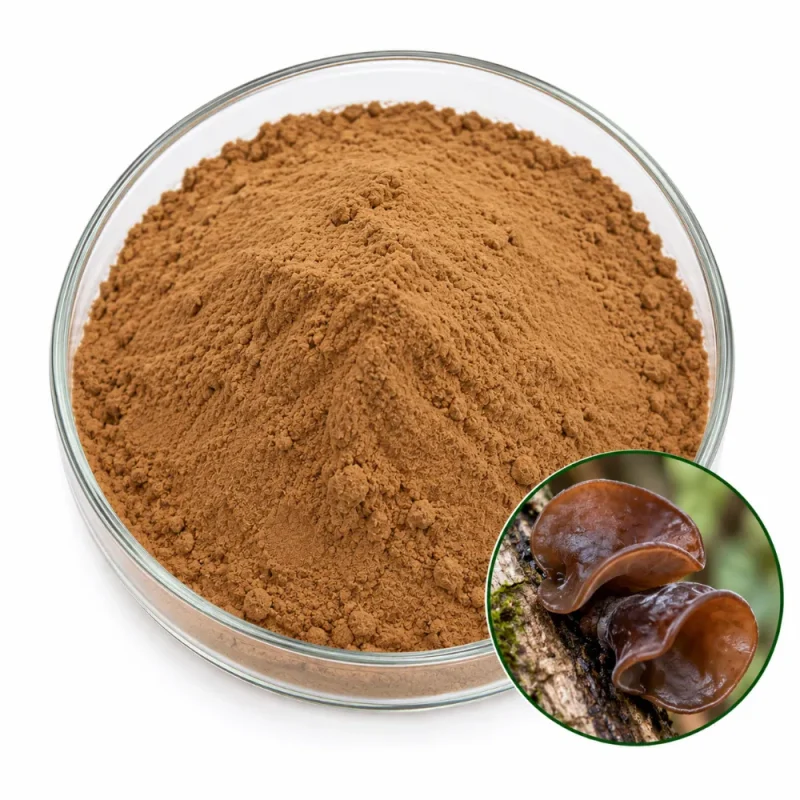
Auricularia heimuer polysaccharide powder is made from the fruiting body of Auricularia heimuer F.Wu, B.K.Cui & Y.C.Dai, the black wood ear that is cultivated on wood-based substrate. Auricularia heimuer fruiting body is the part used. The species was separated in 2014 from the European wood ear, Auricularia auricula-judae, to which Chinese cultivated black wood ear had been assigned before, so older literature may use the earlier name for the same crop.
The fruiting body is gelatinous when hydrated and leathery when dried, and it swells many times its dry weight in water. That behavior comes from acidic polysaccharides in the cell walls: chains containing mannose, glucuronic acid, xylose and glucose, with glucuronic acid giving the chain its charge. Glucans are also present. These polymers hold water and give the fruiting body its elastic crunch.
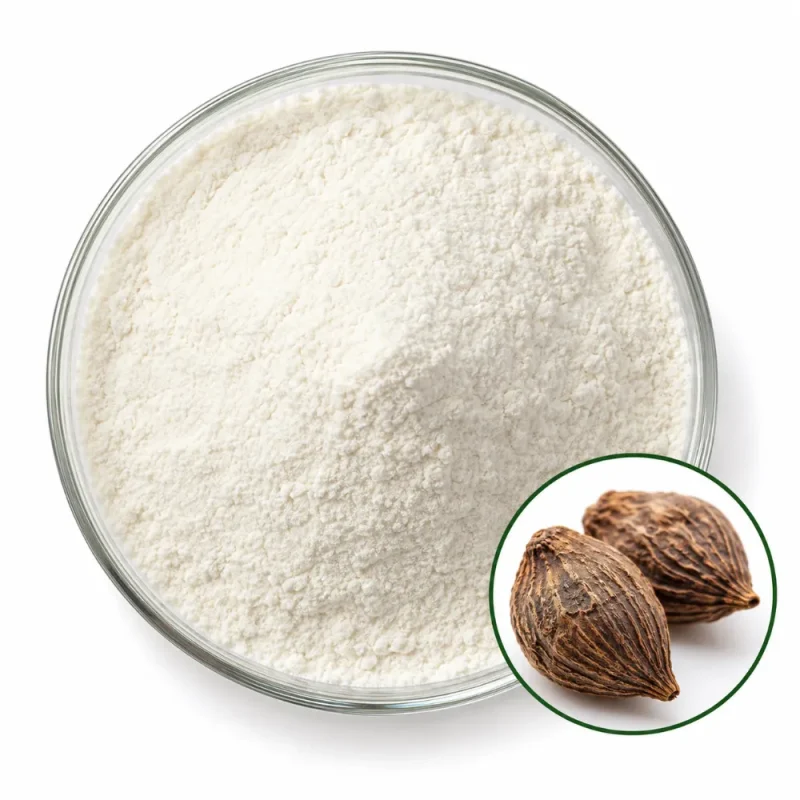
Hot-water extraction of Auricularia heimuer pulls these polymers into solution, and ethanol precipitation concentrates them. Chitin and cell-wall residue remain in the insoluble solid, and the dark melanin pigment of the fruiting body mostly stays behind or is removed during purification, which leaves the powder light in color.
Black wood ear is grown on logs or sawdust bags and picked when the ear is soft and fully expanded, then dried. Harvest stage influences wall thickness and polysaccharide content, and extraction always starts from dried, sorted fruiting body so that substrate and debris do not enter the powder.
No other Auricularia heimuer product is currently listed in the catalog, and this powder is the only form of the mushroom that Essencefield offers.