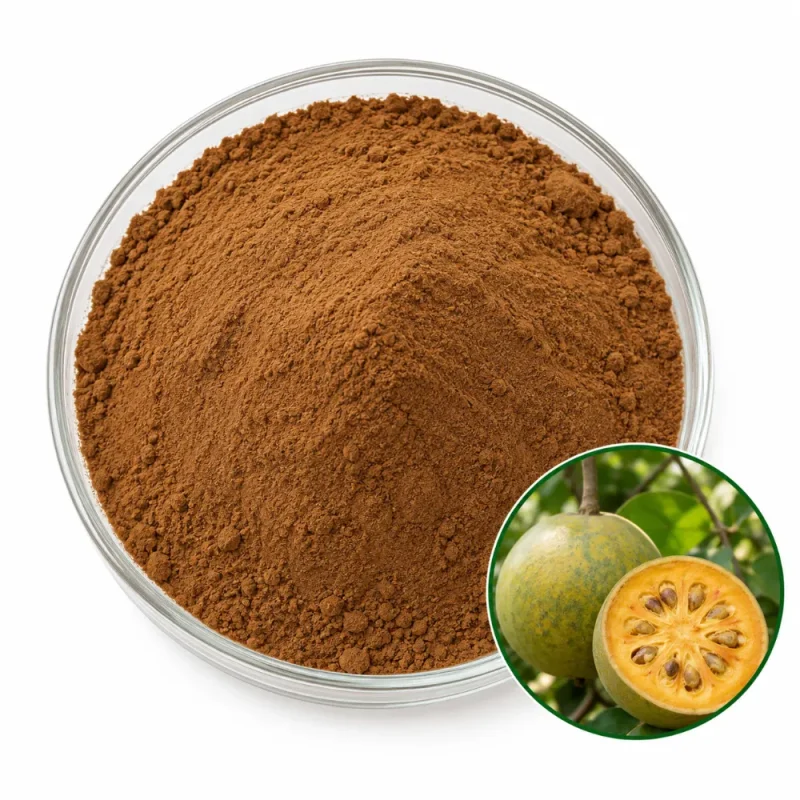
Bael Fruit Extract Powder

Bael fruit, the woody-shelled fruit of Aegle marmelos, is the only plant material behind this extract. The fruit is extracted in water, concentrated and dried to a light brown powder. Leaves, bark and roots of the bael tree are not used.

This bael fruit extract is a 10:1 ratio extract with no marker assay and no tannin percentage. The 80 mesh powder disperses in water. A standardized tannin extract of the same fruit and a plain fruit powder are listed as separate products.

Aegle marmelos Fruit Source & Identity

The botanical entity is Aegle marmelos (L.) Corrêa, a thorny tree of the citrus family, Rutaceae, native to the Indian subcontinent and widely grown in South and Southeast Asia. The part used is the fruit, a round berry with a hard shell and a sticky, fragrant pulp. The leaves, bark and roots are not part of this bael fruit extract.

Several fruits share the name “wood apple”. Limonia acidissima, also called wood apple, is a different tree with a different fruit, and it should not be substituted for bael on a specification.

Pectin and mucilage, tannins, coumarins and alkaloids are the main constituent families reported for the fruit.

Bael Fruit Extract vs Standardized & Powder

FormWhat It IsChoose It When
10:1 Bael Fruit ExtractWater extract of the whole bael fruit, ratio-definedA dispersible fruit extract without a marker is needed
Bael Extract 5% TanninsStandardized extract of the same fruit with a defined tannin contentThe specification names a tannin figure
Bael Fruit PowderDried bael fruit powder with no extractionWhole-fruit material with fibre is wanted

The 10:1 ratio measures fruit going into the extract. It is not a tannin assay. Bael pulp is rich in gum-like carbohydrates, so a water extract of the fruit holds a good deal of mucilage in addition to its phenolic fraction.

The three rows are three specification bases: a ratio extract, a tannin-standardized extract and a whole-fruit powder. A buyer should pick the row that matches what the specification must fix.

Typical Specifications

Specification ItemProduct Information
Latin NameAegle marmelos
Plant PartFruit & Berry
ProcessingWater Extraction
Common NameBael, Bengal Quince
Ingredient TypeRatio Extract
Extract Ratio10:1
AppearanceLight Brown powder
Solubility / DispersibilityWater Dispersible
Quality Parameters
Moisture (LOD)≤5.0%
Total Ash≤5.0%
Particle Size80 mesh
Heavy MetalsLead ≤2 ppm · Arsenic ≤1 ppm · Cadmium ≤1 ppm · Mercury ≤0.1 ppm
MicrobiologyTPC ≤1,000 cfu/g · Yeast & Mold ≤100 cfu/g · E. coli Negative · Salmonella Negative/25 g
Shelf Life24 months in unopened original packaging, cool and dry storage

Application Areas

Capsules for a Mucilaginous Extract

The gum-like carbohydrates in bael pulp make the dried water extract sticky, so bael fruit extract can cake in humid air. Fill capsules in a controlled-humidity room, keep the hopper covered and add a glidant if the powder bridges at 80 mesh.

Tablets with Anti-Caking Care

Tablets from a sticky fruit extract need a dry binder and an anti-caking agent. Press under low humidity, then compare hardness at pressing and after a week of storage. A moisture-barrier film coat hides the light brown core and slows water pickup.

Fruit-Style Drink Sticks

Bael has a sweet-sour, aromatic fruit character that suits warm or cold drink sticks. The powder disperses in water to a tan, slightly viscous liquid, so test viscosity at the planned dose. Citrus, ginger and rose-style flavours match the fruit profile well.

Sachet Blends

Sachets carry the extract in a sugar or fibre carrier. Sieve bael fruit extract into the carrier before filling, because a mucilaginous powder forms soft lumps when poured straight into a hopper. Check dose uniformity at the start, middle and end of the filling run, since a sticky powder can drift in weight as the line warms.

Powder Sticks for Hot Drinks

A hot-water stick lets the mucilage hydrate fully, giving a smoother, thicker cup than cold water does. Bael fruit extract blends with ginger or cardamom-style flavours, and a stirring test at the planned dose shows whether the drink needs less extract or a thinner base.

Formulation Notes

Bael fruit extract is a light brown powder with a sweet, resinous, fruity aroma. In water it forms a tan, thickened dispersion, because the mucilage and pectin-like fractions of the pulp hold water. At higher use levels the liquid feels noticeably more viscous, which suits a nectar-style drink more than a clear beverage.

Add the powder slowly to agitated water, or wet it first with a small volume, since dry clumps of a gummy powder hydrate from the outside only. Use a two-step dry blend: sieve the extract into a small amount of carrier, then bring in the remainder. Return the opened drum to a dry store with the liner pressed flat and sealed.

The tannin fraction of bael fruit extract gives a slightly astringent finish, and tannins bind to proteins and to iron. Avoid dairy or protein bases without a trial, use low-iron water, and judge the liquid only after it has rested for several minutes.

Packaging & Commercial Supply

Essencefield supports product evaluation, formulation trials, commercial orders, and ongoing ingredient supply. Packaging, storage, and shipping arrangements are determined by product characteristics, order quantity, stability requirements, and destination-market needs.

Supply ItemGeneral Information
SampleAvailable upon request for formulation, testing, and supplier evaluation
Order Quantities100 g · 1 kg · 5 kg · 25 kg · 100 kg · 500 kg · Bulk
Sample Lead TimeTypically 5–7 days after sample confirmation
Production Lead TimeTypically 15–30 days after order and specification confirmation
PackagingSuitable protective inner packaging with bags, cartons, drums, or other appropriate outer packaging
StorageStore in tightly sealed, suitable protective packaging in a cool, dry environment. Protect from moisture, heat, and direct sunlight. Specific storage conditions follow the approved product specification.
DocumentationCOA · Product Specification · TDS · SDS · Applicable declarations (as applicable)

Final order quantities, lead times, packaging, documentation, and shipping arrangements are confirmed according to the selected product and commercial requirements.

Request Ingredient Specifications & Quote

Share your target specification, application, quantity, and documentation needs. We’ll help confirm suitable options, samples, and commercial supply details.