Cherry Powder

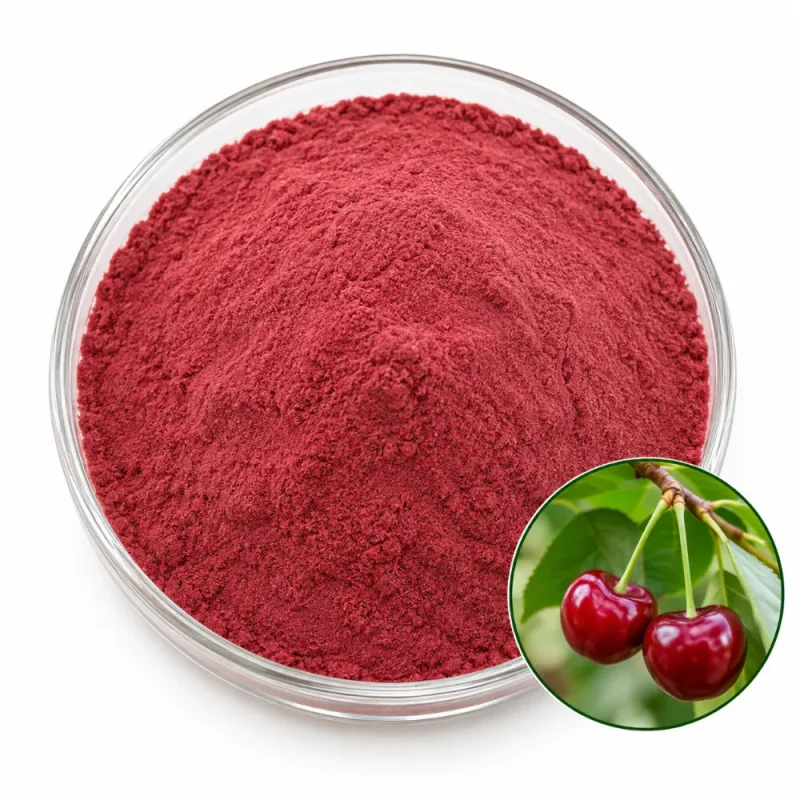
Cherry juice from the sour cherry tree, Prunus cerasus, is concentrated and spray-dried onto a maltodextrin carrier to give this purple-red powder with a bright, fruity tartness. The raw material is the juice of the pitted ripe fruit, so the stone and the stem stay out of the material.

Cherry powder dissolves in water to a clear to slightly hazy ruby liquid and has a lively, fruity-sour taste with a faint almond-like note from the stone fruit. It differs from freeze-dried cherry powder, which keeps the skin, pulp and fiber, and from the sweet-cherry powders of the confectionery trade.

Cherry Juice Powder Processing

The species is Prunus cerasus L., family Rosaceae, the sour or tart cherry, with the morello and amarelle groups as its main types. It is a different species from the sweet cherry, Prunus avium, whose fruit is larger, sweeter and darker. The word cherry on a label can mean either, and the botanical name settles which one is in the powder. Here it is the sour cherry, which carries more acid and a stronger fruit flavor per unit of sugar.

The raw material is cherry juice concentrate. The fruit is pitted, pressed and the juice concentrated, mixed with maltodextrin and spray-dried to a fine powder. The carrier keeps the sticky fruit sugars and acids from fusing, so the powder remains free-flowing and dissolves cleanly, and it softens the sharpness of the concentrate without removing the sour character.

Sour cherries are harvested for processing when fully ripe, because they soften quickly and lose acid and color if left on the tree. The juice is also taken soon after harvest. Seasonal and regional variation shows up as small differences in acidity and depth of color between lots, and the powder is defined by its fruit and process and not by a fixed sensory score.

Cherry Flavor, Color & Forms

Cherry powder is purple-red to dark red, and it dissolves into a bright ruby liquid. The color comes from anthocyanins, mainly glycosides of cyanidin, and the sourness from malic acid. The taste is fresh and tart, closer to a cooking cherry than to a dessert cherry, with a faint bitter-almond note that is characteristic of stone fruit.

Cherries are known for anthocyanins and for hydroxycinnamic acids, named here as traits of the fruit and not as stated levels for this powder. The anthocyanins shift color with pH, from red in acid to purple and blue-gray in near-neutral liquids, and they fade with heat and light.

FormWhat It IsChoose It When
Cherry Juice PowderSpray-dried sour cherry juice on a maltodextrin carrierA soluble, tart fruit powder for drinks
Tart Cherry PowderSpray-dried juice of the same species under the tart-cherry nameThe tart-cherry name is preferred on the label
Freeze-Dried Cherry PowderFreeze-dried whole cherry that keeps pulp and fiberFruit texture and fiber are wanted
Freeze-Dried Tart Cherry PowderFreeze-dried whole tart cherry, pulp and fiber retainedA whole-fruit powder under the tart-cherry name

The juice powders suit soluble products, while the freeze-dried powders belong in snacks, bars and cereals where fruit texture is wanted. The two juice powders and the two freeze-dried powders share a species, and the choice between them is mostly one of labeling.

Typical Specifications

Specification ItemProduct Information
Latin NamePrunus cerasus
Plant PartFruit & Berry
ProcessingSpray-Dried Juice
Common NameSour cherry, cherry, morello cherry
Raw MaterialCherry juice concentrate
Ingredient TypeJuice Powder
CarrierMaltodextrin
AppearancePurple Red powder
FlavorBright, fruity-sour with a faint almond note
Solubility / DispersibilityWater Soluble
Quality Parameters
Moisture (LOD)≤5.0%
Heavy MetalsLead ≤2 ppm · Arsenic ≤1 ppm · Cadmium ≤1 ppm · Mercury ≤0.1 ppm
MicrobiologyTPC ≤10,000 cfu/g · Yeast & Mold ≤1,000 cfu/g · E. coli Negative · Salmonella Negative/25 g
Shelf Life24 months in unopened original packaging, cool and dry storage

Application Areas

Iced tea and instant drink powders

Cherry powder dissolves quickly in cold water, and it gives iced tea powders, lemonade-style mixes and stick packs a ruby tint and a tart cherry flavor. Sweeteners balance the acid, and the color holds best in acidic bases.

Cherry-flavored dairy and dessert mixes

Yogurt, pudding and ice-cream bases use the powder for cherry flavor and a pink tint. The acid thickens milk proteins, so the powder is added with mixing and at a modest level, and the shade is checked after storage.

Bakery fillings, glazes and toppings

Pie fillings, glazes and bakery toppings accept the powder as a dry sour component. Heat shifts the red toward brown-purple, so the baked color is tested, and the powder balances sweeter fruit solids in the recipe.

Gummies and fruit snacks

Gummies and fruit snacks take cherry powder as a colored, acidic fruit component. The acid affects gel strength, so pectin and pH are adjusted, and the powder is added late to limit heat exposure of the pigments.

Mocktail and soda syrup bases

Dry mixes for mocktails and soda syrups use cherry powder for a bright, tart fruit note. It dissolves in warm water to a concentrate that is diluted later, and the almond-like undertone pairs well with vanilla and citrus.

Moisture Pickup & Stability

Cherry juice solids are rich in sugars and organic acids, and the powder draws water from the air. An open pack turns tacky within hours in a humid room, the particles fuse, and a hard cake forms at the base. Barrier packaging with low headspace, dry weighing areas and quick resealing keep the powder loose, and lumps are screened out and not forced through the line.

Color is the first indicator of damage. Anthocyanins fade under light, heat and oxygen, and a brownish tinge in the powder points to humidity or warm storage. Opaque packs, a cool store and short working periods after opening protect the red tone, and stainless steel equipment is used because iron and copper darken the pigment.

In finished products the pigment moves with pH. Carbonates and other alkaline ingredients turn it toward gray-blue, so dry premixes keep the cherry powder apart from them, and trials at the final pH confirm the shade. Opened containers are resealed at once.

Cherry powder from an opened pack is used within a short period, and the working container is filled in a dry room. Surface powder that looks dark or damp is removed first, because it has already absorbed humidity and will cake the rest of the content.

Packaging & Commercial Supply

Essencefield supports product evaluation, formulation trials, commercial orders, and ongoing ingredient supply. Packaging, storage, and shipping arrangements are determined by product characteristics, order quantity, stability requirements, and destination-market needs.

Supply ItemGeneral Information
SampleAvailable upon request for formulation, testing, and supplier evaluation
Order Quantities100 g · 1 kg · 5 kg · 25 kg · 100 kg · 500 kg · Bulk
Sample Lead TimeTypically 5–7 days after sample confirmation
Production Lead TimeTypically 15–30 days after order and specification confirmation
PackagingSuitable protective inner packaging with bags, cartons, drums, or other appropriate outer packaging
StorageStore in tightly sealed, suitable protective packaging in a cool, dry environment. Protect from moisture, heat, and direct sunlight. Specific storage conditions follow the approved product specification.
DocumentationCOA · Product Specification · TDS · SDS · Applicable declarations (as applicable)

Final order quantities, lead times, packaging, documentation, and shipping arrangements are confirmed according to the selected product and commercial requirements.

Request Ingredient Specifications & Quote

Share your target specification, application, quantity, and documentation needs. We’ll help confirm suitable options, samples, and commercial supply details.