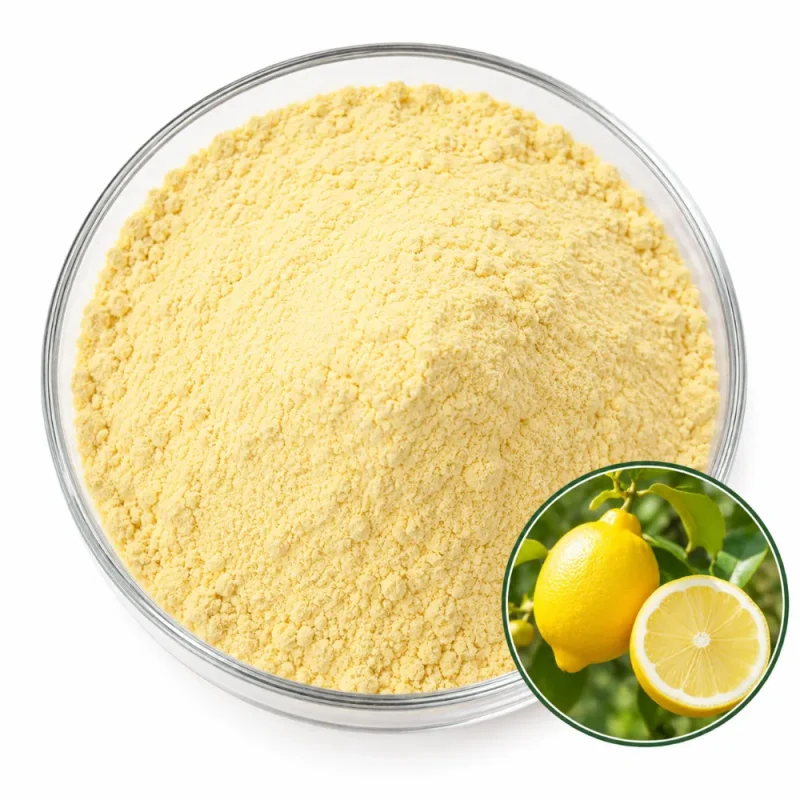
Lemon Juice Powder Processing
The species is Citrus limon (L.) Osbeck, the lemon, a small evergreen tree of the rue family (Rutaceae) that is generally treated as a hybrid of citron and sour orange ancestry. It is not the lime, Citrus aurantiifolia, whose juice is also sour but has a different aroma. It is not the Meyer lemon, a sweeter citrus hybrid grown mainly as an ornamental and garden fruit. Buyers searching for “lemon powder” also meet dried lemon peel powder, a different product based on a different part.
The raw material is lemon juice concentrate pressed from the fruit, with peel and seeds excluded. The concentrate is mixed with maltodextrin and atomized in a spray dryer. Because lemon juice solids are dominated by citric acid and contain relatively little sugar, the carrier does most of the work of forming a stable particle. The finished powder is a diluted form of the original concentrate.
Lemon trees flower and fruit across much of the year, and juice composition shifts a little with growing region and season, so a concentrate may blend fruit from several lots to hold an even acid level.
Harvest timing changes the balance of the fruit. Lemons picked at full yellow color have more sugar and a rounder flavor than green-tinged fruit, which is sharper and more bitter. A powder made from a blend of ripe lots tastes cleaner and less harsh than one from underripe fruit, even though both are sour.