Sea Buckthorn Juice Powder Processing
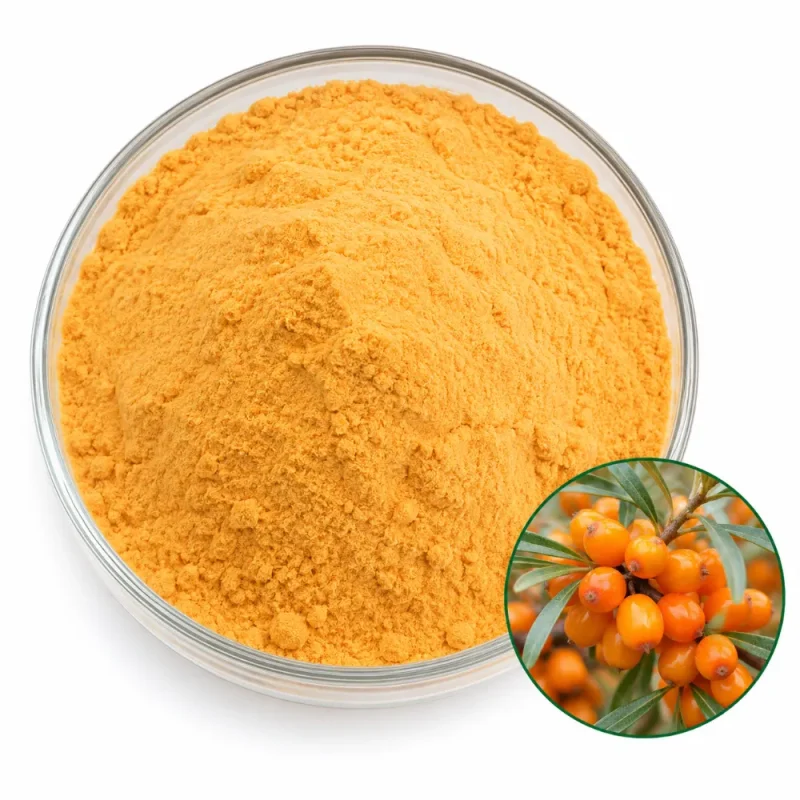
The species is Hippophae rhamnoides L., the sea buckthorn or seaberry, a thorny deciduous shrub of the oleaster family (Elaeagnaceae) that grows on coasts and mountain slopes across Europe and Asia. Its orange berries cling tightly to the branches in dense clusters and are hard to pick by hand. Sea buckthorn is unrelated to the true buckthorns of the genus Rhamnus, although the common names overlap.
The raw material is sea buckthorn juice concentrate. Berries are pressed, the juice is separated from the oily pomace, concentrated and blended with maltodextrin, and the mixture is atomized in a spray dryer. The carrier makes the powder soluble and free-flowing, and it softens the strong sourness of the berry juice.
Because much of the berry oil stays in the pomace, the juice powder carries a smaller share of the fat-soluble material than the whole fruit does. Buyers who want the oil fraction look at separate oil products, and those who want fruit solids look at whole-berry forms, so this powder fits where soluble sourness and color are the target.
Plantations in China, Russia, Mongolia and northern Europe supply most of the fruit, and cutting branches and freezing them is common because the berries are hard to detach by hand. Fruit frozen on the branch releases from the stem more cleanly, which helps keep leaf and twig fragments out of the press.
Fruit is harvested in autumn, often after the first frost, when the berries have lost some of their sharpness. Berry quality varies with the harvest date, and the concentrate used here comes from fully colored fruit.