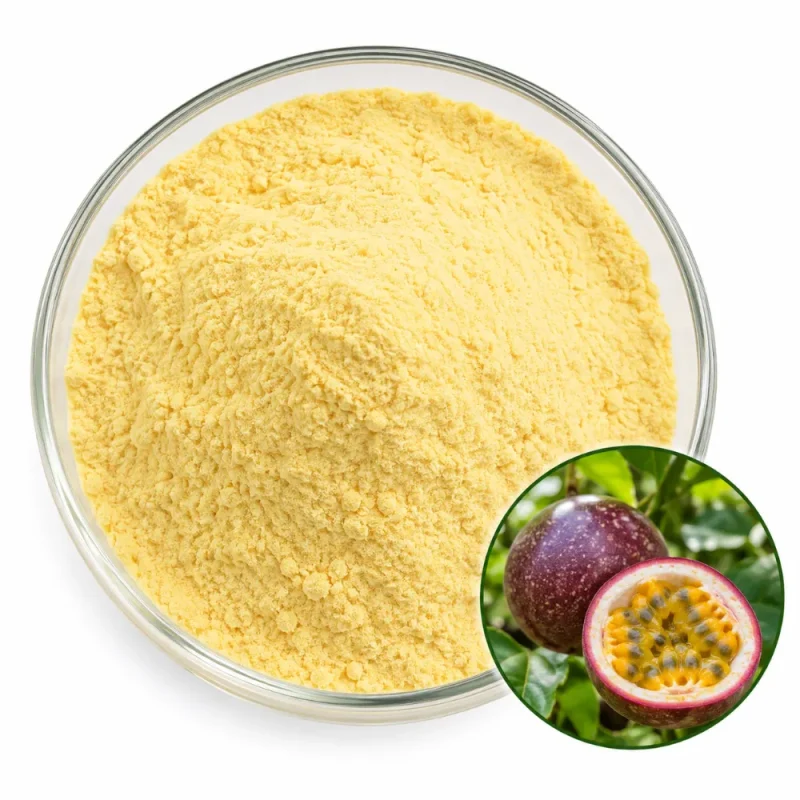
Passion Fruit Juice Powder Processing
The species is Passiflora edulis Sims, a climbing vine of the passion flower family (Passifloraceae) native to South America. Two forms are traded. The purple passion fruit is smaller and sweeter, and the yellow form, often listed as P. edulis f. flavicarpa, is larger and more acidic; the pale color of this powder fits the yellow type. Sweet granadilla, Passiflora ligularis, and banana passionfruit, Passiflora tarminiana, are different species. The medicinal herb Passiflora incarnata is a different plant used for a different purpose.
The raw material is passion fruit juice concentrate. The aromatic pulp with its black seeds is strained, the juice is concentrated, and maltodextrin is added as the carrier before atomization in a spray dryer. The carrier gives the powder its flow and dissolves it cleanly, and it softens the biting acidity of pure juice.
Seeds and the leathery rind are removed in straining, so the powder dissolves without grit and without the crunchy specks of whole-pulp products. The pulp’s aromatic compounds are carried largely in the juice phase, which is why the powder keeps the strong nose of the fruit.
The vines flower and fruit twice a year in many regions, and the harvest is concentrated when the fruit drops from the vine fully ripe, since wrinkled skin signals the sweetest pulp. Concentrate makers press the fruit soon after collection because the pulp ferments quickly.