Dragon Fruit Juice Powder Processing
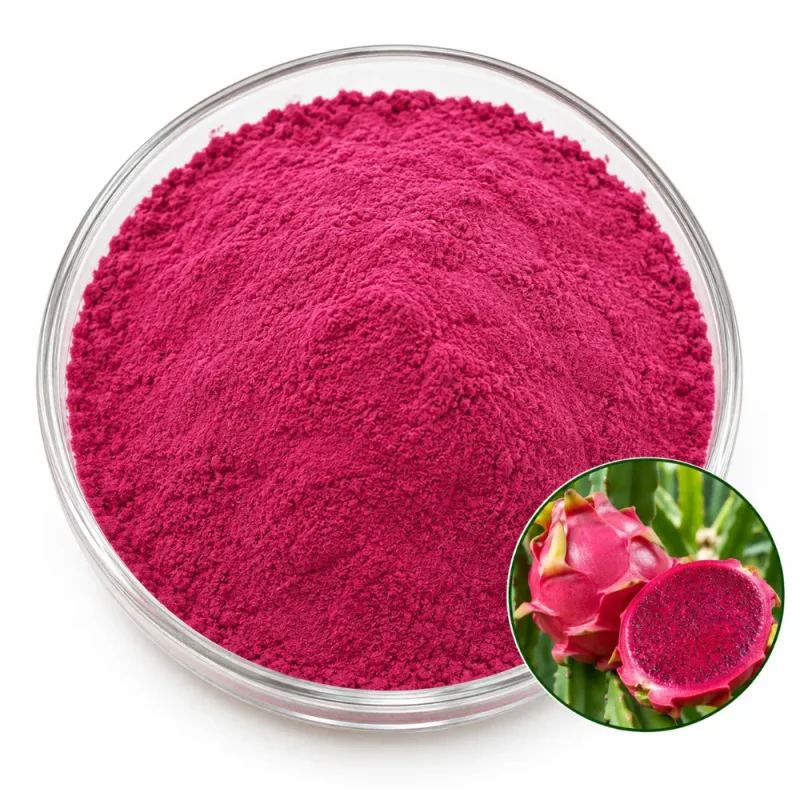
The botanical entity is Hylocereus undatus (Haw.) Britton & Rose, a climbing cactus grown for its oblong fruit with leafy scales on the skin. Pitaya is the common name across Latin America and Asia, and dragon fruit is the English trade name. The same trade names cover other cactus species and cultivars whose pulp ranges from white to deep magenta, so a name alone does not tell a buyer how the fruit looks or what color it gives.
The raw material is dragon fruit juice concentrate. Pulp and the small black seeds are pressed and separated, the juice is concentrated by evaporation, and maltodextrin is added as the carrier before atomization in a spray dryer. The carrier makes the powder soluble and easy to scoop, and it also dilutes the pigment, so the powder is paler than a freeze-dried whole-fruit form. Seeds and their oil do not appear in a spray-dried juice powder, which is one practical difference between the two forms.
Dragon fruit juice is low in acid compared with most fruits used for juice powders, and its sugar level is moderate. The spray-drying step therefore meets fewer sticky, acid-rich solids than a citrus or berry juice would give, though the maltodextrin carrier still sets how the powder flows and how fast it picks up moisture. A buyer comparing powders should look at the color source and carrier, not at the acid taste that dominates other fruit powders.