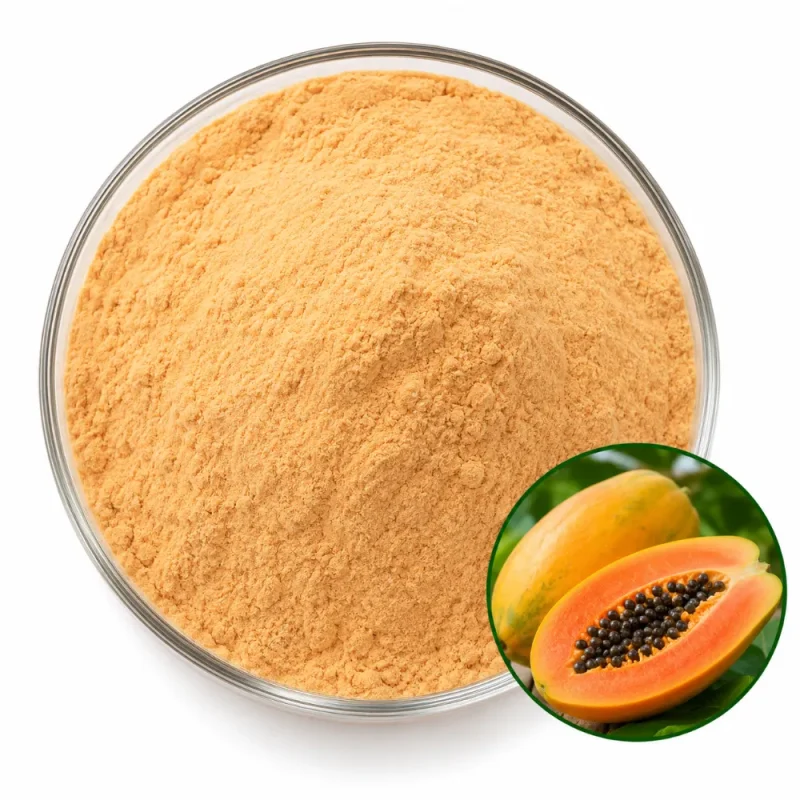
Papaya Powder

Papaya powder is spray-dried from the pulp juice of ripe Carica papaya fruit on a maltodextrin carrier. It is a yellow-orange, water-soluble powder with a mild, musky sweetness and very little acid. Leaves, seeds and the latex of unripe fruit are not part of this product.

The word “papaya” covers two different raw materials in trade. Ripe papaya is a sweet, orange-fleshed fruit, while unripe green papaya is a firm, pale vegetable-like fruit rich in the enzyme papain. This powder is the ripe-fruit juice product, and the green fruit has its own powder.

Papaya Juice Powder Processing

The species is Carica papaya L., the papaya or pawpaw of the tropics, a fast-growing herbaceous tree of the papaya family (Caricaceae) native to Central America. In parts of the world “pawpaw” means Asimina triloba, a North American tree in a different family, so the Latin name settles identity. The part used is the ripe fruit, which has orange or reddish flesh around a cavity of black seeds.

The raw material is papaya juice concentrate, prepared from ripe pulp that is pulped, strained and concentrated. Seeds and coarse fiber are removed, and the concentrate is blended with maltodextrin and atomized in a spray dryer. The carrier makes the powder soluble and gives it body, and the process heat inactivates the protein-digesting enzyme papain, which sits mainly in the latex of unripe fruit and is low in ripe flesh.

Papaya ripens off the tree and softens fast, so processors work with fruit at the fully colored stage. Pulp from underripe fruit is firmer and pale, and the juice has a greener flavor and more enzyme activity, which is why ripeness is part of the quality of the concentrate.

Papaya trees fruit all year in warm climates, and fruit of different sizes and flesh colors is grown, from the large red-fleshed types of Latin America to the small yellow-fleshed Hawaiian types. The master color of this powder is yellow-orange, and the cultivar mix is not stated.
Papaya Flavor, Color & Forms

The powder is yellow-orange from carotenoids, chiefly beta-cryptoxanthin and related pigments. Red-fleshed cultivars add lycopene and give a deeper tone. In water the powder forms an opaque, golden drink, as the carotenoids stay dispersed. The taste is gently sweet and musky, with a soft, buttery body and a slightly cheesy note that some tasters notice in ripe fruit.

Acidity is low, so papaya powder reads as a mild base and not as a sharp fruit. In blends the mild flavor lets papaya act as a carrier for stronger fruits, rounding the sharp notes of pineapple or passion fruit. Characteristic constituents are sugars, carotenoids, pectin and small amounts of organic acids and aroma esters. No figure is given for any of them.

FormWhat It IsChoose It When
Papaya Juice PowderSpray-dried ripe-fruit juice on maltodextrinA soluble, mild ripe papaya base is wanted
Green Papaya PowderPowder from unripe papayaThe unripe, enzyme-bearing fruit is specified
Freeze-Dried Papaya PowderRipe fruit dried under vacuumPulp solids and no added carrier are wanted
Carica Papaya Leaf Extract Powder10:1 water extract of the papaya leafThe leaf, not the fruit, is the requirement

Typical Specifications

Specification ItemProduct Information
Latin NameCarica papaya
Plant PartFruit & Berry
ProcessingSpray-Dried Juice
Common NamePapaya
Raw MaterialPapaya juice concentrate
Ingredient TypeJuice Powder
CarrierMaltodextrin
AppearanceYellow-Orange powder
FlavorMild, sweet, musky
Solubility / DispersibilityWater Soluble
Quality Parameters
Moisture (LOD)≤5.0%
Heavy MetalsLead ≤2 ppm · Arsenic ≤1 ppm · Cadmium ≤1 ppm · Mercury ≤0.1 ppm
MicrobiologyTPC ≤10,000 cfu/g · Yeast & Mold ≤1,000 cfu/g · E. coli Negative · Salmonella Negative/25 g
Shelf Life24 months in unopened original packaging, cool and dry storage

Application Areas

Tropical Smoothie Powders

Dry smoothie bases blend papaya powder with mango, pineapple and coconut for a soft tropical profile. The low acidity makes papaya a good base fruit that other flavors can sharpen, and it thickens the drink slightly through residual pectin.

Yogurt and Dairy Fruit Preps

Dairy preps use papaya powder for color and a mild fruity sweetness. The carotenoid tint is stable at the pH of yogurt, and because the enzyme is largely inactivated, milk proteins stay intact, unlike with fresh papaya, which can turn dairy bitter.

Gummies and Soft Candy

Confectioners add papaya powder to gummies for yellow-orange color and a gentle tropical flavor. Because the powder is low in acid, candy recipes usually add citric or malic acid to reach a lively taste, and the added acid also helps pectin set.

Bakery Fillings and Cream Mixes

Dry cream and custard fillings use papaya powder for a tropical note and warm color. It blends smoothly with vanilla and coconut, and bakers add it to the cooled filling to keep the delicate aroma from baking off.

Dessert Jelly and Pudding Mixes

Jelly and pudding mixes take papaya powder as the main flavor in tropical lines. The lack of active protease means gelatin and milk proteins in the mix are not broken down, so the dessert sets reliably.

Moisture Pickup & Stability

Papaya powder is a high-sugar, low-acid glass on a maltodextrin carrier, and it takes up water quickly. A drum left open in humid air becomes tacky at the surface and then forms lumps that grow inward. Weigh in a dry room, close the liner after every draw, and sieve any clumps before blending.

Carotenoids set the color stability. Light and oxygen bleach the golden shade, and warmth speeds the loss, so opaque, sealed packaging and cool storage keep the color closer to the received tone. Fat-containing mixes pull the pigment into the oil phase, which can deepen the orange of a creamy product.

Aroma is the second weak point. The soft esters and the faint musky note fade with warmth and air, and aged powder tastes flatter. Because papaya is low in acid, the powder is also an easier target for microbial growth if moisture enters, so a sealed liner is both a taste and a hygiene control.

Papaya powder carries almost no acid to protect it, so an opened drum is more exposed than citrus or berry powders to musty off-odors if damp air gets in. Smell each drum before use; a sour or fermented note means moisture has entered, and the material should be set aside.

Packaging & Commercial Supply

Essencefield supports product evaluation, formulation trials, commercial orders, and ongoing ingredient supply. Packaging, storage, and shipping arrangements are determined by product characteristics, order quantity, stability requirements, and destination-market needs.

Supply ItemGeneral Information
SampleAvailable upon request for formulation, testing, and supplier evaluation
Order Quantities100 g · 1 kg · 5 kg · 25 kg · 100 kg · 500 kg · Bulk
Sample Lead TimeTypically 5–7 days after sample confirmation
Production Lead TimeTypically 15–30 days after order and specification confirmation
PackagingSuitable protective inner packaging with bags, cartons, drums, or other appropriate outer packaging
StorageStore in tightly sealed, suitable protective packaging in a cool, dry environment. Protect from moisture, heat, and direct sunlight. Specific storage conditions follow the approved product specification.
DocumentationCOA · Product Specification · TDS · SDS · Applicable declarations (as applicable)

Final order quantities, lead times, packaging, documentation, and shipping arrangements are confirmed according to the selected product and commercial requirements.

Request Ingredient Specifications & Quote

Share your target specification, application, quantity, and documentation needs. We’ll help confirm suitable options, samples, and commercial supply details.