Durian Powder

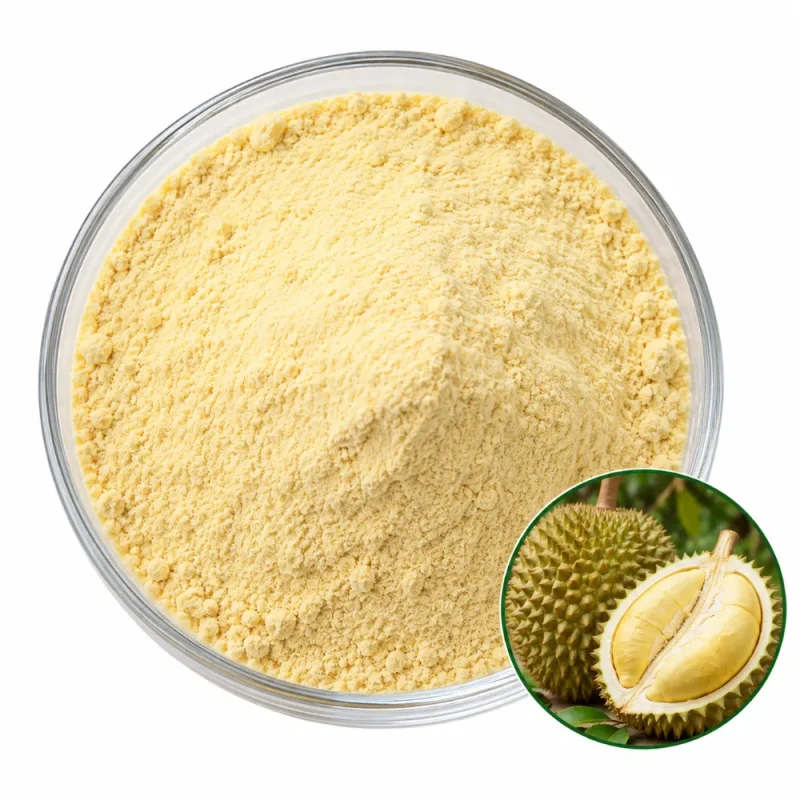
Durian powder comes from the creamy pulp of Durio zibethinus, the species behind nearly all durian sold as food, processed to a juice concentrate and spray-dried onto maltodextrin. The result is a light yellow, water-soluble powder that keeps the sweet custard note of the fruit. Husk and seeds are not used.

Durian is unusual among juice-powder fruits because its pulp is rich, starchy and slightly fatty. The powder carries the fruit’s strong sulfur-and-ester aroma, which is the first thing a formulator will notice and the main handling point for storage and blending.

Durian Juice Powder Processing

Durio zibethinus Murray is the common durian, a large tropical tree of the mallow family (Malvaceae). Related species such as Durio graveolens and Durio kutejensis are eaten locally in Southeast Asia, but only D. zibethinus is traded widely, so the species name settles identity. The part used is the creamy aril around the seeds. Jackfruit, which is often compared to it, is a different genus with a different flavor.

The tree is cultivated in Thailand, Malaysia, Indonesia and Vietnam, and named cultivars differ in sweetness, bitterness and pulp texture. Since the powder is made from a blended concentrate, the cultivar mix is not stated, and the flavor is described by character instead of by variety name. Buyers who need a single named cultivar should treat that as a separate specification.

Durian pulp holds little free juice, so the raw material is a concentrate prepared from the pulp. This is blended with maltodextrin and atomized in a spray dryer, where water leaves quickly and the solids set as fine particles. The carrier makes the finished powder soluble and gives it a more even, lighter color than the cooked pulp has. Because the pulp contains fat, spray-dried durian can feel slightly heavier and more prone to clumping than a fruit powder made from clear juice.
Durian Flavor, Color & Forms

The powder is light yellow with a rich, custard-like sweetness and a savory background that some tasters compare to roasted onion or garlic. This note comes from volatile sulfur compounds together with fruity esters, and it is the reason durian can divide a room. The sweet, creamy side comes from sugars and the fat-bearing pulp. In water the powder gives a creamy, slightly cloudy liquid that smells strongly of fresh fruit.

Characteristic constituents are starch and sugars, a small share of fat, volatile sulfur compounds and esters, and soft fiber; no figure is given for any of them.

Sweetness in the powder is tied to the pulp itself and to the carrier, so a formula that adds more sugar can quickly become cloying. Durian also pairs unusually well with coconut, glutinous rice and pandan in the dessert traditions of Thailand, Malaysia and Indonesia, and that pairing is the practical guide for flavor design with the powder.

FormWhat It IsChoose It When
Durian Juice PowderSpray-dried concentrate on a maltodextrin carrierA soluble, evenly colored durian base is wanted
Freeze-Dried Durian PowderPulp dried under vacuum without a carrierPulp texture and full aroma matter most

Typical Specifications

Specification ItemProduct Information
Latin NameDurio zibethinus
Plant PartFruit & Berry
ProcessingSpray-Dried Juice
Common NameDurian
Raw MaterialDurian juice concentrate
Ingredient TypeJuice Powder
CarrierMaltodextrin
AppearanceLight Yellow powder
FlavorSweet, custard-like, strongly aromatic
Solubility / DispersibilityWater Soluble
Quality Parameters
Moisture (LOD)≤5.0%
Heavy MetalsLead ≤2 ppm · Arsenic ≤1 ppm · Cadmium ≤1 ppm · Mercury ≤0.1 ppm
MicrobiologyTPC ≤10,000 cfu/g · Yeast & Mold ≤1,000 cfu/g · E. coli Negative · Salmonella Negative/25 g
Shelf Life24 months in unopened original packaging, cool and dry storage

Application Areas

Gelato and Ice Cream Premixes

Dry premixes for durian gelato mix the powder with milk solids, sugar and stabilizers before freezing. The fat in the pulp carries aroma into the cream, and the carrier keeps the powder easy to hydrate, so the base builds a smooth body without the cost of fresh pulp.

Milk Tea and Bubble Tea Powders

Instant milk-tea powders use durian powder to add a sweet, creamy fruit layer to tea and creamer blends in Southeast Asian styles. It dissolves in hot or cold liquid, and the aroma is strong enough that a low inclusion usually delivers the character.

Pastry and Mooncake Fillings

Pastry makers fold durian powder into custard, cream cheese and lotus fillings to rebuild fresh-pulp flavor in a shelf-stable form. Baking dulls the volatile top notes, so the powder is best added to cooled fillings or to finishing cream, not to the dough.

Sweets and Nougat

Confectioners use the powder in milk candies, nougat and fudge, where sugar and dairy fat match the sweet-savory profile. Dry-blend it into the sugar phase and avoid steam in the mixing area, since the aroma travels and the powder can pick up moisture quickly.

Pancake and Waffle Mixes

Dry pancake mixes with durian powder give breakfast and dessert batters a custard note that needs no fruit puree. The powder also lightly colors the batter yellow, and it should be tested for browning because its sugars accelerate color on the griddle.

Moisture Pickup & Stability

Durian powder is a sugar-rich amorphous solid and, because of the pulp’s fat, also an oxidation-prone one. In a humid room it first loses flow, then forms sticky lumps, so weighing areas for this powder should be dry and the liner closed after each draw. Fat in the solids can go stale on long exposure to air.

Aroma is the other handling issue. The sulfur volatiles are strong and move through porous packaging and warehouse air, so durian powder should sit in sealed, odor-tight liners and away from delicate ingredients such as vanilla, tea or dairy powder. After opening, a lid on the drum helps hold the smell in place.

Heat accelerates both browning and aroma loss. Warm storage turns the light yellow toward tan, mutes the sweet top note and sharpens the sulfur edge. Keep unopened drums cool and dry, and use opened containers promptly. The product is supplied on maltodextrin alone, and any flow aid belongs to the buyer’s own blend.

Packaging & Commercial Supply

Essencefield supports product evaluation, formulation trials, commercial orders, and ongoing ingredient supply. Packaging, storage, and shipping arrangements are determined by product characteristics, order quantity, stability requirements, and destination-market needs.

Supply ItemGeneral Information
SampleAvailable upon request for formulation, testing, and supplier evaluation
Order Quantities100 g · 1 kg · 5 kg · 25 kg · 100 kg · 500 kg · Bulk
Sample Lead TimeTypically 5–7 days after sample confirmation
Production Lead TimeTypically 15–30 days after order and specification confirmation
PackagingSuitable protective inner packaging with bags, cartons, drums, or other appropriate outer packaging
StorageStore in tightly sealed, suitable protective packaging in a cool, dry environment. Protect from moisture, heat, and direct sunlight. Specific storage conditions follow the approved product specification.
DocumentationCOA · Product Specification · TDS · SDS · Applicable declarations (as applicable)

Final order quantities, lead times, packaging, documentation, and shipping arrangements are confirmed according to the selected product and commercial requirements.

Request Ingredient Specifications & Quote

Share your target specification, application, quantity, and documentation needs. We’ll help confirm suitable options, samples, and commercial supply details.