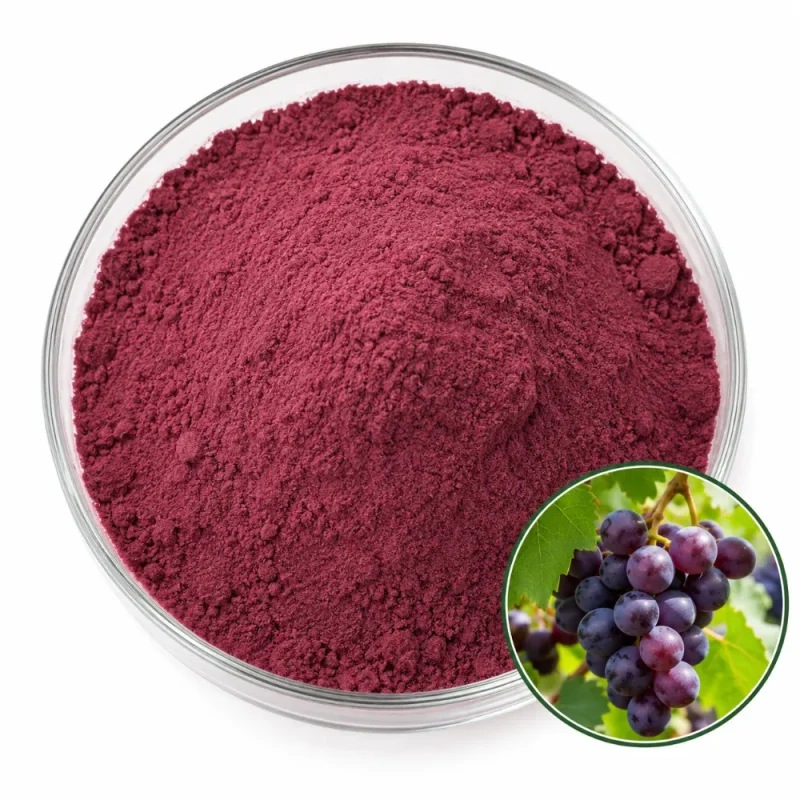
Grape Juice Powder Processing
The species is Vitis vinifera L., the Eurasian grape, a woody vine of the Vitaceae family that supplies most of the world’s wine and table grapes. American Concord grape juice comes from a different species, Vitis labrusca, with a distinct “foxy” aroma and purple color, and muscadine grapes are Vitis rotundifolia. The pale yellow color of this powder points to white or green grape juice, and the species name fixes the botanical identity.
The raw material is grape juice concentrate pressed from the ripe fruit. In pressing, the seeds and skins stay in the pomace, so the juice carries sugars, acids and a smaller share of phenolics than the whole berry. Maltodextrin joins the concentrate before it is atomized in a spray dryer, and the carrier lets the finished particles dissolve cleanly and flow freely.
Because grape juice solids are rich in glucose and fructose, which have low glass-transition temperatures, a grape powder needs a higher share of carrier than a sucrose-rich juice to stay a flowing powder. That is a general feature of high-sugar fruit juices, not a value stated for this product.