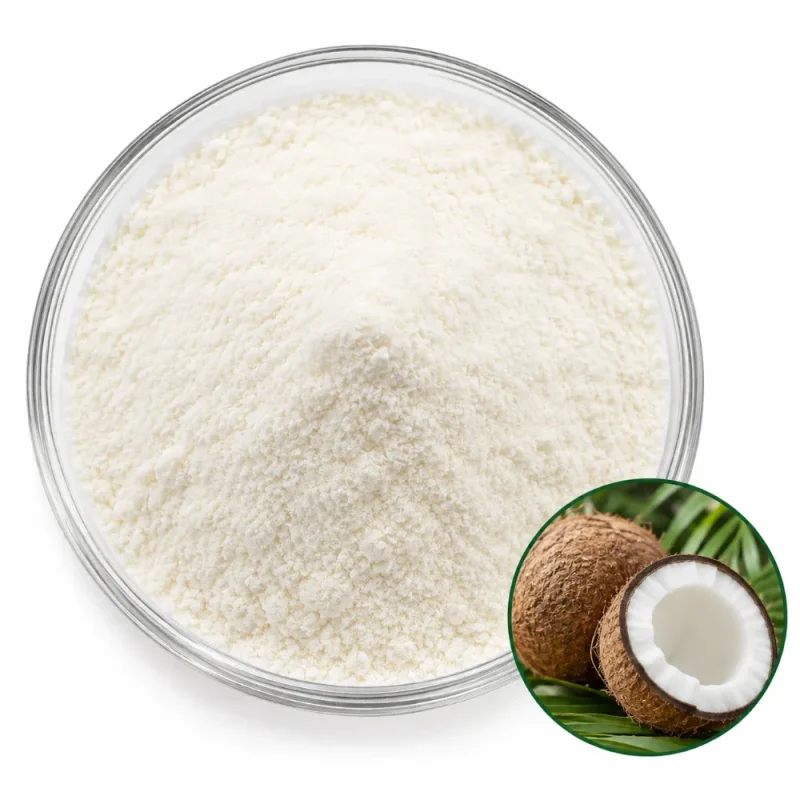
Coconut Juice Powder Processing
The species is Cocos nucifera L., family Arecaceae, the coconut palm, whose fruit is a drupe with a fibrous husk, a hard shell and a white kernel with a central cavity filled with liquid. Several different ingredients come from one nut. The grated meat gives desiccated coconut and pressed milk, the oil is separated as coconut oil, and the liquid of the cavity is coconut water. These are separate raw materials, and the word coconut on a label does not say which one is meant.
The raw material of this powder is coconut juice concentrate, meaning the liquid of the nut. The liquid is concentrated, mixed with maltodextrin and spray-dried to a fine powder. The carrier keeps the powder free-flowing and soluble, and it dilutes the sugars and minerals of the liquid so that the dry material does not fuse into a block.
Nut maturity decides the liquid. A young nut carries a larger volume of thin, lightly sweet liquid, while a mature nut has less liquid with a higher fat and mineral content and a more pronounced coconut flavor. The powder follows the liquid in sweetness and taste, and it is defined by its source and process and not by a fixed sweetness score.
Coconuts are harvested as young nuts for their abundant liquid or as mature nuts for meat and oil. The liquid is collected from nuts opened soon after harvest, since it ferments quickly at room temperature and has to be processed promptly, which is why the concentration step follows the opening of the nuts closely.