Guava Juice Powder Processing
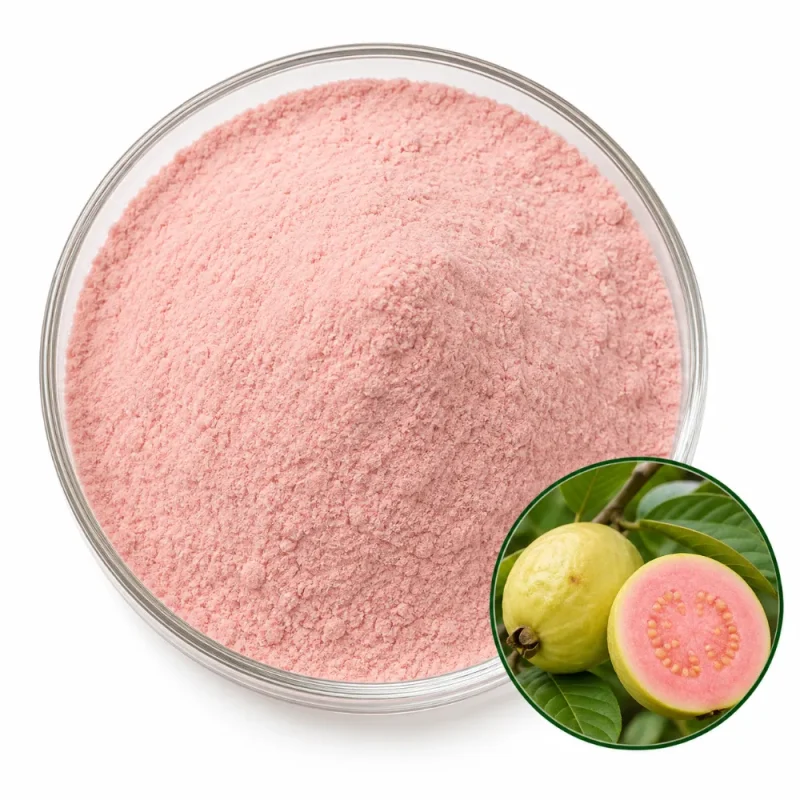
The species is Psidium guajava L., the common guava, a small tree of the myrtle family (Myrtaceae) native to tropical America and grown across the tropics. Strawberry guava, Psidium cattleyanum, is a different species with smaller red fruit, and pineapple guava or feijoa, Acca sellowiana, is a different genus altogether. The part used is the ripe fruit; guava leaf is a separate and widely traded botanical.
Guava flesh is dense with hard seeds, so the raw material is a juice concentrate made from strained pulp. Seeds and coarse fiber are removed, the pulp juice is concentrated, and maltodextrin is added as the carrier before atomization in a spray dryer. The carrier produces a soluble, free-flowing powder and lightens the color of the pulp.
Guava trees fruit repeatedly through the year in warm climates, and the fruit softens quickly after picking, so the time between harvest and pressing matters for aroma. Fully ripe guava has the strongest musky character, while underripe fruit is greener and more astringent.
Guava juice is naturally viscous and cloudy because of its pectin and fine pulp particles. That cloud survives drying in part, so the powder gives a hazy, opaque solution in water instead of the clear liquid that citrus or grape powders give.