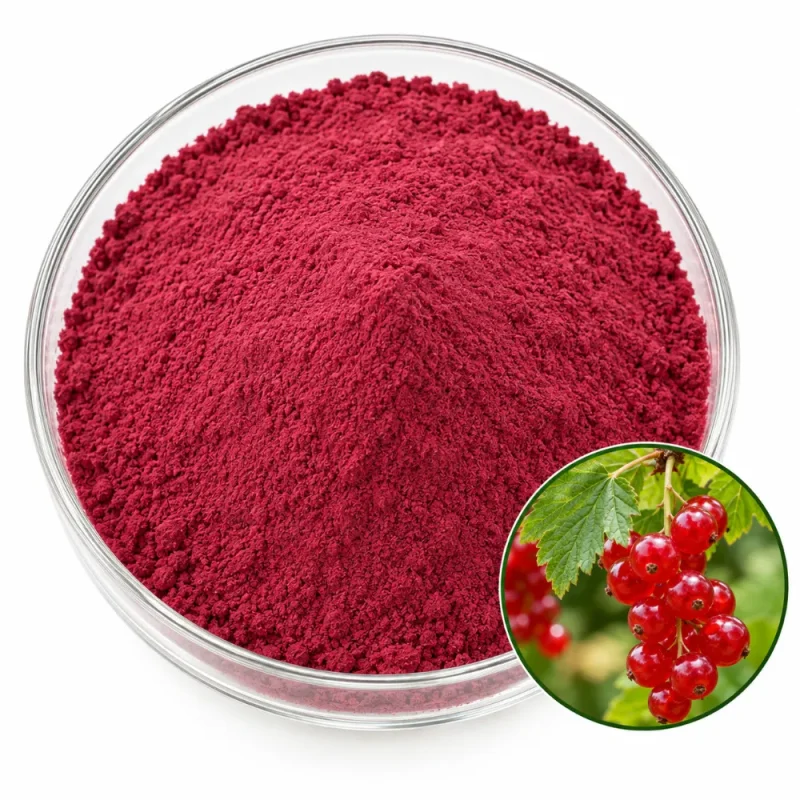
Red Currant Powder

Juice pressed from Ribes rubrum berries, the red-fruited currant, is concentrated and spray-dried into this red currant powder. Black currant and the dried Zante currant of the raisin trade are different plants and different products. The fruit is the only plant part used; leaves and buds are not.

Maltodextrin carries the juice solids through the dryer and gives a free-flowing, purple red powder that dissolves in water. The tart red currant flavor stays recognizable, and the juice-powder form suits drink mixes, fruit fillings and confectionery coatings where a liquid concentrate would add water and weight.

Red Currant Juice Powder Processing

The species is Ribes rubrum L., the red currant, a deciduous shrub of the gooseberry family whose translucent red berries ripen in hanging clusters called strigs. It is not the black currant, Ribes nigrum, which is darker, more aromatic and more heavily pigmented, and it is not the Zante currant, a small dried grape. A search for “currant powder” meets all three, so the species decides what the powder actually is.

The raw material is red currant juice concentrate. Pressing leaves the skins and most seeds in the pomace, so the juice carries the acids, sugars and pigments of the berry but little of its fiber. The concentrate is blended with maltodextrin and atomized in a spray dryer, where water leaves in seconds and the dissolved solids set as fine particles. The carrier makes the powder soluble and free-flowing, and it lightens the color and softens the sourness compared with pressed juice. Whole-berry fiber belongs to freeze-dried forms.

Red currants are naturally rich in pectin and acid, which is why the fresh fruit is a classic jelly berry, and some of that character survives in the juice. The powder therefore tends to thicken slightly at high dissolved concentration, a behavior formulators of syrups and glazes should check at their own use level.
Red Currant Flavor, Color & Forms

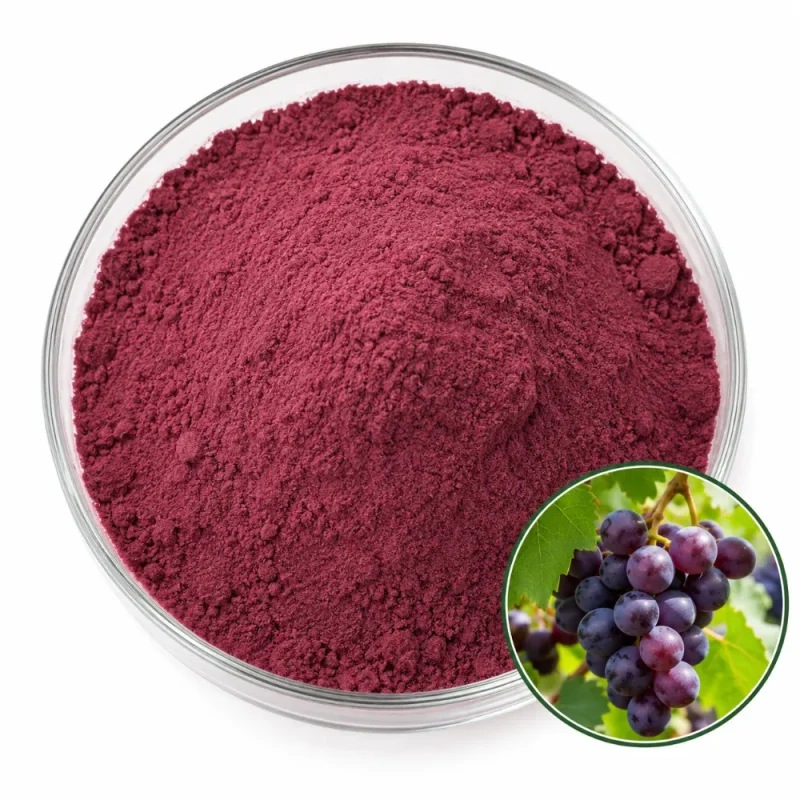
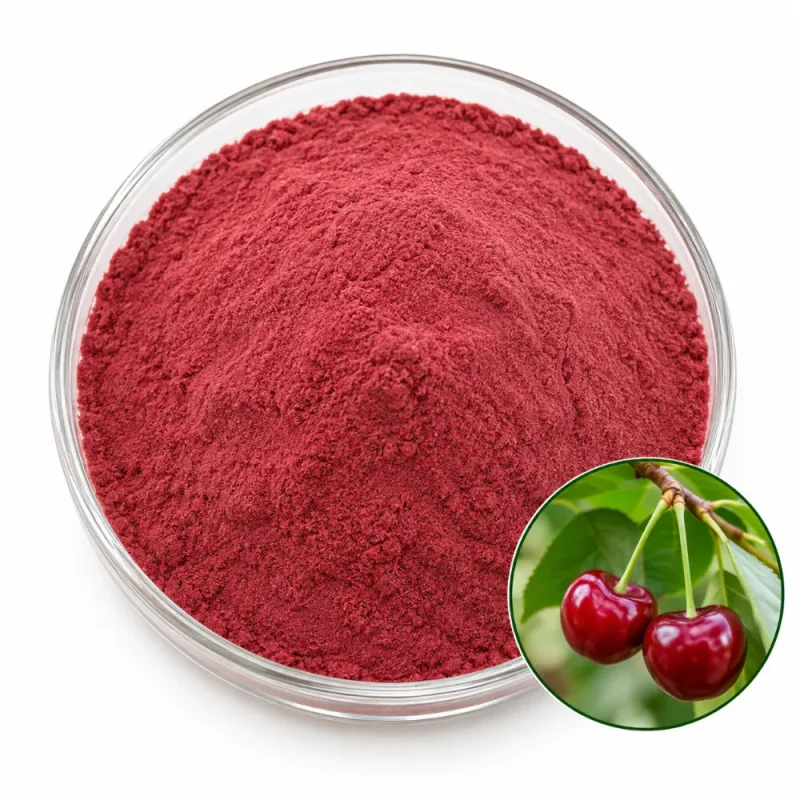
Red currant powder is purple red because the berry juice carries anthocyanin pigments alongside a heavy acid load. The flavor is sharply tart with a clean, slightly resinous berry note, and it stays sour after dilution, so formulas usually pair it with sweetener or a milder fruit base.

In water the powder dissolves to a clear to faintly hazy red liquid whose shade moves with pH, brighter in acid and duller toward neutral. The characteristic constituents are organic acids, mainly citric and malic, anthocyanins and other phenolics, and the vitamin C that currants are known for. No figure is given for any of them.

FormWhat It IsChoose It When
Red Currant Juice PowderSpray-dried juice on a maltodextrin carrierA soluble, tart red color is wanted
Freeze-Dried Whole-Fruit PowderWhole berries dried under vacuum, keeping pulp and fiberFruit solids matter more than solubility

Typical Specifications

Specification ItemProduct Information
Latin NameRibes rubrum
Plant PartFruit & Berry
ProcessingSpray-Dried Juice
Common NameRed currant
Raw MaterialRed currant juice concentrate
Ingredient TypeJuice Powder
CarrierMaltodextrin
AppearancePurple Red powder
FlavorSharply tart, fruity
Solubility / DispersibilityWater Soluble
Quality Parameters
Moisture (LOD)≤5.0%
Heavy MetalsLead ≤2 ppm · Arsenic ≤1 ppm · Cadmium ≤1 ppm · Mercury ≤0.1 ppm
MicrobiologyTPC ≤10,000 cfu/g · Yeast & Mold ≤1,000 cfu/g · E. coli Negative · Salmonella Negative/25 g
Shelf Life24 months in unopened original packaging, cool and dry storage

Application Areas

Tart Drink Mix Sticks

Red currant powder gives single-serve drink sticks a bright red tint and a sharp berry edge. It dissolves quickly in cold water, but the acidity needs a sweetener, and the stick film should be moisture-proof because the powder takes up humidity in an open sachet.

Jam and Fruit Filling Premixes

Dry pectin-and-sugar premixes for fruit fillings use red currant powder to restore the color and acid that cooking removes from fresh berries. Add it after the boil to protect the pigment, and recheck set strength because the acid load shifts pectin gelation.

Yogurt Fruit Preps

A dry fruit base for yogurt can include red currant powder to add tartness without extra water. The pigment is stable in the low pH of cultured dairy, which keeps the red shade clear, though long warm storage will slowly dull it.

Confectionery Dusting Powders

Sour sugar dusts for gummies and hard candy use red currant powder for acid, red color and a fruit note in a single ingredient. Blend it with citric acid and sugar in a dry mixer, and keep the room humidity low or the dust will clump.

Sauce and Glaze Bases

Savory sauces for game and poultry traditionally use red currant jelly for a sharp, glossy fruit finish. A dry red currant powder gives the same tart note and red tone in a dry sauce base, and it is whisked into hot stock where the maltodextrin dissolves without lumps.

Moisture Pickup & Stability

Spray-dried powders on maltodextrin are amorphous, and amorphous sugar-rich particles take up water from the air readily. For red currant powder the acids add to this, so an opened drum left in a damp room forms a crust, then lumps, and finally a sticky mass. Limit exposure time and reseal the liner tightly after each draw.

Color is the first property to change under stress. The anthocyanin red fades slowly in light and faster with heat, and it shifts toward a dull violet-brown when the powder is blended with alkaline ingredients such as carbonates. Keep opened containers in the dark and away from warm equipment.

Heat history matters as well. A drum stored beside a boiler or in a hot warehouse bay undergoes browning reactions between the sugars and amino traces in the juice solids, and the powder darkens from purple red toward brown over months. Cool, steady storage slows this and keeps the shade closer to what was received.

Flow aids can help in dry mixes, but this product is supplied on maltodextrin alone, and any additive belongs to the buyer’s own blend. Dissolve fresh batches of liquid preparations promptly: the acid attacks plain iron and uncoated steel, which turns the solution dark.

Packaging & Commercial Supply

Essencefield supports product evaluation, formulation trials, commercial orders, and ongoing ingredient supply. Packaging, storage, and shipping arrangements are determined by product characteristics, order quantity, stability requirements, and destination-market needs.

Supply ItemGeneral Information
SampleAvailable upon request for formulation, testing, and supplier evaluation
Order Quantities100 g · 1 kg · 5 kg · 25 kg · 100 kg · 500 kg · Bulk
Sample Lead TimeTypically 5–7 days after sample confirmation
Production Lead TimeTypically 15–30 days after order and specification confirmation
PackagingSuitable protective inner packaging with bags, cartons, drums, or other appropriate outer packaging
StorageStore in tightly sealed, suitable protective packaging in a cool, dry environment. Protect from moisture, heat, and direct sunlight. Specific storage conditions follow the approved product specification.
DocumentationCOA · Product Specification · TDS · SDS · Applicable declarations (as applicable)

Final order quantities, lead times, packaging, documentation, and shipping arrangements are confirmed according to the selected product and commercial requirements.

Request Ingredient Specifications & Quote

Share your target specification, application, quantity, and documentation needs. We’ll help confirm suitable options, samples, and commercial supply details.