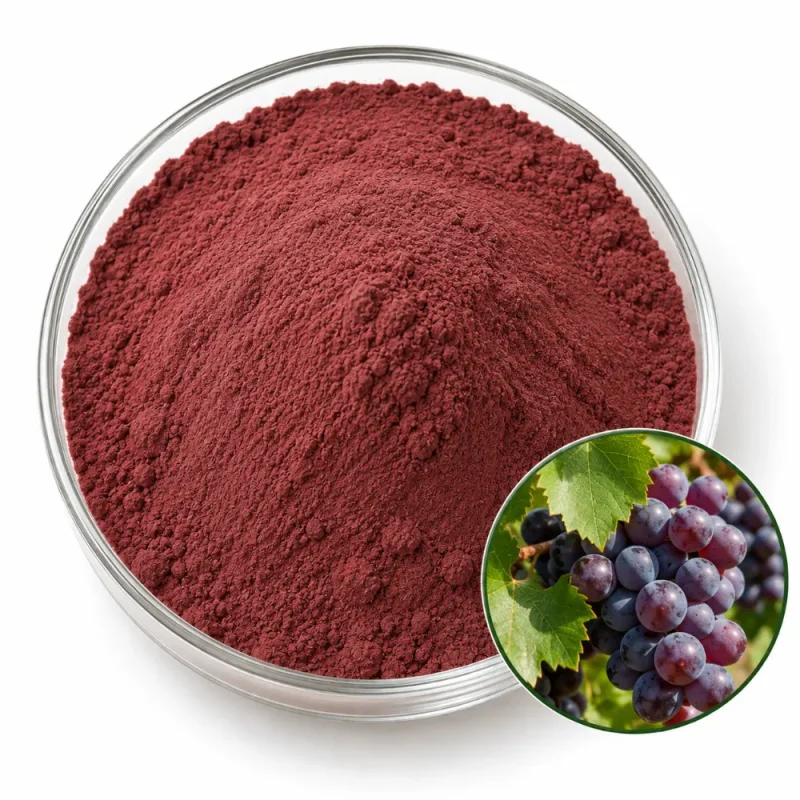
Grape Skin Extract Powder

Grape skin extract is made from the skin of Vitis vinifera berries, the pressing residue that carries the fruit’s pigments, and not from the seed, leaf or pulp. Water extraction concentrates the soluble skin fraction, and the liquor is dried into a purple red powder that disperses in water.

The extract is supplied at a 10:1 ratio and milled to 80 mesh, with no marker percentage declared. A separate grape skin extract with a stated anthocyanin range exists for color-driven formulas, while this grape skin extract is the plain ratio line.

Vitis vinifera Identity & Plant Part

The botanical entity is Vitis vinifera L., the European wine grape, a climbing woody vine of the Vitaceae. The part used is the skin, the outer layer of the berry. Seed, pulp, stem and leaf are not included. Skin color depends on the variety, because the anthocyanin pigments sit in the skins of red and black grapes and are largely absent from white varieties. The skin, seed and leaf of the same vine are sold as separate extracts. Anthocyanins, flavonols and other polyphenols are the main constituent families of grape skin, named here without figures.

Grape Skin Extract vs Other Forms

FormWhat It IsChoose It When
10:1 Skin ExtractWater-extracted, concentrated and dried grape skinWhole-skin extract without a marker claim
Grape Skin Extract 10–25% AnthocyaninsSkin extract with a stated anthocyanin rangeA defined pigment level is required
Grape Seed Extract PowderRatio extract of the grape seed instead of the skinThe seed is the specified part
Red Vine Leaf Extract PowderRatio extract of the red vine leafLeaf-derived material is the target

The 10:1 ratio shows how concentrated the extract is against the skin it came from. It does not state an anthocyanin level, so pigment strength cannot be read from it.

Three parts of the grape vine are sold as separate extracts, and they behave differently. The skin carries the pigment, the seed carries tannin-rich material, and the leaf carries flavonol glycosides. Naming the part is therefore part of the specification. For formulas that must meet a color target, the marker-based skin extract is the line to start from, and this plain ratio extract fits where skin identity matters more than pigment strength.

Typical Specifications

Specification ItemProduct Information
Latin NameVitis vinifera
Plant PartFruit & Berry
ProcessingWater Extraction
Common NameRed Grape Skin
Ingredient TypeRatio Extract
Extract Ratio10:1
AppearancePurple red powder
Solubility / DispersibilityWater Dispersible
Quality Parameters
Moisture (LOD)≤5.0%
Total Ash≤5.0%
Particle Size80 mesh
Heavy MetalsLead ≤2 ppm · Arsenic ≤1 ppm · Cadmium ≤1 ppm · Mercury ≤0.1 ppm
MicrobiologyTPC ≤1,000 cfu/g · Yeast & Mold ≤100 cfu/g · E. coli Negative · Salmonella Negative/25 g
Shelf Life24 months in unopened original packaging, cool and dry storage

Application Areas

Skin Extract Capsules

Grape skin extract fills into capsules as a purple red powder, and the shell color decides whether the tint shows through. An opaque or colored shell hides it, and a flow aid in the premix prevents the fine powder from bridging in the hopper.

Berry-Style Drink Powders

In drink powders the extract gives a rosy to purple tone that suits grape, berry and pomegranate flavors. Anthocyanin-bearing skin pigments shift color with acidity, so test the finished drink at its actual pH. Light, clear bottles speed up fading, so opaque or amber packaging protects the shade of ready-to-mix products.

Tablet Coating Blends

Tablets carry the extract in the core at modest inclusion with microcrystalline cellulose. The powder can speckle a white tablet, so it fits colored cores or tinted film coats more than plain white ones. A pink or red film coat matches the extract, whereas a pale core shows the pigment speckles clearly.

Anthocyanin-Style Gummy Bases

In gummies the extract adds a purple red tint and a mildly tart, astringent character that works with grape and cherry flavors. Add it to the cooked base late, since heat and light accelerate pigment loss. Because heat dulls the pigment, depositing temperature should stay as low as the gel allows.

Sachet Mixes with Fruit Acids

Sachets pair the extract with citric acid and a sweetener, and low pH keeps the red hue vivid. The pigment fades under light in clear packs, so opaque sachet film protects shelf color. Single-serve stick formats limit light exposure compared with large tubs that are opened every day.

Formulation Notes

Grape skin extract is a purple red powder with a faint fruity, winelike aroma and a tart, astringent taste. Shaken into water, it settles as a clear to slightly hazy red or purple liquid whose shade depends on pH. The color moves toward red in acid and toward blue or gray as the pH rises.

Weigh the grape skin extract in a dry room and reseal the pack after each draw, because a skin water extract takes up moisture and clumps. Pigment fades under heat and light, so store the open pack out of sunlight. Metal contact can dull the color, so use stainless or plastic scoops and mixing equipment.

Grape skin extract has a stronger color than most plain extracts, so a small dose changes the tint of a blend. Weigh grape skin extract on a separate balance and check each premix by eye or colorimeter, because skin pigment looks more intense wet than dry.

Packaging & Commercial Supply

Essencefield supports product evaluation, formulation trials, commercial orders, and ongoing ingredient supply. Packaging, storage, and shipping arrangements are determined by product characteristics, order quantity, stability requirements, and destination-market needs.

Supply ItemGeneral Information
SampleAvailable upon request for formulation, testing, and supplier evaluation
Order Quantities100 g · 1 kg · 5 kg · 25 kg · 100 kg · 500 kg · Bulk
Sample Lead TimeTypically 5–7 days after sample confirmation
Production Lead TimeTypically 15–30 days after order and specification confirmation
PackagingSuitable protective inner packaging with bags, cartons, drums, or other appropriate outer packaging
StorageStore in tightly sealed, suitable protective packaging in a cool, dry environment. Protect from moisture, heat, and direct sunlight. Specific storage conditions follow the approved product specification.
DocumentationCOA · Product Specification · TDS · SDS · Applicable declarations (as applicable)

Final order quantities, lead times, packaging, documentation, and shipping arrangements are confirmed according to the selected product and commercial requirements.

Request Ingredient Specifications & Quote

Share your target specification, application, quantity, and documentation needs. We’ll help confirm suitable options, samples, and commercial supply details.