Orange Powder

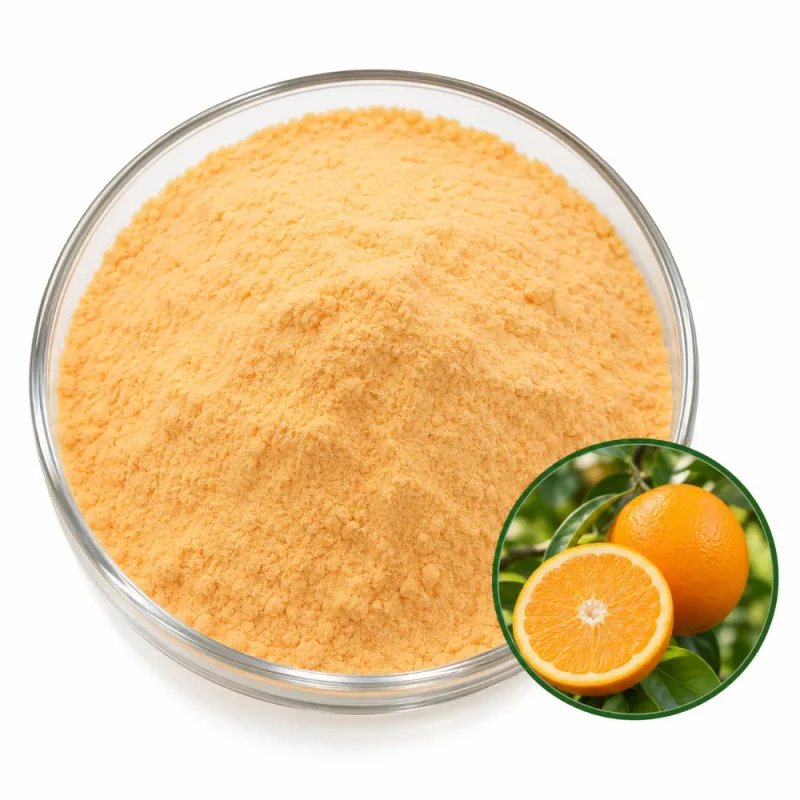
Orange powder is spray-dried from the pressed juice of sweet orange, Citrus sinensis, on a maltodextrin carrier. It is a yellow-orange, water-soluble powder with a balanced sweet-tart taste. Peel, pith and seeds stay out of the juice, so the powder carries the fruit’s sugars and acids and very little of the peel oil that scents orange zest.

Sweet orange is the mainstream citrus juice, and the powder is the most familiar citrus flavor in dry drink mixes. Its character is sweetness first, with enough acid to taste fresh and a warm color from the carotenoids that stay in the juice.

Orange Juice Powder Processing

The species is Citrus sinensis (L.) Osbeck, the sweet orange, an evergreen tree of the rue family (Rutaceae) that arose as a hybrid of pomelo and mandarin ancestry. Bitter orange, Citrus × aurantium, is a related fruit used for marmalade and peel flavor, and mandarins and tangerines, Citrus reticulata, are separate species. Blood orange is a pigmented group of sweet orange and has its own freeze-dried product. The part used here is the juice of the ripe fruit.

The raw material is orange juice concentrate, produced by pressing or extracting juice from the fruit and removing water by evaporation. The concentrate is blended with maltodextrin and atomized in a spray dryer. The carrier makes the powder dissolve and flow, and it dilutes the juice solids, so the finished powder is paler and less intense than the concentrate it came from.

Citrus juice solids are acidic and sugar-rich, and they form sticky particles in a dryer, so orange powder generally calls for more carrier than juices from low-acid fruit. A higher carrier share compensates for the sticky, acid-rich solids of citrus juice, which is a general feature of the process and not a stated value.

Navel and Valencia are the two main commercial types. Navel oranges are eaten fresh and their juice turns bitter on standing, while Valencia oranges are the classic juicing orange with a stable flavor. A concentrate for powder is built mainly on juicing types, and the cultivar mix is not stated for this product.

Oranges ripen slowly and keep their quality on the tree for weeks, so juice for concentrate can be pressed at peak sweetness. Early-season fruit is sharper and greener, and late-season fruit is sweeter and flatter, which is why concentrate makers often blend lots across the season.
Orange Flavor, Color & Forms

The powder is yellow-orange. The color comes from carotenoids in the juice vesicles, which are fat-soluble and stay dispersed in water as a cloud instead of dissolving. In a glass the powder gives an opaque, golden orange drink, similar to cloudy orange juice. The taste is sweet with a gentle acidity and a mild bitterness at the finish.

Characteristic constituents are sucrose, glucose and fructose, citric acid, vitamin C and carotenoids, along with flavanone glycosides such as hesperidin, which is concentrated in the peel and membranes more than in the juice. No figure is given for any of them.

FormWhat It IsChoose It When
Orange Juice PowderSpray-dried juice on a maltodextrin carrierA soluble, sweet orange base is wanted
Freeze-Dried Orange PowderWhole fruit dried under vacuumPulp solids and no added carrier are wanted
Freeze-Dried Blood Orange PowderPigmented blood orange dried under vacuumA red-tinged citrus color is wanted
Orange Peel Extract Powder10:1 extract of the sweet orange peelThe peel, not the juice, is the requirement

Typical Specifications

Specification ItemProduct Information
Latin NameCitrus sinensis
Plant PartFruit & Berry
ProcessingSpray-Dried Juice
Common NameOrange
Raw MaterialOrange juice concentrate
Ingredient TypeJuice Powder
CarrierMaltodextrin
AppearanceYellow-Orange powder
FlavorSweet, mildly tart citrus
Solubility / DispersibilityWater Soluble
Quality Parameters
Moisture (LOD)≤5.0%
Heavy MetalsLead ≤2 ppm · Arsenic ≤1 ppm · Cadmium ≤1 ppm · Mercury ≤0.1 ppm
MicrobiologyTPC ≤10,000 cfu/g · Yeast & Mold ≤1,000 cfu/g · E. coli Negative · Salmonella Negative/25 g
Shelf Life24 months in unopened original packaging, cool and dry storage

Application Areas

Instant Breakfast Drink Mixes

Dry drink mixes use orange powder as the main flavor and color, with sugar and citric acid to set the sweet-tart balance. It dissolves in cold water within seconds, forming a cloudy golden drink that looks like fresh juice without the weight of liquid concentrate.

Effervescent Drink Tablets

Effervescent tablets and fizzing powders take orange powder for the flavor and warm color of the finished drink. Tablet rooms must stay dry because the powder’s acid and sugar can start the reaction in the press, and bag films should be moisture-proof.

Bakery Icings and Cake Mixes

Dry icings and cake mixes use orange powder to deliver a citrus note without liquid juice. It spreads evenly with powdered sugar, and bakers add it to the topping or batter late, since oven heat dulls the volatile top notes.

Gummies and Fruit Chews

Confectioners use orange powder for flavor and color in gummies, jelly candy and chews. The powder carries sugar and acid, so these are counted in the candy’s total balance, and it is added after the cook to protect the fresh note.

Yogurt and Dairy Mixes

Dry bases for yogurt, milkshakes and ice cream take orange powder for a sweet citrus layer and light color. The carotenoid color tolerates the pH of cultured dairy, and the cloud blends into the milk phase without breaking the emulsion.

Moisture Pickup & Stability

Orange powder is a hygroscopic glass, and the acid makes it more so. In humid air the surface softens and turns sticky within minutes, then sets into lumps that are hard to break. Weigh in a dry room, reseal the liner after each draw, and sieve any lumpy material before it enters a blend.

Flavor is the part most exposed to age. The fresh citrus top notes are volatile and oxidize in air, and warm storage produces a flat, slightly stale orange character. Cool storage in sealed packaging holds the profile closer to the received taste, and opened containers are best used quickly.

Color moves more slowly. Carotenoids fade under light and oxygen, and browning reactions between sugars and amino traces darken the powder from yellow-orange toward tan. Use opaque packaging, avoid leaving drums near warm equipment, and note that acid attacks bare metal, so stainless steel or food-grade plastic tools are the right choice for mixing and scooping.

A dry orange mix keeps its character better when stock is rotated first in, first out, because heavily aged powder tastes flatter than fresh. Check that smell and flow of the oldest drums match the newest before they go into production, and avoid mixing very old and very new material in one blend.

Packaging & Commercial Supply

Essencefield supports product evaluation, formulation trials, commercial orders, and ongoing ingredient supply. Packaging, storage, and shipping arrangements are determined by product characteristics, order quantity, stability requirements, and destination-market needs.

Supply ItemGeneral Information
SampleAvailable upon request for formulation, testing, and supplier evaluation
Order Quantities100 g · 1 kg · 5 kg · 25 kg · 100 kg · 500 kg · Bulk
Sample Lead TimeTypically 5–7 days after sample confirmation
Production Lead TimeTypically 15–30 days after order and specification confirmation
PackagingSuitable protective inner packaging with bags, cartons, drums, or other appropriate outer packaging
StorageStore in tightly sealed, suitable protective packaging in a cool, dry environment. Protect from moisture, heat, and direct sunlight. Specific storage conditions follow the approved product specification.
DocumentationCOA · Product Specification · TDS · SDS · Applicable declarations (as applicable)

Final order quantities, lead times, packaging, documentation, and shipping arrangements are confirmed according to the selected product and commercial requirements.

Request Ingredient Specifications & Quote

Share your target specification, application, quantity, and documentation needs. We’ll help confirm suitable options, samples, and commercial supply details.