Fucus vesiculosus Fucoidan Identity
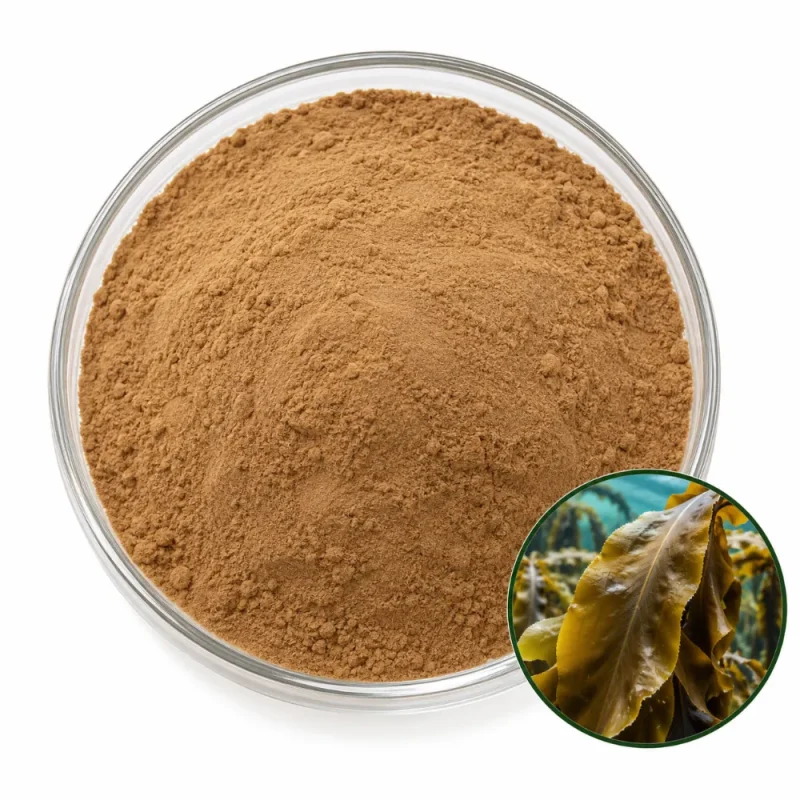
Fucoidan polysaccharide powder is made from the thallus of Fucus vesiculosus L., the brown seaweed bladderwrack, which is recognized by air bladders arranged in pairs along the frond. The whole thallus is the source. Other brown seaweeds, such as kelp (Laminaria) and wakame (Undaria), also yield fucoidans, but these differ in structure from the bladderwrack material and are not included.
Fucoidan is a family name and not a single molecule. In Fucus vesiculosus the chains are built mainly from L-fucose units that carry sulfate ester groups, with smaller amounts of galactose, xylose and uronic acid. The sulfate groups give the polymer a strong negative charge, and the exact sulfate content, branching and chain length depend on the seaweed species, season and extraction method.
Brown algae hold several other polysaccharides, and fucoidan must be separated from them. Alginate, the main structural polysaccharide of the cell wall, is largely removed by calcium or acid steps, laminarin and mannitol remain in solution until the ethanol precipitation, and phlorotannins, the polyphenols of brown algae, add color and are removed in purification.
Related bladderwrack products have a different identity. Bladderwrack Powder is the milled thallus and Bladderwrack Extract Powder is a ratio extract, and neither is defined by a polysaccharide assay.
Seaweed is also a metal-accumulating material. Brown algae take up arsenic and other elements from seawater, which is why the heavy-metal limits in the specification matter for this class of ingredient.