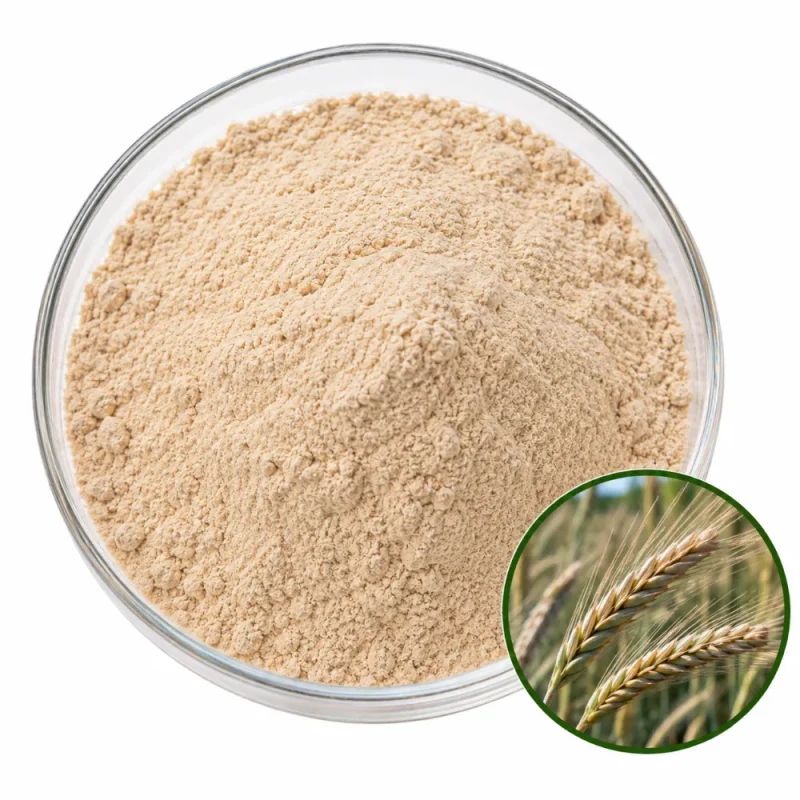
Rye Beta Glucan Powder

Rye beta-glucan powder is the mixed-linkage glucan of Secale cereale grain, separated from the arabinoxylan, starch and protein that dominate the rye kernel. It is a purified cereal fraction and not rye flour or bran, and it is dried to a light yellow powder that disperses in water.

The primary grade carries beta-glucans ≥70% by enzymatic assay, with an 80% option, and moisture and ash are each ≤5.0%. The powder is milled to 80 mesh and supplied for dry blends, beverage mixes, capsules and tablets.

Rye Beta-Glucan Identity

Rye beta-glucan powder is made from the grain of Secale cereale L., the cereal rye. The glucan sits in the cell walls of the starchy endosperm and in the aleurone layer, and the purified powder is built from it. Rye is known for a high content of dietary fiber, but most of that fiber is not glucan, and this product is defined by the glucan itself.

Rye’s cell walls are dominated by arabinoxylan, a branched xylose polymer that is the main pentosan of the grain and is far more abundant than β-glucan. The β-glucan of rye is the same mixed-linkage type as in barley and oats, with β-(1→4) runs of three or four units separated by single β-(1→3) bonds. Because arabinoxylan co-extracts with it, purification must separate the two.

Extraction in warm water, enzyme treatment to remove starch and arabinoxylan, and ethanol precipitation produce a fraction in which the glucan is the majority component. The result is a fiber concentrate that behaves differently from rye flour, in which the glucan is a small share of a starch-rich mass.

Rye is also sold as a milled grain. Rye Powder is the ground kernel, specified as a food powder and not by a glucan assay, and it is a different product from this one.

Rye is harvested as a winter or spring crop and the grain is cleaned and dried before milling. The glucan content of the grain varies with variety and season, which is why the finished powder is specified by an assay and not by the grain it starts from.
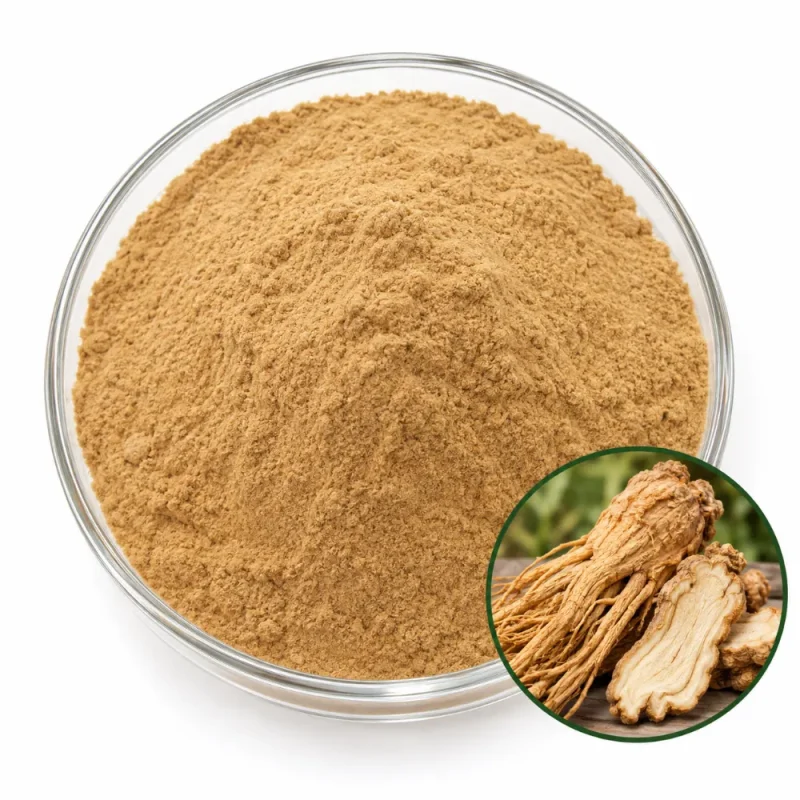
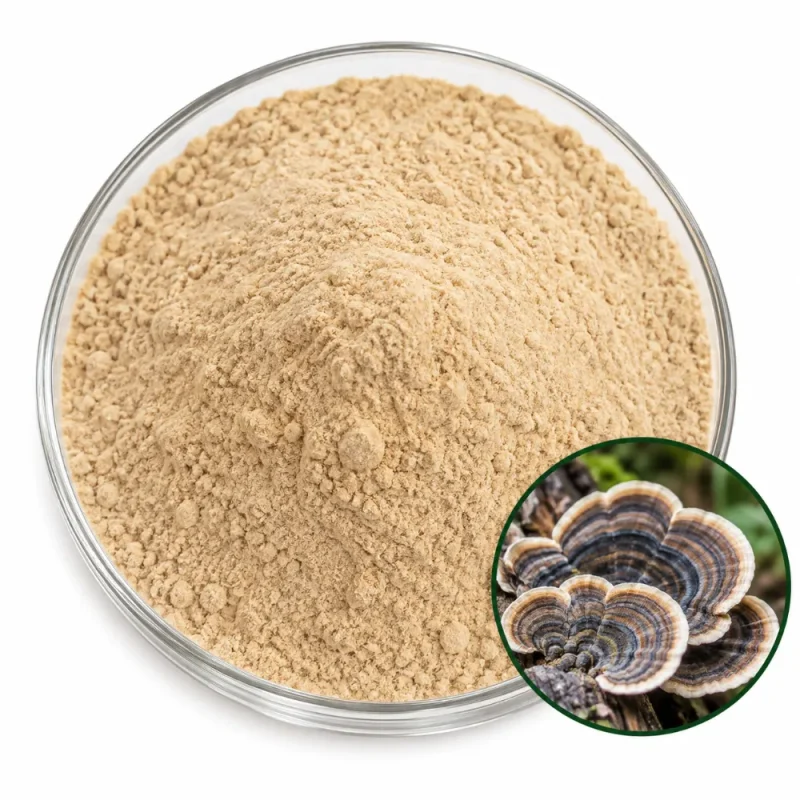
Polysaccharide Content & Test Method

GradeAssay & MethodWhere It Fits
70% Beta-Glucan≥70% Beta-Glucans (Enzymatic)Dry blends and bar systems
80% Beta-Glucan≥80% Beta-Glucans (Enzymatic)Compact tablets and capsules

For rye the question is what the percentage counts, and here it counts one polymer. The enzymatic assay uses lichenase to cut mixed β-(1→3),(1→4) glucan into fragments and β-glucosidase to turn them into glucose, which is measured. Arabinoxylan and starch are not hydrolysed by lichenase, so they do not add to the result.

A UV-Vis phenol–sulfuric figure would give a very different number for a rye fiber. It reports every sugar from hydrolysis, so the abundant arabinoxylan, with its xylose and arabinose, would count along with the glucan, and a rye product at 70% by that method could hold only a modest share of β-glucan. The values here are enzymatic and should not be compared with a total-sugar number.

Sample preparation determines how fully the glucan is released. The sample is dispersed in hot buffer so the chains swell, and the specific enzymes then act on the dissolved glucan. A result is comparable only when the dispersion step and the enzyme system are stated, and when the basis, dry matter or as-is, is given beside the percentage.

Typical Specifications

Specification ItemProduct Information
Latin NameSecale cereale
Plant PartSeed & Grain
ProcessingWater Extraction & Purification
Common NameRye beta-glucan
Ingredient TypePolysaccharide Extract
Polysaccharide TypeMixed-linkage (1→3),(1→4)-β-D-glucan
ContentBeta-Glucans ≥70% (Enzymatic)
Available GradesBeta-Glucans ≥70% (Primary) · ≥80% (Enzymatic)
AppearanceLight Yellow powder
Solubility / DispersibilityWater Dispersible
Quality Parameters
Moisture≤5.0% (LOD)
Total Ash≤5.0%
Particle Size80 mesh
Heavy MetalsLead ≤2 ppm · Arsenic ≤1 ppm · Cadmium ≤1 ppm · Mercury ≤0.1 ppm
MicrobiologyTPC ≤1,000 cfu/g · Yeast & Mold ≤100 cfu/g · E. coli Negative · Salmonella Negative/25 g
Shelf Life24 months in unopened original packaging, cool and dry storage

Rye Beta-Glucan Solution Behavior

Rye beta-glucan is water dispersible and not freely soluble. The powder hydrates quickly at the surface and forms soft lumps if it is poured into still water, so it is sifted into a vortex or blended first with another dry ingredient. Full hydration takes longer than wetting, and warm water shortens it.

Viscosity depends on chain length and concentration. Long chains give a thick, shear-thinning liquid, and at higher concentration the solution can set to a soft gel on cooling. Shorter chains give a thinner liquid. Rye β-glucan generally forms less viscous solutions than high-molecular-weight oat or barley glucan prepared the same way, a feature to test in the final drink.

Residual arabinoxylan adds to the thickness and can raise the haze, and traces of ferulic acid on arabinoxylan give a faint tint and a mild, bready note. Neutral pasteurization is tolerated, while prolonged heating in acid or contact with β-glucanase from other ingredients shortens the chain and thins the product.

Freeze–thaw cycles can push glucan out of solution. The powder is hygroscopic and cakes in open air. Viscosity and molecular weight figures are not stated for this grade.

Application Areas

Rye-Style Bakery Fiber Blends

Rye beta-glucan fits baked goods where a rye note is welcome, adding fiber solids without the heaviness of whole rye flour. The glucan binds water during baking, so dough hydration is adjusted when the powder is added.

Dry Beverage Concentrates

Concentrates built for reconstitution carry the powder when it is pre-blended with sugar or maltodextrin to disperse it. Viscosity builds as the drink stands, so the final mouthfeel is judged at the intended serving temperature.

Crispbread and Cracker Doughs

Thin, dry baked formats can include the glucan at modest levels. The powder absorbs water quickly, so it is mixed into the flour before the liquid goes in, and moisture loss during baking is checked.

Extruded Cereal Pieces

In extruded cereals the glucan survives short heating but loses some chain length under high shear. Screw speed and barrel temperature are the settings to adjust, and the chewiness of the finished piece is compared with a control.

Compact Tablet Formats

The 80% grade reduces tablet mass for the same glucan dose. Granulation avoids over-wetting, which turns the surface into a gel, and tablet hardness is checked after humid storage. Tablet hardness is checked after humid storage, and disintegration time is recorded at the same point to confirm release.

Packaging & Commercial Supply

Essencefield supports product evaluation, formulation trials, commercial orders, and ongoing ingredient supply. Packaging, storage, and shipping arrangements are determined by product characteristics, order quantity, stability requirements, and destination-market needs.

Supply ItemGeneral Information
SampleAvailable upon request for formulation, testing, and supplier evaluation
Order Quantities100 g · 1 kg · 5 kg · 25 kg · 100 kg · 500 kg · Bulk
Sample Lead TimeTypically 5–7 days after sample confirmation
Production Lead TimeTypically 15–30 days after order and specification confirmation
PackagingSuitable protective inner packaging with bags, cartons, drums, or other appropriate outer packaging
StorageStore in tightly sealed, suitable protective packaging in a cool, dry environment. Protect from moisture, heat, and direct sunlight. Specific storage conditions follow the approved product specification.
DocumentationCOA · Product Specification · TDS · SDS · Applicable declarations (as applicable)

Final order quantities, lead times, packaging, documentation, and shipping arrangements are confirmed according to the selected product and commercial requirements.

Request Ingredient Specifications & Quote

Share your target specification, application, quantity, and documentation needs. We’ll help confirm suitable options, samples, and commercial supply details.