Cordyceps Polysaccharide Identity
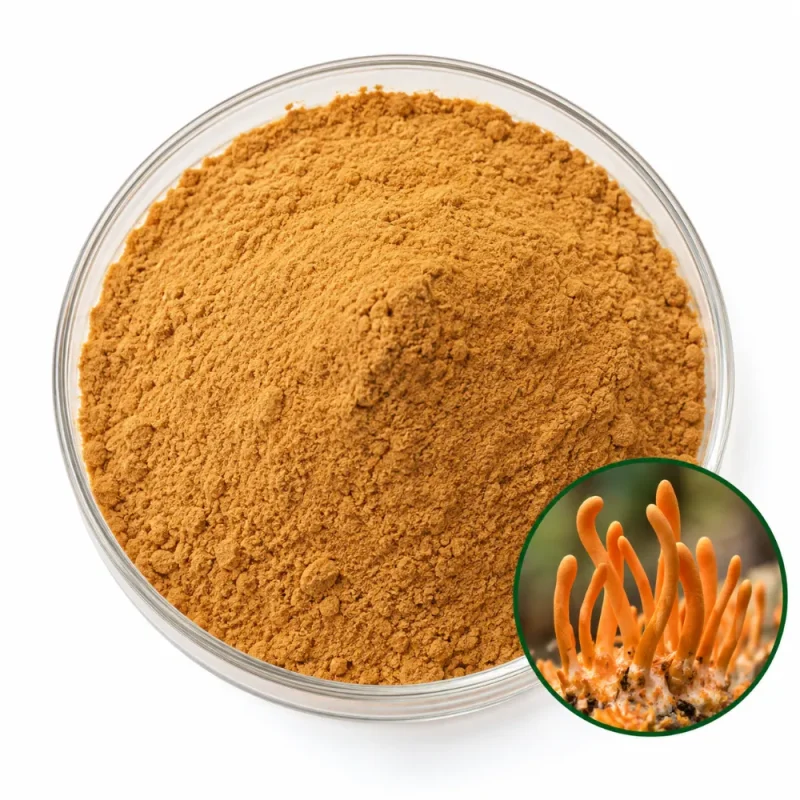
The source is Cordyceps militaris (L.) Fr., the scarlet caterpillar fungus, a member of the Cordycipitaceae. In nature it grows from buried insect pupae and forms a small orange club above ground. Cultivation on grain or silkworm pupa substrates is routine, and the commercial fruiting body is grown on such a substrate. The part used here is the fruiting body, the orange club.
The fungus is often confused with Cordyceps sinensis, now classified as Ophiocordyceps sinensis, the Tibetan caterpillar fungus that is far scarcer and more expensive. The two are different species with different chemistry. Mixing the names on a label is a recurring market problem, and the Latin name in this product’s H1 settles which fungus is meant.
The polysaccharides of Cordyceps militaris include glucans, mannose-rich heteropolysaccharides and galactose-containing fractions. Water extraction followed by concentration and ethanol precipitation recovers the water-soluble polysaccharides, and the fraction is dried to a powder. Protein, small amounts of mineral salts and, depending on the substrate, residual starch or dextrins can travel with them.
Related Cordyceps militaris products are separate. The Cordyceps Extract Powder is a ratio extract, and the Cordyceps Mushroom Powder is the dried, milled fruiting body. Neither is defined by a polysaccharide percentage.