Barley Beta Glucan Powder

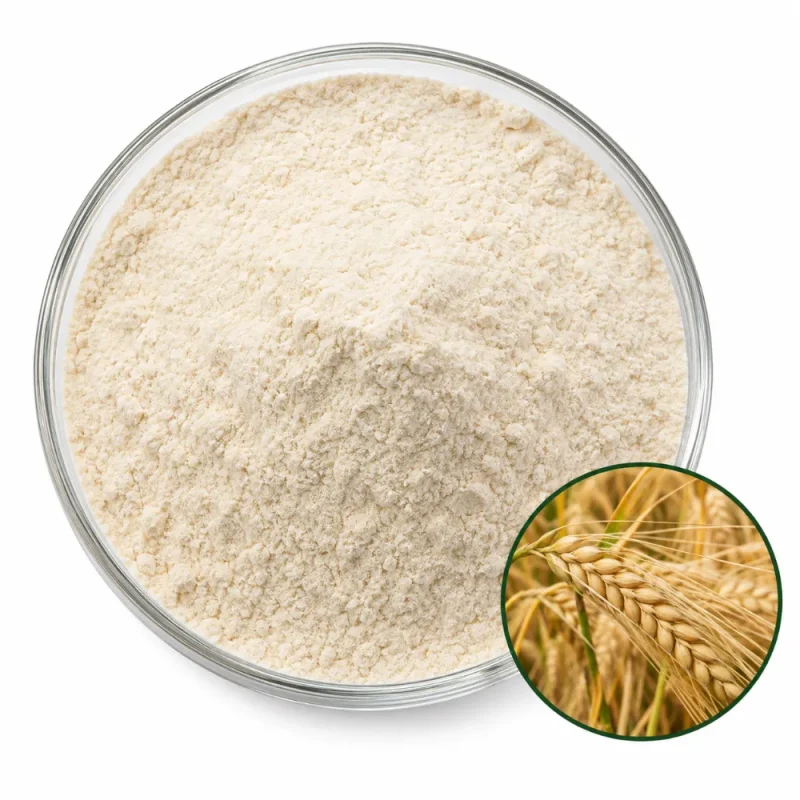
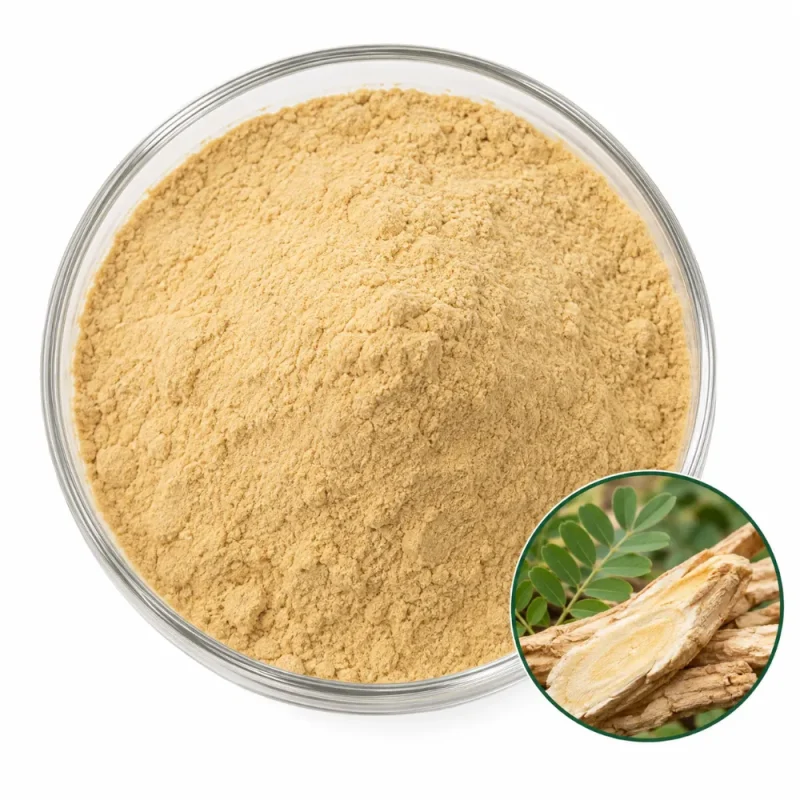
Barley beta-glucan powder is the water-extractable cell-wall fiber of Hordeum vulgare grain, concentrated until the mixed-linkage glucan is the main component. It is a purified cereal fraction, not a milled barley flour or a malt extract, and it is dried to a light yellow powder.

The primary grade carries beta-glucans ≥70% by enzymatic assay, with an 80% option, and moisture and ash are each ≤5.0%. The powder is milled to 80 mesh and is water dispersible, so it is used in capsules, dry blends and beverage mixes.

Barley Beta-Glucan Identity

Barley beta-glucan powder comes from the seed of Hordeum vulgare L., where the glucan sits mainly in the cell walls of the starchy endosperm and aleurone layer. The polymer is a linear chain of glucose units joined by both β-(1→4) and β-(1→3) bonds. Short runs of three or four β-(1→4)-linked units are separated by single β-(1→3) links, and that irregular pattern keeps the chain flexible and water-hydrating. Barley is one of the richest cereal sources of this glucan, and hull-less types are generally richer than hulled ones.

Extraction in warm water, followed by enzyme treatment and precipitation, removes most of the starch, protein and arabinoxylan that travel with the glucan in the grain. The remaining solid is a purified fiber fraction, so its behavior differs from barley flour, where the same glucan is diluted by starch.

Three other barley products are easy to confuse with this one. Barley Powder is the milled grain, Highland Barley Powder is milled hull-less grain, and Malt Extract Powder is a sprouted-grain extract rich in maltose. None of them is specified by a glucan assay, and each behaves like barley food rather than like a concentrated fiber.

The distinction matters for dose. A milled barley product carries glucan as a minor share of its mass, so reaching a meaningful glucan amount through flour means adding a large mass of starch and protein with it. The purified fraction delivers the polymer at a much smaller inclusion, which is its reason to exist in capsule and beverage formats where space and flavor are limited.
Polysaccharide Content & Test Method

GradeAssay & MethodWhere It Fits
70% Beta-Glucan≥70% Beta-Glucans (Enzymatic)Capsules and general dry blends
80% Beta-Glucan≥80% Beta-Glucans (Enzymatic)Compact tablets and low-dose sachets

The percentage in both grades is a specific beta-glucan content. An enzymatic assay first cuts the chain with lichenase, an enzyme that attacks only the mixed β-(1→3),(1→4) linkage, and then converts the fragments to glucose with β-glucosidase, which is measured colorimetrically. Starch is not cleaved by lichenase, so it does not inflate the result.

A UV-Vis phenol–sulfuric reading behaves differently. It reports total carbohydrate, so starch, dextrins and arabinoxylan all count, and a barley product at 70% by that method could hold little glucan. Gravimetric ethanol-precipitate figures weigh everything that precipitates, including protein and arabinoxylan carried down with the glucan.

Sample preparation also affects the number. Cereal glucan is first dispersed in hot buffer so the chains swell, and starch is removed or ignored by the enzyme choice, so a poorly dispersed sample can read low. A result is only comparable when the dispersion step and the enzyme system are the same, and the basis (dry matter or as-is) is stated beside the percentage. The 70% and 80% values here are enzymatic only and should not be compared with a total-sugar figure quoted for other barley fiber.

Typical Specifications

Specification ItemProduct Information
Latin NameHordeum vulgare
Plant PartSeed & Grain
ProcessingWater Extraction & Purification
Common NameBarley beta-glucan
Ingredient TypePolysaccharide Extract
Polysaccharide TypeMixed-linkage (1→3),(1→4)-β-D-glucan
ContentBeta-Glucans ≥70% (Enzymatic)
Available GradesBeta-Glucans ≥70% (Primary) · ≥80% (Enzymatic)
AppearanceLight Yellow powder
Solubility / DispersibilityWater Dispersible
Quality Parameters
Moisture≤5.0% (LOD)
Total Ash≤5.0%
Particle Size80 mesh
Heavy MetalsLead ≤2 ppm · Arsenic ≤1 ppm · Cadmium ≤1 ppm · Mercury ≤0.1 ppm
MicrobiologyTPC ≤1,000 cfu/g · Yeast & Mold ≤100 cfu/g · E. coli Negative · Salmonella Negative/25 g
Shelf Life24 months in unopened original packaging, cool and dry storage

Barley Beta-Glucan Solution Behavior

Barley beta-glucan is water dispersible rather than freely soluble. The powder hydrates quickly at the surface and forms lumps if it is poured into still water, so it is best sifted into a vortex or pre-blended with sugar or another dry ingredient. Full hydration takes longer than wetting, and warm water speeds it.

Viscosity depends on chain length and concentration. Long chains give thick, shear-thinning solutions, and at higher concentrations the solution can set to a soft gel on cooling, because the cellotriosyl-rich stretches associate. Shorter chains give thinner liquids that hold their clarity.

Heat and pH matter mainly through depolymerization. Neutral pasteurization is tolerated, while prolonged heating in acid, or contact with residual β-glucanase from other ingredients, shortens the chain and lowers thickness. Freeze–thaw cycles can also push the glucan out of solution. No viscosity or molecular weight values are stated for this grade.

Order of addition is the practical lever. Dispersing the powder in a small volume of cold water or syrup and then diluting it gives a more even gel-free solution than adding it directly to a hot base, where the outer layer swells before the core is wet. Low shear is enough for hydration, and long high-shear mixing offers no gain in dissolution while it can shorten the chains.

Application Areas

Capsule and Tablet Fills

The 70% grade packs into capsules at modest fill weights, and the 80% option reduces tablet size. The powder is hygroscopic, so granulation should avoid over-wetting, which turns the surface into a gel and slows the batch.

Dry Beverage Blends

Stick-pack drink mixes can carry barley beta-glucan when it is pre-blended with sweetener or maltodextrin so it disperses without clumping. Expect a thicker mouthfeel that rises as the drink stands, and test viscosity at the final serving temperature.

Cereal and Bar Systems

Binder syrups and extruded cereal pieces can include the powder as a fiber source. The glucan absorbs water during baking and extrusion, which firms the matrix, so water addition and shear are the main settings to adjust. Hardness of the finished piece should be compared after a week of storage.

Dairy-Alternative Bases

Oat-style and soy-style drinks tolerate small additions because the glucan adds body without a strong flavor. Added late, after any enzyme step has been inactivated, it keeps its chain length and gives smoother texture. Mouthfeel should be judged cold, after overnight storage.

Gel and Jelly Textures

In fruit jellies and spoonable desserts the glucan can reinforce gel structure at modest levels. It sets more softly than pectin, so it is a texturizer to test alongside the gelling agent, not a replacement for it.

Packaging & Commercial Supply

Essencefield supports product evaluation, formulation trials, commercial orders, and ongoing ingredient supply. Packaging, storage, and shipping arrangements are determined by product characteristics, order quantity, stability requirements, and destination-market needs.

Supply ItemGeneral Information
SampleAvailable upon request for formulation, testing, and supplier evaluation
Order Quantities100 g · 1 kg · 5 kg · 25 kg · 100 kg · 500 kg · Bulk
Sample Lead TimeTypically 5–7 days after sample confirmation
Production Lead TimeTypically 15–30 days after order and specification confirmation
PackagingSuitable protective inner packaging with bags, cartons, drums, or other appropriate outer packaging
StorageStore in tightly sealed, suitable protective packaging in a cool, dry environment. Protect from moisture, heat, and direct sunlight. Specific storage conditions follow the approved product specification.
DocumentationCOA · Product Specification · TDS · SDS · Applicable declarations (as applicable)

Final order quantities, lead times, packaging, documentation, and shipping arrangements are confirmed according to the selected product and commercial requirements.

Request Ingredient Specifications & Quote

Share your target specification, application, quantity, and documentation needs. We’ll help confirm suitable options, samples, and commercial supply details.